
Beige Christmas trees are having a major moment on Pinterest right now — and once you’ve saved your tenth one, you start to see why. They photograph beautifully in low light, they get along with whatever sofa you already own, and they never fight the rest of your decor.
We spent serious time browsing Target, Amazon, and Etsy to bring you only what’s worth pinning this year, from $14 ornaments up to an $849 showpiece tree. Inside you’ll find 31 real neutral tree ideas — cozy oatmeal, taupe coastal, rustic glam, and full champagne luxury — with budget and luxury versions compared side by side and every idea shoppable with direct product links.
Neutral trees stuck around in 2026 because people are decorating for the room they actually live in, not for a catalog page. And stay until the end — we break down the most common mistakes that can ruin these looks.
📌 Save this to Pinterest for later — you’ll want to revisit these ideas.
This post contains affiliate links — we may earn a small commission at no extra cost to you.
1. Sandy 4-Foot Color-Changing Tree, Seen From Every Angle
There’s a reason a sandy, wheat-toned tree looks expensive without trying: the needles sit closer to dried grass or raw linen than to pine, so it blends into a room instead of announcing itself. With 70 integrated LEDs on a 4-foot frame, the light does most of the decorating. Keep the ornament count low and the palette tight — two or three finishes, no more — and the tree reads as texture rather than theme.
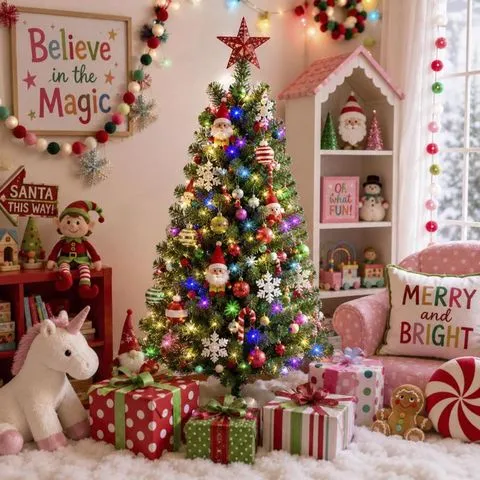
Four feet is the underrated size. This tree fits rooms under 100 square feet — a guest room corner, a reading nook, the dead zone beside a tall bookcase — and still clears an 8-foot ceiling with room for a topper. If your space is larger, look at Idea #15 instead, where a cluster of taller pre-lit trees fills an entire wall. The color-changing LEDs are the real flex here: warm white for dinner parties, then dial the tone down for late nights.
2. Oversized Silver and Gold Floral Ornaments on a Tall Tree
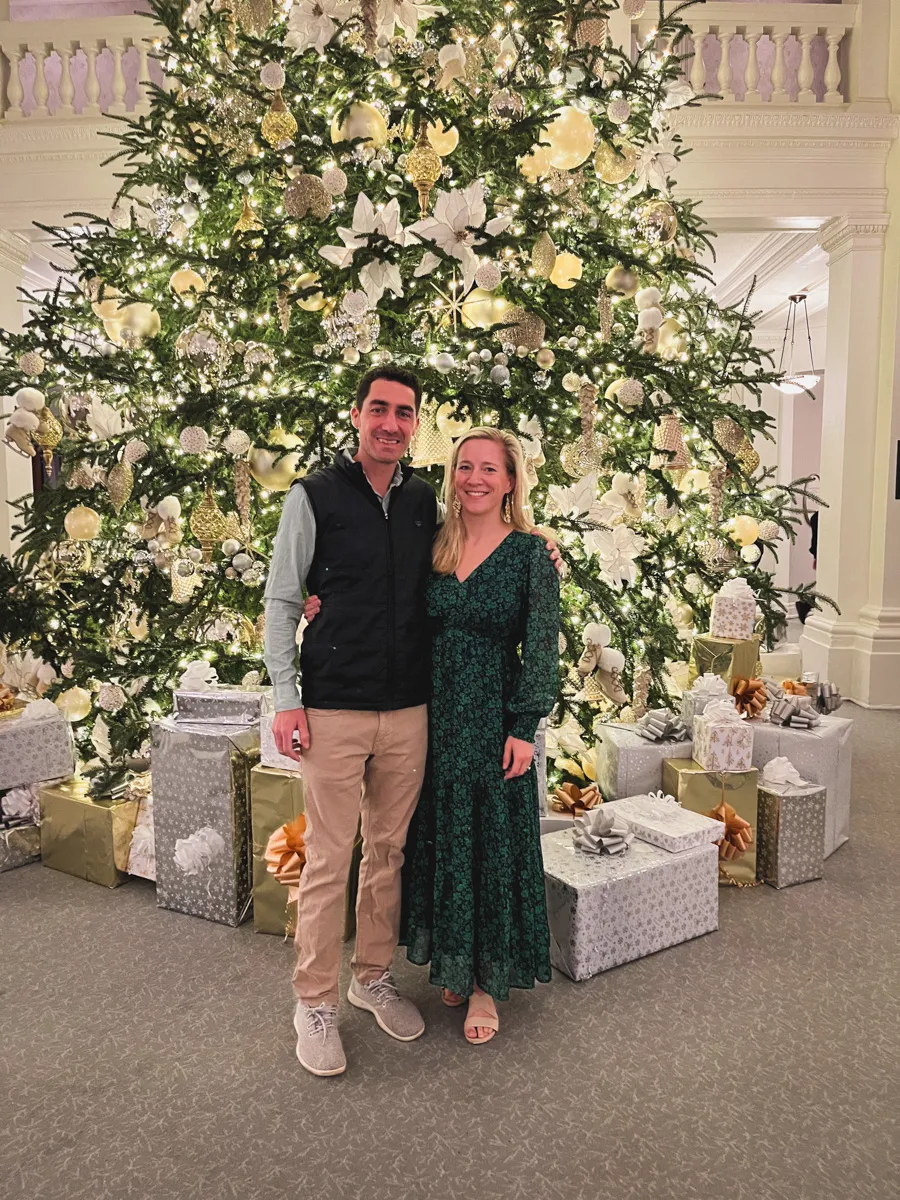
The oversized floral ornaments are the entire personality of this tree. Shimmering silver and gold blooms, big white snowflakes and wide ribbon loops — each one is roughly the size of a dinner plate, which is why the tree can get away with fewer pieces overall. Take them away and you’re left with a pretty but ordinary full tree. Scale is the entire point: one ornament doing the work of five.
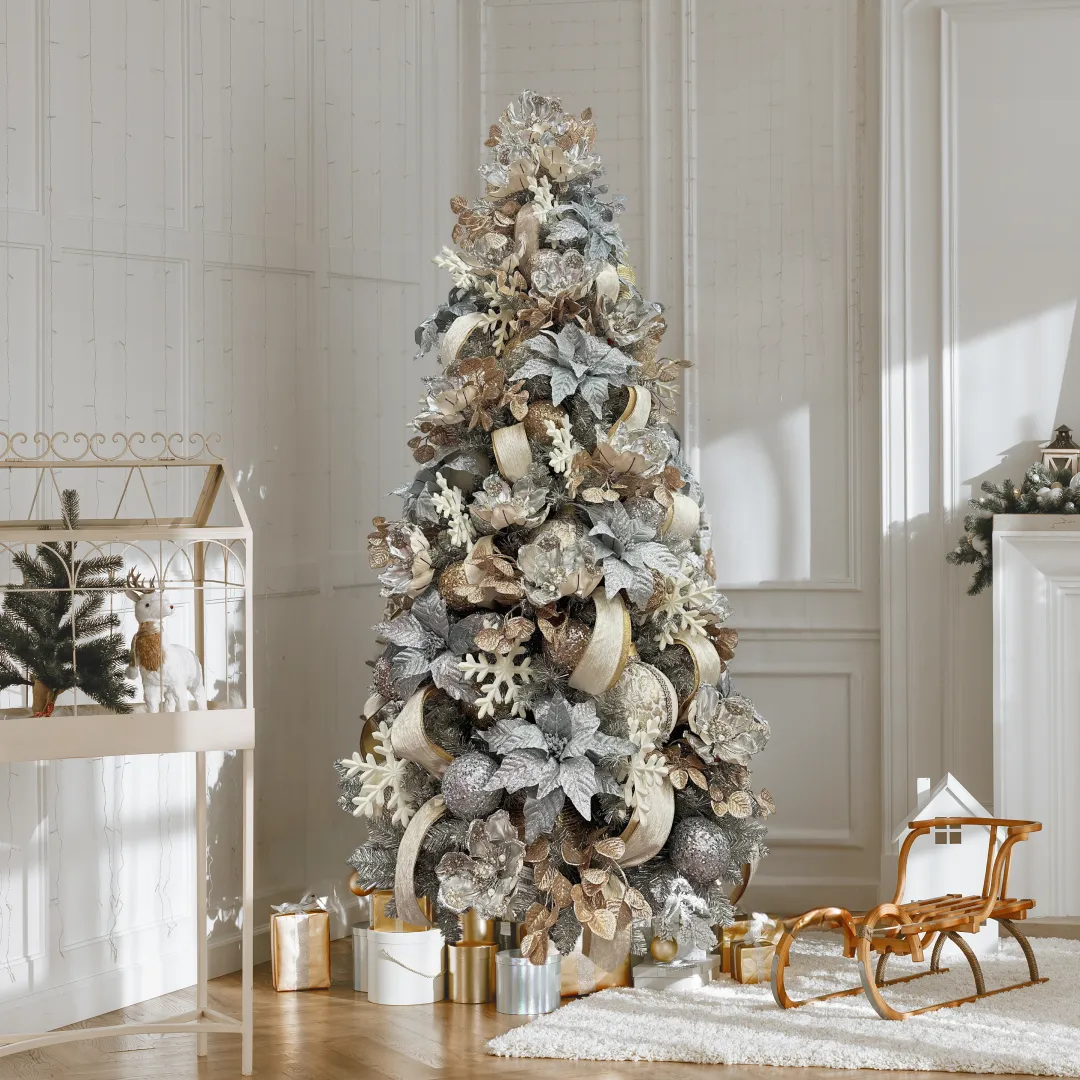
Recreating this look, roughly:
- Tree (7.5–9 ft full): $180–$600
- Floral and snowflake ornaments: $120–$380
- Wide gold and silver ribbon: $30–$70
- White shag rug: $90–$300
- Gifts, sled and styling props: $60–$250
- Total: $480–$1,600
Budget alternative: skip the rug, buy six oversized floral stems from a craft store at half price in early November, and layer them with dollar-store snowflakes. Same silhouette, about $140 all in.
3. Flocked Beige Tree in a Woven Basket Collar
The woven basket collar is doing quiet heavy lifting. A flocked tree dressed in cream and matte gold already leans soft and warm — set it in a metal or mirrored base and the whole thing turns cold in a hurry. The basket keeps the base in the same family as the ribbon and the beige throw nearby. Warm white fairy lights, wide cream ribbon woven in loose loops rather than spiraled tight, and matte gold spheres in three sizes. Nothing shiny, nothing loud.
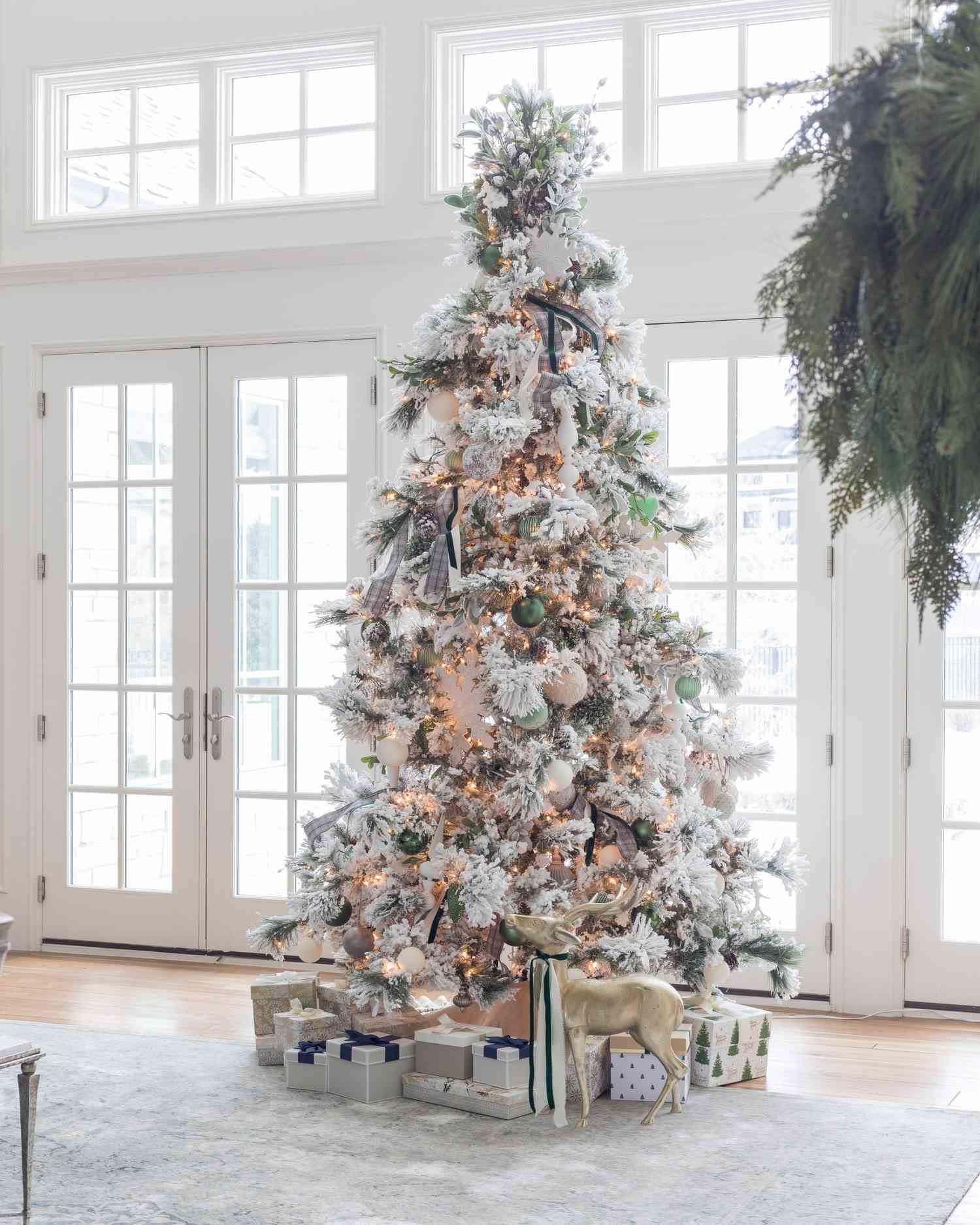
Ribbon that actually looks relaxed:
- Cut 6–8 lengths of 4-inch-wide cream ribbon, each about 3 feet long.
- Push the ribbon into the branches so only the loop shows — never wrap it around the tree.
- Twist each loop slightly off-center so no two sit at the same angle.
- Space the loops about 10 inches apart, working top to bottom.
- Add ornaments after the ribbon, not before. Takes about 45 minutes; ribbon runs $25–$45.
4. Ivory and Silver Ornaments, Lit Softly After Dark
Ivory and silver is the most forgiving combination on camera and the least forgiving in real life. Silver ornaments show every fingerprint, and dust becomes visible under tree lights, so a quick wipe-down before guests arrive is worth the ten minutes. And if your living room has cool white overhead lighting, this palette will turn grey and flat after dark. Warm light is what makes a neutral tree look expensive. Add one warm-toned lamp on a dimmer and the whole arrangement comes back to life.
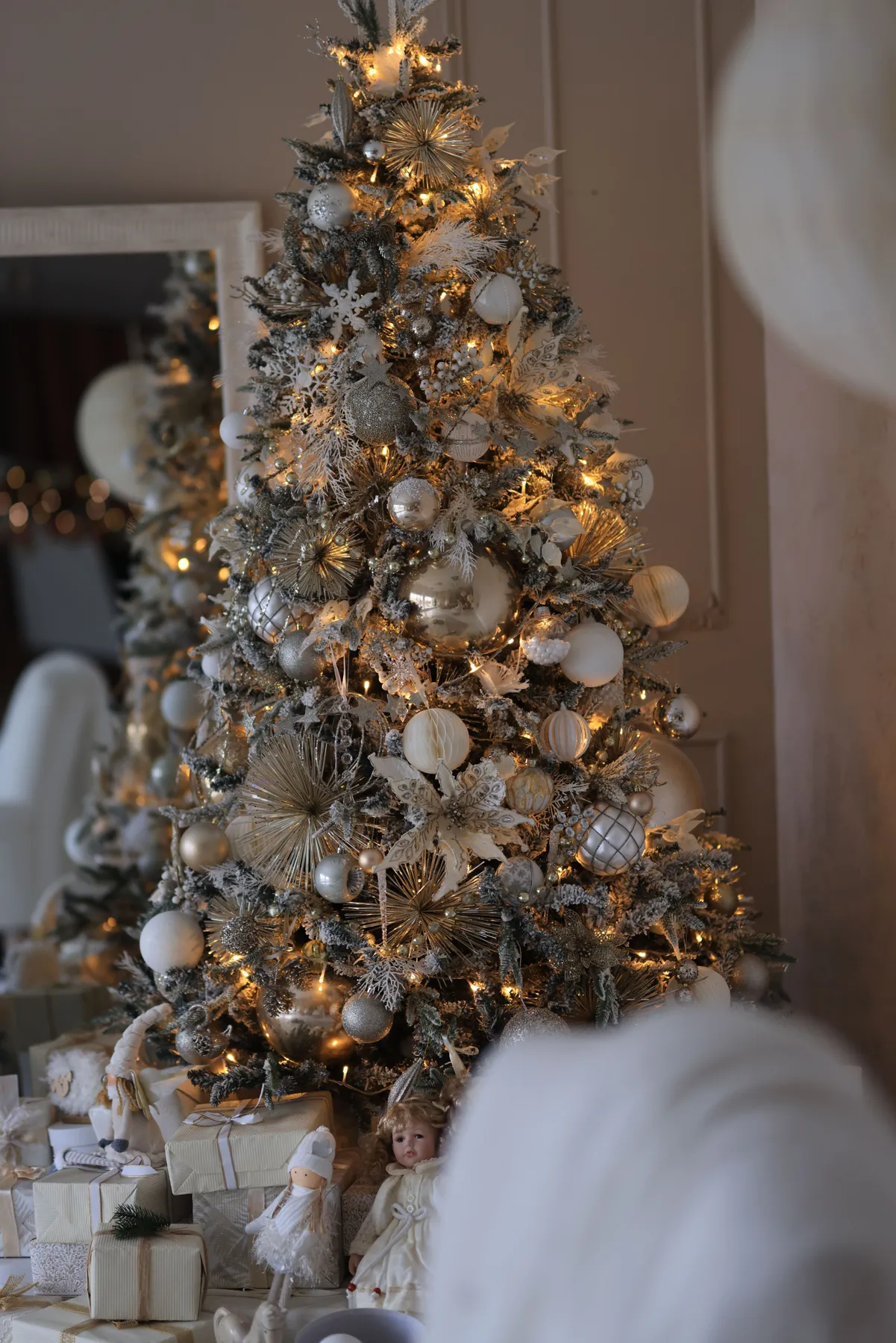
Here’s the thing nobody tells you about softly lit trees: the lights should go on in three passes. Run one strand deep against the trunk for glow, a second mid-branch for sparkle, and a third right at the tips for the halo you see in photos. On a 7-foot tree that’s roughly 700–900 warm white bulbs total, not the 300 that came installed. A $25 plug-in dimmer lets you drop it to candlelight at 9 p.m.
5. Taupe Tree Styled for a Luxurious Living Room
The taupe formula is almost boringly simple: 60% taupe and greige tree base, 25% warm metallic (champagne gold, brushed brass), 10% soft white texture, 5% dark anchor. That dark anchor matters — a single deep bronze or charcoal ornament set low and near the trunk gives the eye somewhere to land. Swap the champagne for rose gold and the mood turns romantic; swap it for antique silver and it goes cool and architectural. Same tree, three completely different rooms.
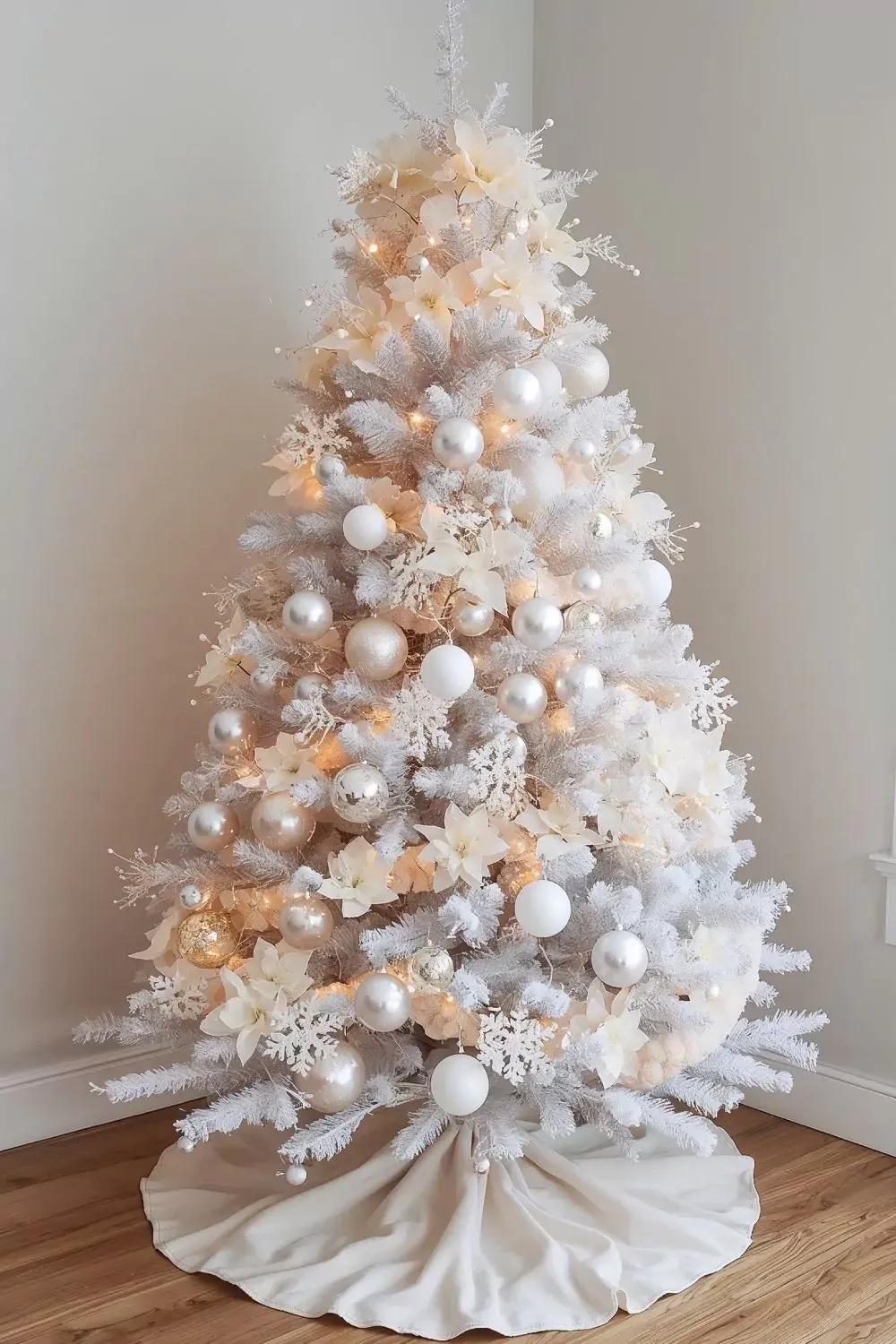
Luxury taupe looks run $400–$900 in ornaments alone, because you’re paying for hand-finished metallics. You can get 85% of the effect at Walmart or Target with three bags of mixed-finish baubles in champagne, oatmeal and pearl, plus one splurge — a wide faux-silk ribbon in taupe, around $18 at Michaels. Stick to two finishes at the front of the tree where people actually look. See Idea #5 for the coastal version of this same palette.
6. Taupe Coastal Tree With Breezy Beach Energy
Coastal neutrals were the sleeper trend of the last few holiday seasons and they’re still growing — saves for taupe and driftwood palettes climbed again this year as people moved away from red-and-green entirely. What gives it staying power is that it isn’t really a Christmas palette at all. Take the tree down, keep the taupe throws and jute accents, and nothing looks dated in January. That’s exactly why it keeps turning up in homes that get photographed.
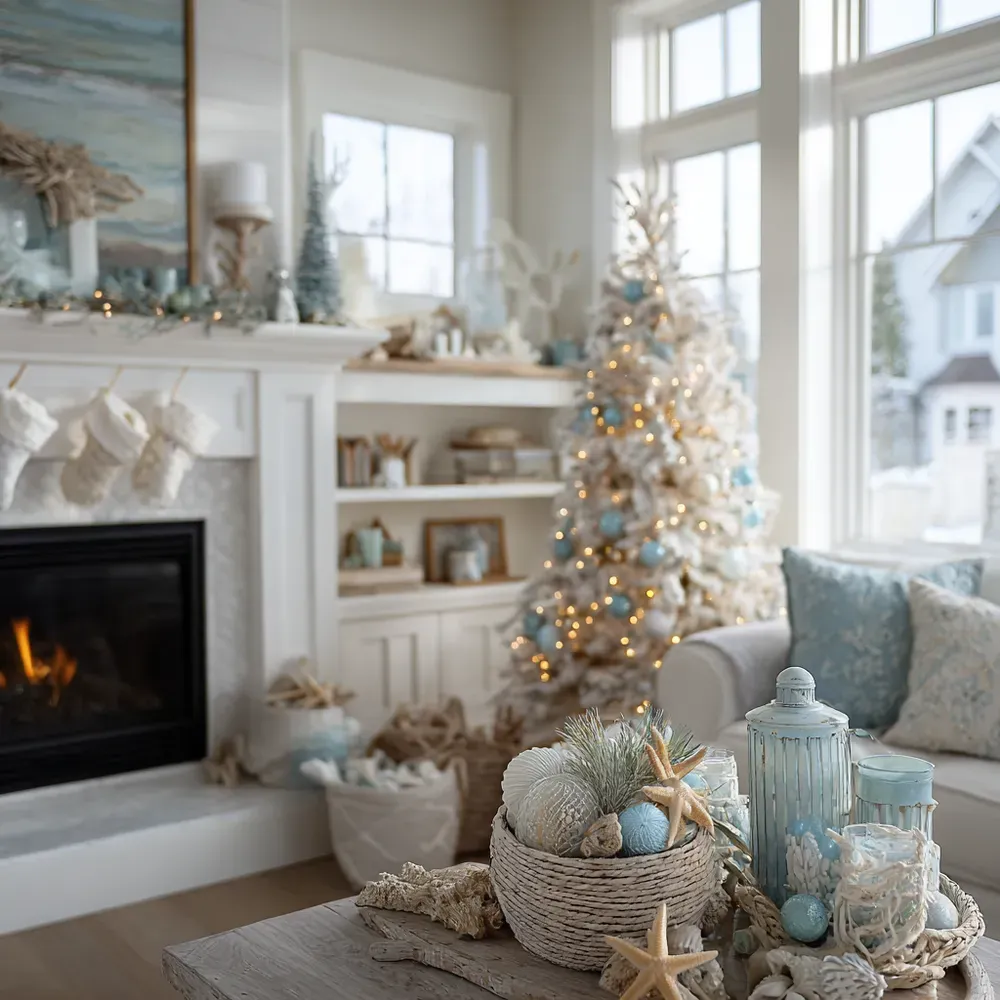
Beach-leaning taupe needs air, which means it works best in rooms with 10-foot ceilings and a wall of windows — a washed-out palette needs daylight to read as intentional rather than just faded. In a low-ceiling apartment, the same ornaments on a taller tree feel cramped. Go 6 to 7 feet maximum under 9-foot ceilings, and keep the base genuinely simple: a basket, a linen skirt, or nothing at all.
7. A Tiered Trio of Flocked Trees in Champagne
The second and third trees. Two smaller flocked and lit trees sit behind the main one, staggered on different heights, and that’s what turns a nice tree into a scene. You get real depth, a natural glow behind the front branches, and a display that photographs with dimension instead of flatness. Remove the smaller trees and the setup collapses back into a good-but-ordinary corner. Everything else — the champagne ornaments, the beige ribbon — is supporting cast.
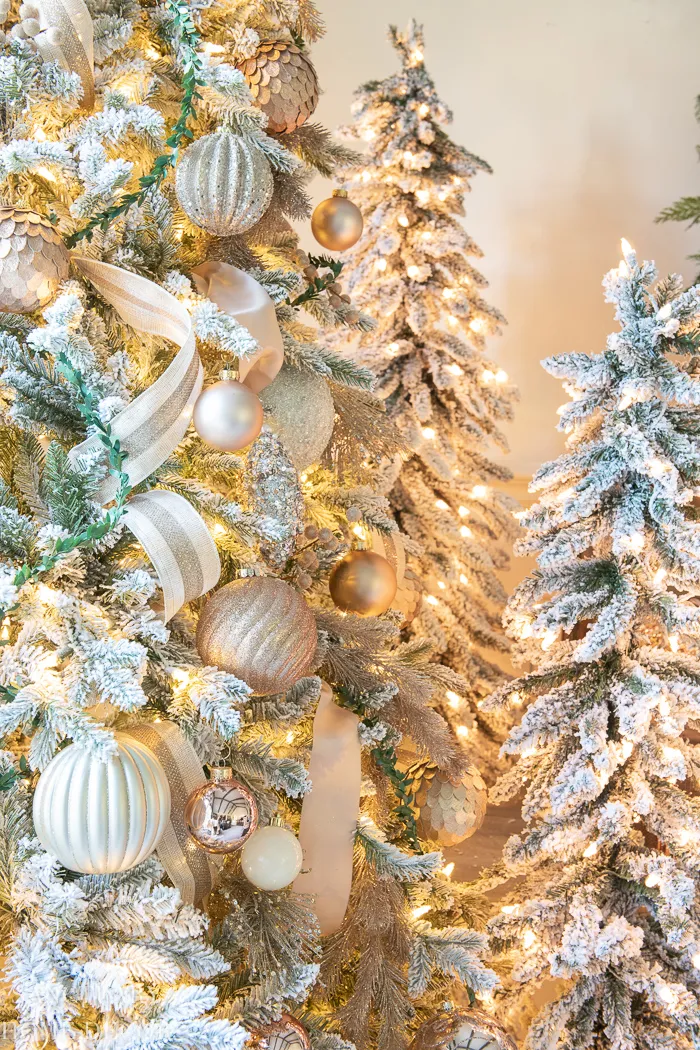
Build the tiered trio:
- Place the largest tree first, offset from center by about a foot.
- Set the mid-size tree behind it at a 45-degree angle, lifting it 8–10 inches on a crate.
- Tuck the smallest tree at the far side, visible mainly in silhouette.
- Use identical warm white lights on all three so they read as one light source.
- Keep ornaments dense on the front tree, sparse on the back two. Budget 2 hours; three flocked trees run $150–$500.
8. Rustic Glam Green Tree With Bronze and Gold
On a green tree loaded with gold and bronze ornaments, the lights should be visible before the decorations are. String warm white bulbs so they sit slightly inside the branches, then place ornaments so every one catches at least a sliver of light. Two other notes: the rustic wooden crate under this tree beats a fabric skirt every time in a room with leather furniture, and the fur throw on the sofa should echo the tree’s warmest ornament tone, not its coolest.
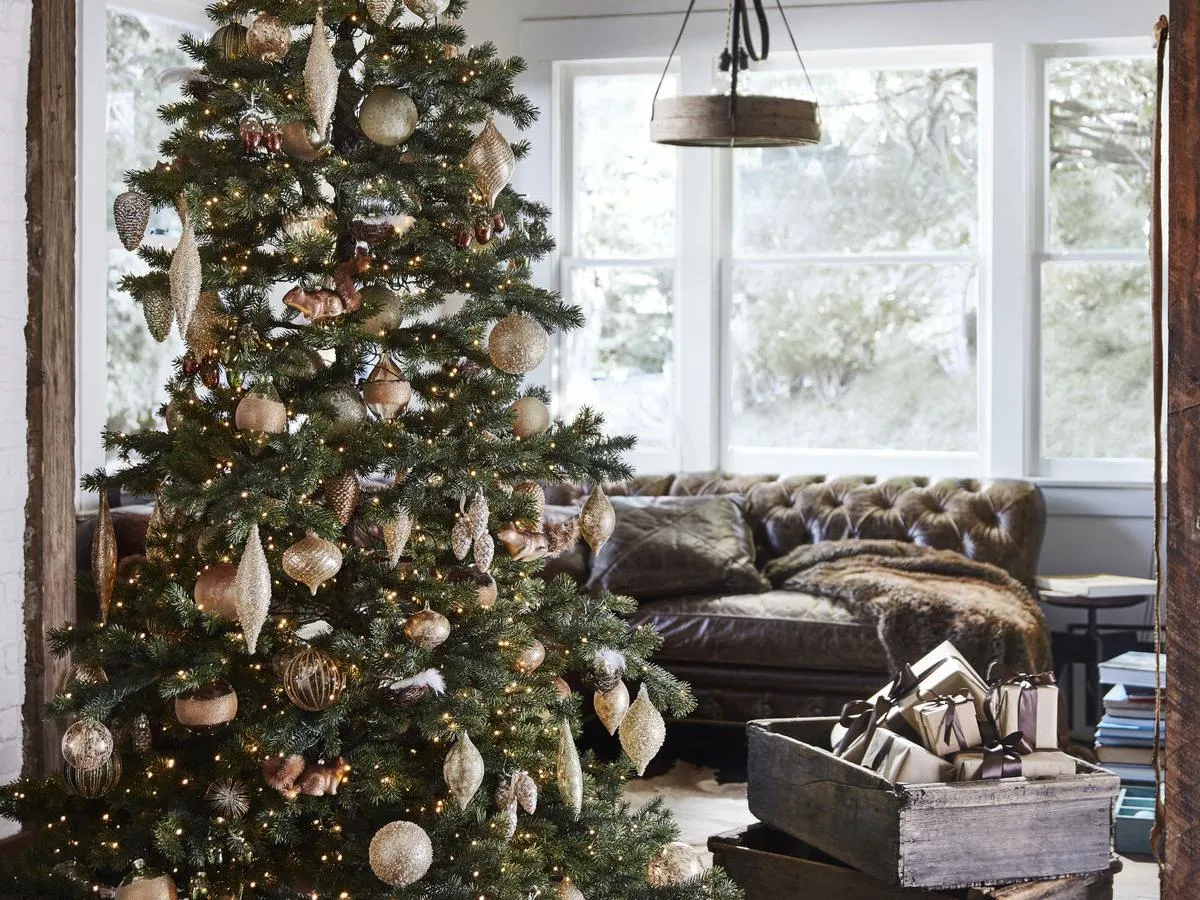
Glittered ornaments shed. On a tree this densely decorated, expect a fine layer of gold dust on the floor by New Year’s — a lint roller every couple of weeks handles it. Fur throws need shaking out weekly and dry cleaning once a season. Bronze and antique-gold finishes are the most durable metallics you can buy; polished silver tarnishes and needs a soft-cloth wipe each year before storage. Store everything in tissue, never plastic bags.
9. Flocked Tree With Paper Honeycomb and a Felt Deer
What this look costs:
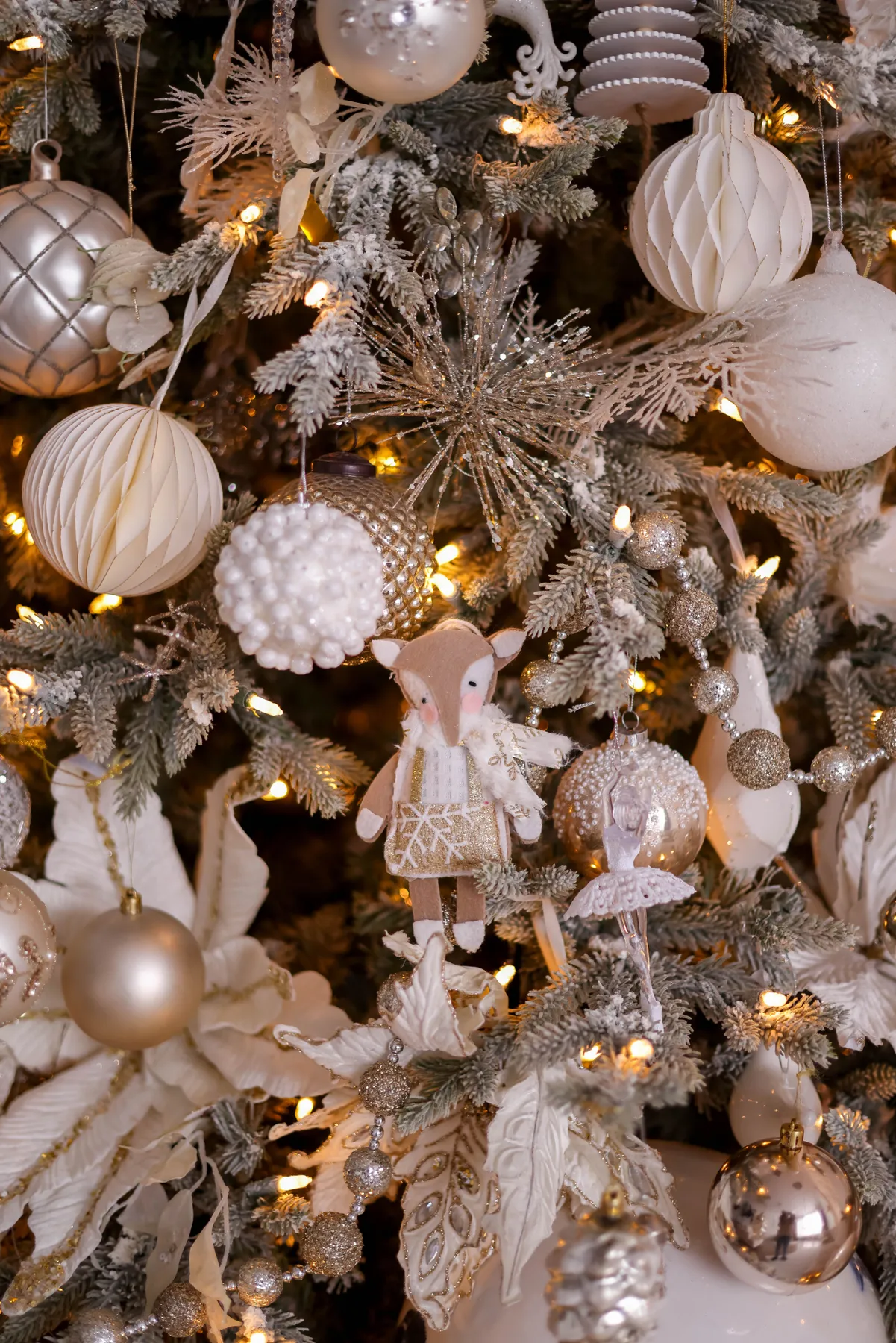
- Flocked tree (6.5–7.5 ft): $120–$450
- Paper honeycomb ornaments (set of 12): $18–$45
- Champagne gold ornaments, mixed sizes: $60–$180
- Felt and fabric figures: $25–$80
- Large white floral accents: $20–$60
- Total: $243–$815
The honeycombs are the value play here — they’re cardboard, they look like sculpture, and they cost a fraction of glass. Buy them in November, before the good shapes sell out.
It’s the mix of textures, not the colors. Cream, champagne and silver are easy; what makes this tree memorable is that nothing is made of the same material. Paper honeycombs sit beside glittered glass, which sits beside a felt deer doll and oversized white blooms. Remove the paper and felt pieces and you’re left with a very standard metallic tree.
10. Mercury Glass Finials on Beige Scripted Ribbon
A single mercury glass finial tells you more about a tree than a whole garland does. These are lightweight, hand-blown and slightly imperfect — which is exactly why they read as vintage rather than new. Choose finials in three heights so they stair-step down the branches, and hang them on twine rather than wire hooks; the fiber texture is what sells the aged look. One finial in this style runs $8–$22, and six of them will carry an entire tree.
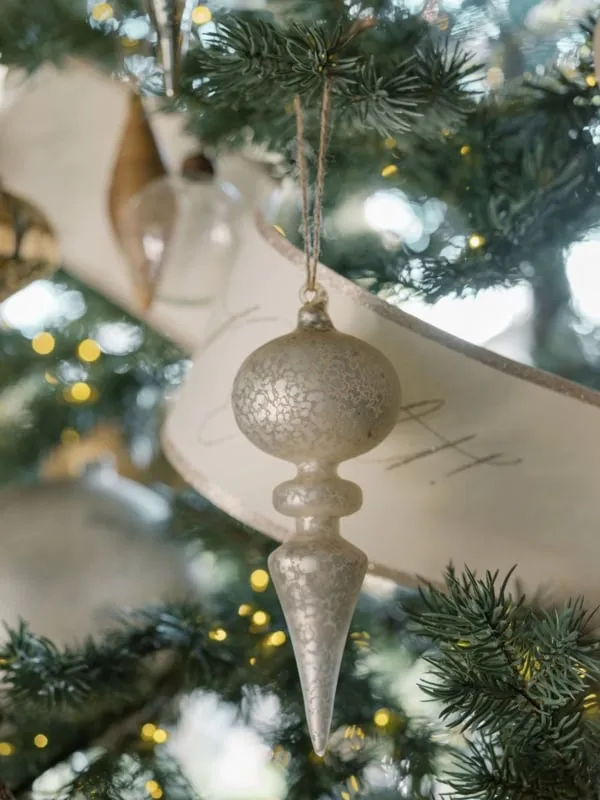
Hang ribbon like a stylist:
- Choose wired ribbon at least 2.5 inches wide — the faintly scripted off-white here is the whole point.
- Cut 8-inch strips and fold each into a soft loop, pinching the base.
- Wire the pinch and tuck it deep so only the loop shows.
- Place loops behind ornaments, not in front, so ribbon becomes background texture.
- Vary loop direction as you go. Twenty minutes, about $12 in ribbon.
11. Rustic Beige Tree Dressed in Natural Ornaments
Rustic trees look effortless and never are. Three principles are doing the work here: repetition (the same natural material — pinecones, wood slices, dried orange — appearing at least eight times), asymmetry (clusters of three ornaments rather than evenly spaced singles), and a muted base palette so the natural textures carry the conversation. The beige and brown tones land somewhere between woodland and farmhouse, which is why this tree works in a modern room and a cabin alike.
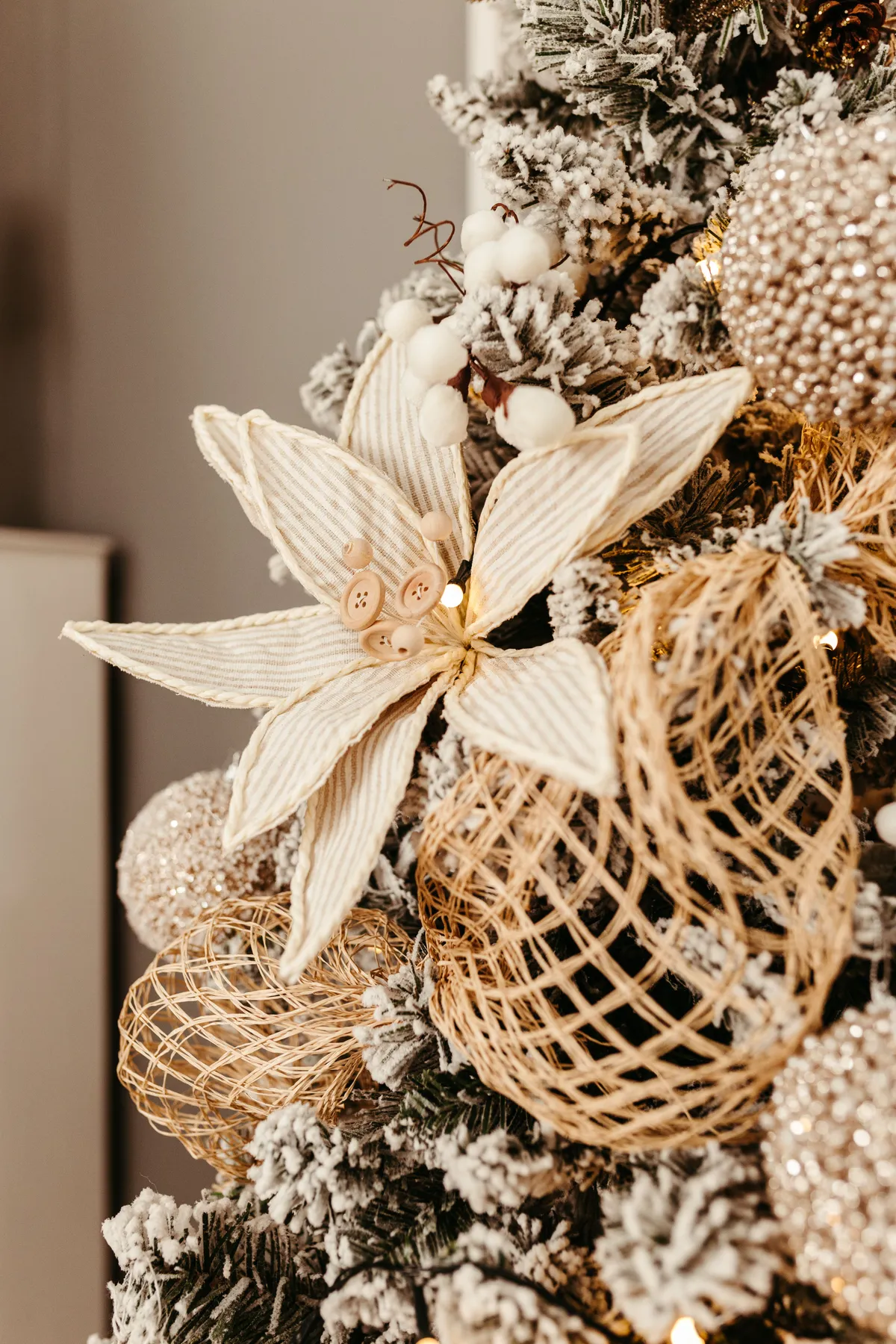
Natural ornaments are the cheapest category in holiday decorating if you’re willing to spend an afternoon. Dried orange slices cost about $6 in fruit, cinnamon sticks a few dollars, and pinecones are free if there’s a park nearby. Facebook Marketplace and thrift stores are full of wooden bead garlands and burlap ribbon in late November, usually under $10. A full natural-ornament tree runs $40–$80, most of which you’ll reuse for years.
12. Silver Glitter Stars and Wire Swirls on Deep Green
Deep green plus silver plus white is the crispest formula in Christmas decorating, and it breaks down cleanly: 55% green (the tree itself), 30% silver in mixed finishes, 10% white ribbon, 5% sparkle. That white glitter ribbon is the connector — it repeats the silver’s brightness in a matte form, which keeps the tree from looking like a jewelry display case. Trade the silver for antique brass and it warms up instantly; trade white for ivory and it softens.
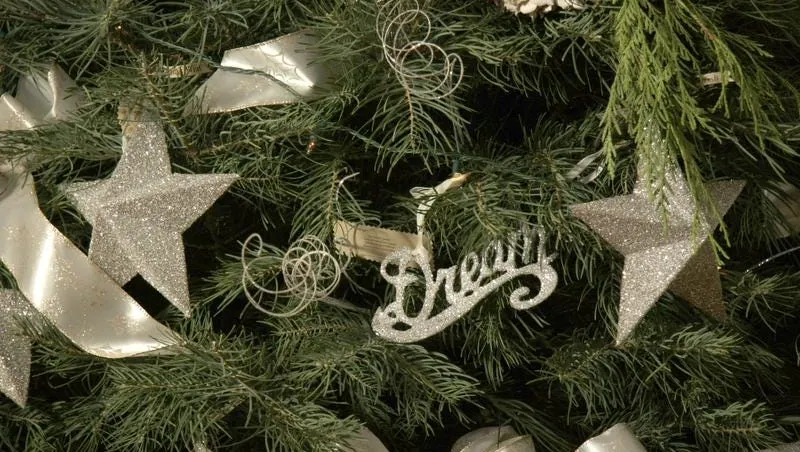
Glittery ornaments need contrast to be seen. On a deep green tree, place a matte white or matte silver piece next to every two glittered ones — the eye needs a resting place or the whole tree becomes noise. Wire swirl ornaments are also worth the fuss: bend them so they arc outward from the branch instead of hanging straight down. That one adjustment makes a $4 ornament look custom, and it takes seconds.
13. A Neutral Toned Tree That Reads Calm, Not Boring
Neutral trees go flat fast when everything is the same value. If your ornaments, ribbon and tree all sit in that light-beige range, the result reads as one beige blur from across the room. You need at least one element that’s noticeably darker or lighter — a black wire star, dark wood beads, a deep green accent — placed low and to one side. Test it from the doorway, not from two feet away, because that’s where you’ll actually see it.
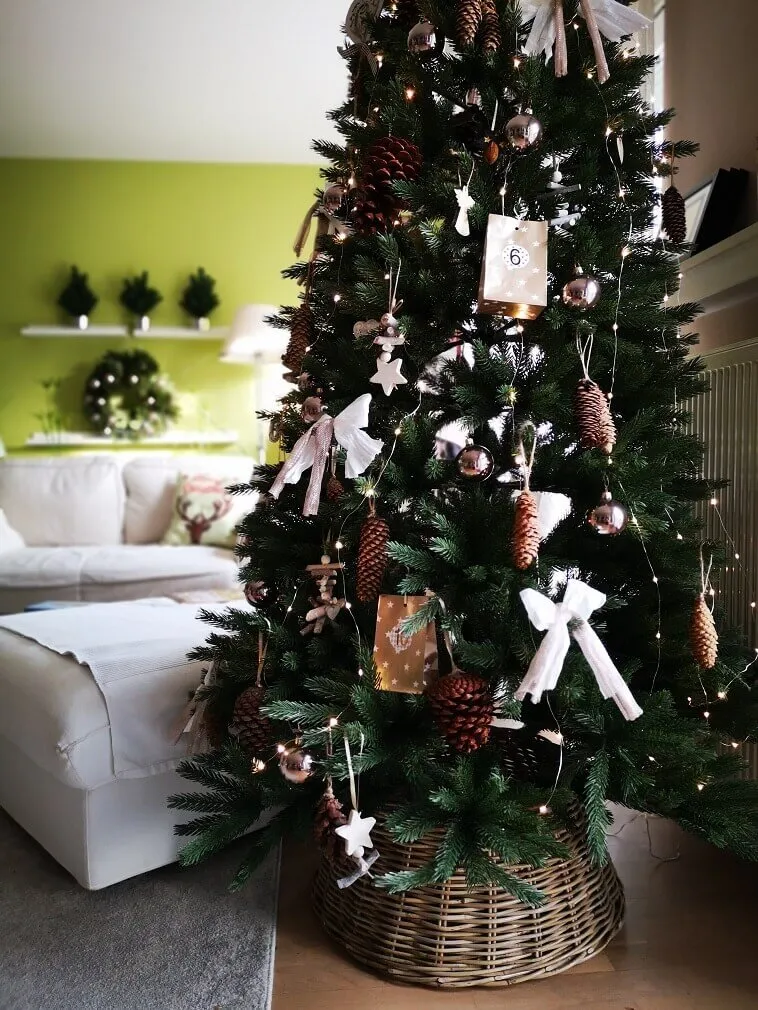
This palette is scale-sensitive. In rooms over 300 square feet, a neutral tree needs to be at least 7.5 feet tall and fairly wide, or it disappears against the wall. In apartments under 700 square feet total, go 5 to 6.5 feet and position the tree so it’s seen against a darker wall or a doorway — never against a white one. The olive-and-oatmeal approach in Idea #21 solves that problem a different way.
14. Velvet Beige, Cream, and Green Ornaments in a Box
Velvet ornaments are the single best value in this entire aesthetic. A box of mixed beige, off-white and dark green velvet spheres runs $16–$35 for a dozen, and the matte fabric finish makes a tree look twice as expensive as the price tag suggests. Skip glass entirely — velvet absorbs light instead of reflecting it, which is exactly why neutral trees styled this way feel calm rather than flashy. Buy two boxes and you’re done.
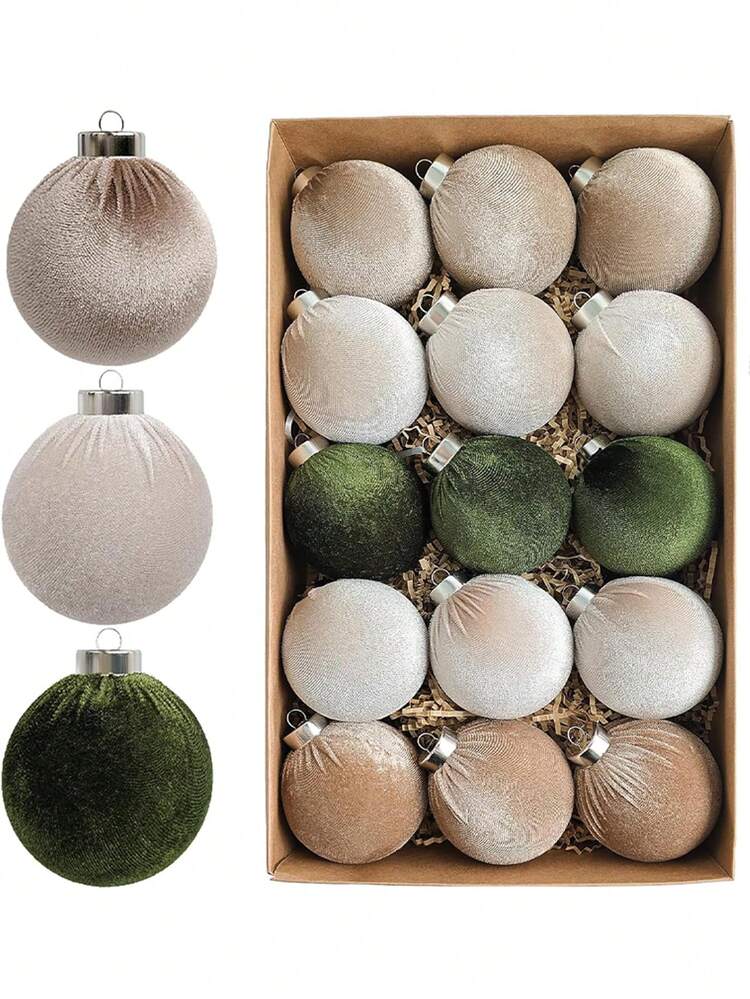
Before you order velvet baubles:
- Check the hanging caps — silver-toned works with beige, gold-toned fights it.
- Confirm the count per box. Most sets are 12; a 7-foot tree needs 60–80 ornaments minimum.
- Decide your third color now: dark green, bronze or blush. Adding it later rarely matches.
- Store velvet in the box it came in, with the shredded paper — velvet crushes and shows creases.
15. Flocked and Green Pre-Lit Trees on a Paneled Wall
Mixing one large flocked tree with several smaller green pre-lit ones works in almost any footprint because the small trees stack vertically, not horizontally. It’s ideal for a 12×14 living room with a beige paneled wall you don’t want to bury — the flocked tree anchors the corner while the potted trees handle the foreground. Keep the smallest ones under 3 feet; anything taller starts competing. A patterned beige rug underneath visually ties the group together.
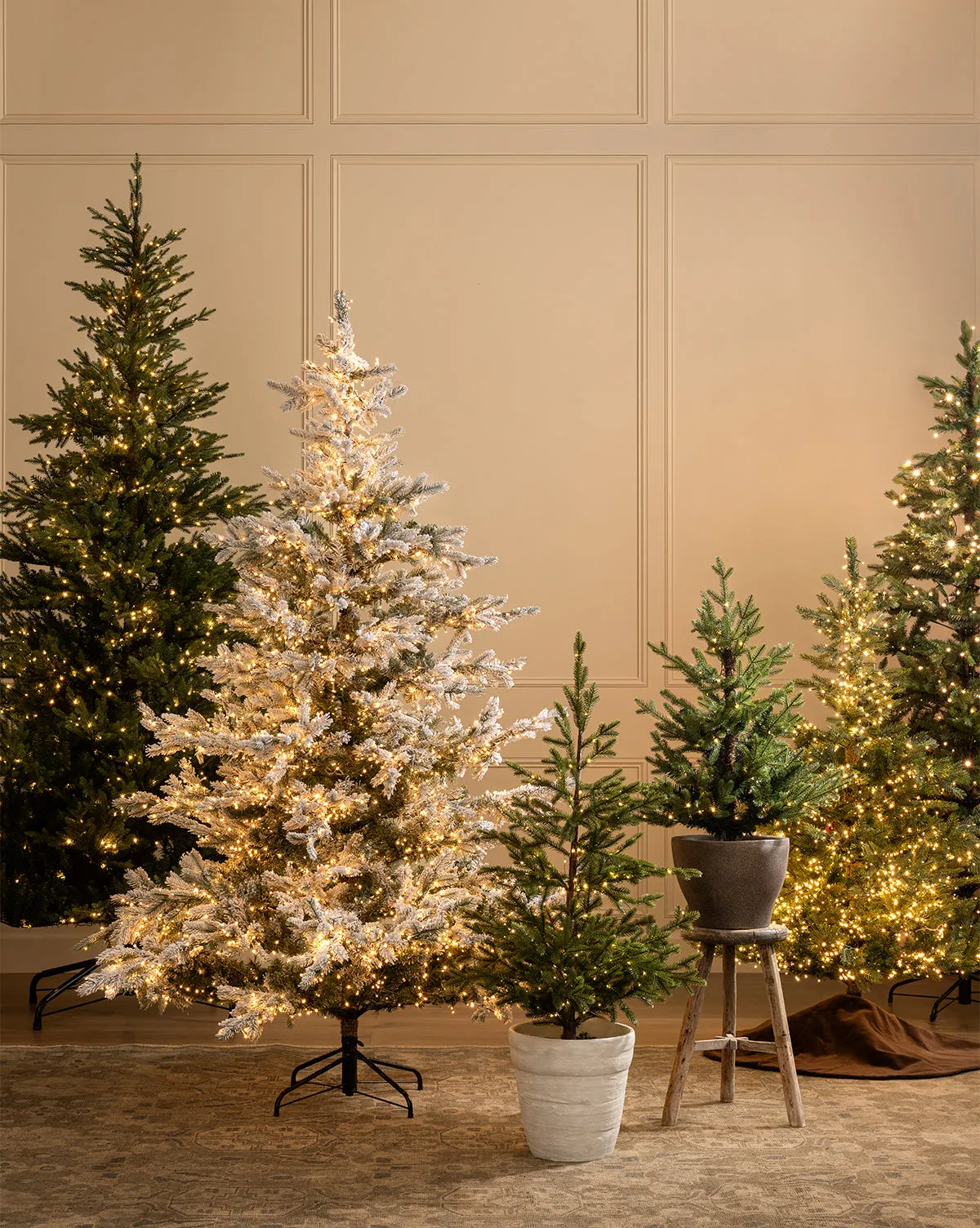
It’s the beige paneled wall. Sounds strange, but a cluster of green and white trees against a warm paneled surface looks curated; the same cluster against a stark white wall looks like a store display. The paneling gives the flocking something to contrast with and makes the whole arrangement feel deliberate rather than accidental. That wall is why this reads as a designed vignette.
16. Beige Sofa, Green Tree, Mustard Pom-Pom Throw
This room runs on a 50/30/20 split: 50% warm neutral from the beige sofa, cream curtains and white cable-knit tree skirt; 30% green from the tree itself; 20% accent — the mustard pom-pom throw, gold and red baubles, a little dark blue. That red keeps the room from being neutral-only, and the mustard throw is what ties sofa to tree. Swap mustard for rust and it goes autumn-warm; swap for charcoal and it goes modern in an instant.
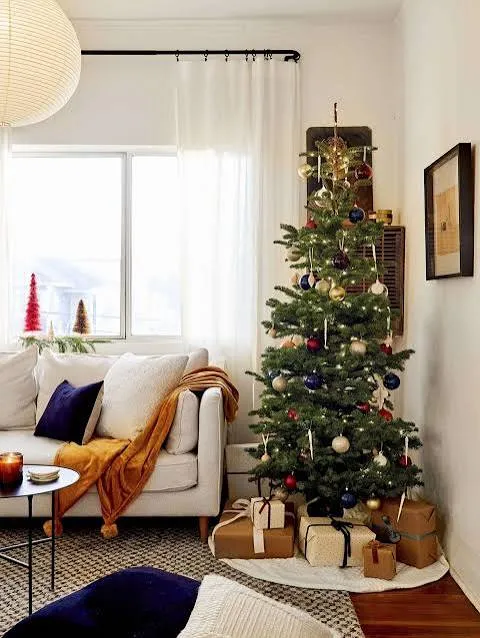
Colourful ornaments on a green tree next to a beige sofa is quietly the most-pinned living room setup of the season. The reason is simple: people already own the beige sofa. Rather than buying a whole new neutral tree, they’re adding a traditional tree into a neutral room and letting the contrast do the work. It’s the budget-friendly answer to the beige tree trend, and it has more staying power because nothing has to be replaced.
17. Three Lighted Ceramic Trees on a Wood Dresser
Ceramic tree trio, costed out:
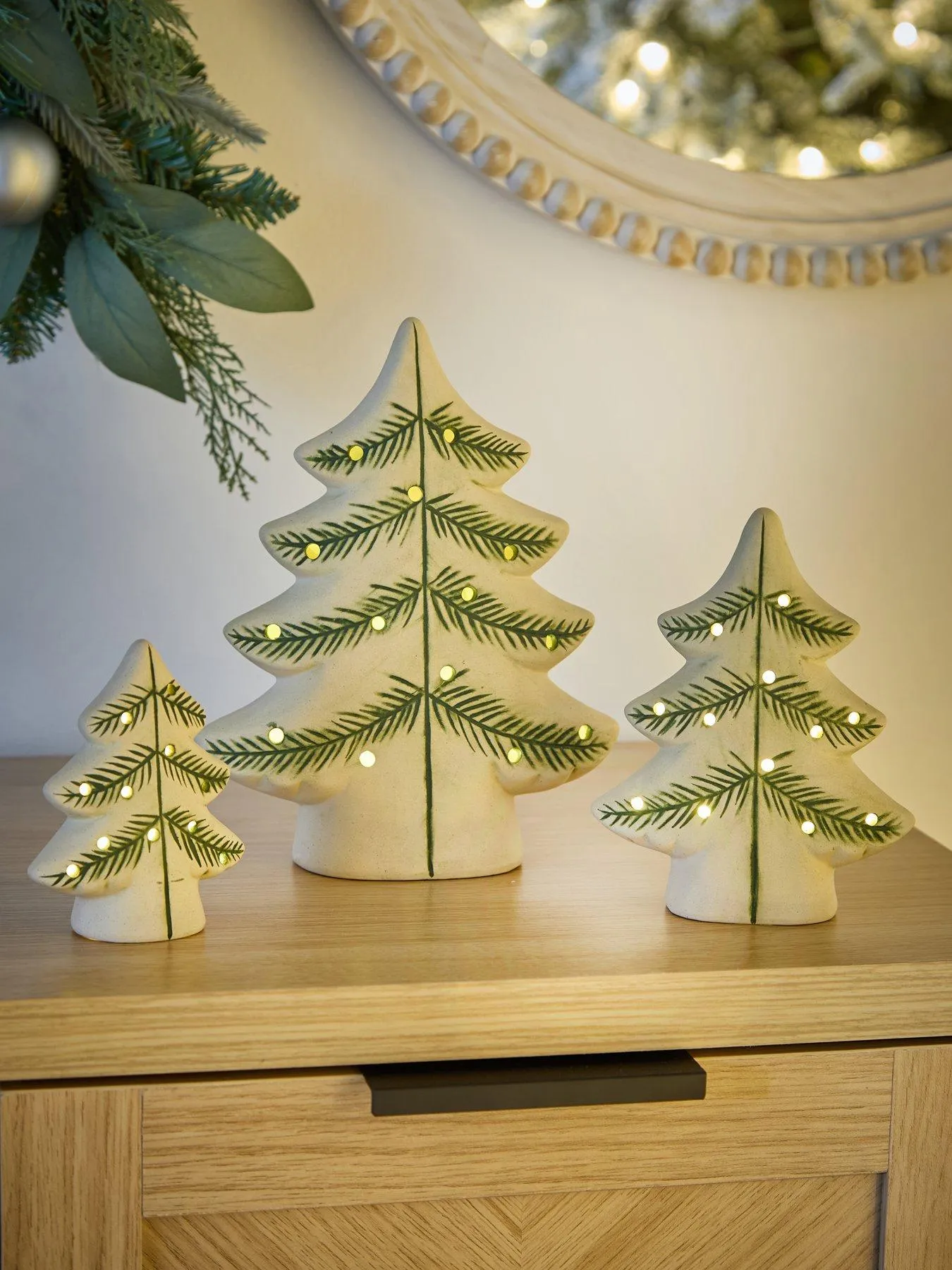
- Three ceramic trees, mixed heights: $45–$180
- Light wood dresser (if needed): $120–$400
- Greenery garland: $20–$50
- Extension cord and warm white bulb swap: $10–$20
- Total: $195–$650
Budget alternative: vintage ceramic trees turn up at thrift stores and estate sales for $8–$25 each, and reproduction versions run $15–$40. Buy two this year, one next year. Compare with Idea #19 for the mantel version.
Ceramic trees are the lowest-maintenance holiday decor you can own — no bulbs to replace on the outside, no branches to fluff, and they wipe clean with a dry cloth. The one failure point is the internal bulb, usually a small incandescent that dies after a few seasons. A $4 replacement or a short strand of battery LEDs behind the tree brings it back. Store them wrapped; chips at the base are the most common damage.
18. The Champagne Tree That Peeks Into the Kitchen
A champagne tree in a kitchen sounds charming until you think about grease. Anything within a few feet of a stovetop collects a fine film, and flocking holds onto it. If your kitchen tree sits on a counter near cooking, keep it small, skip the flocking, and place it at least 4 feet from the range. Also check your outlets — a lit tree on a counter usually means an extension cord across a workspace, which is a genuine trip hazard with hot pans around.
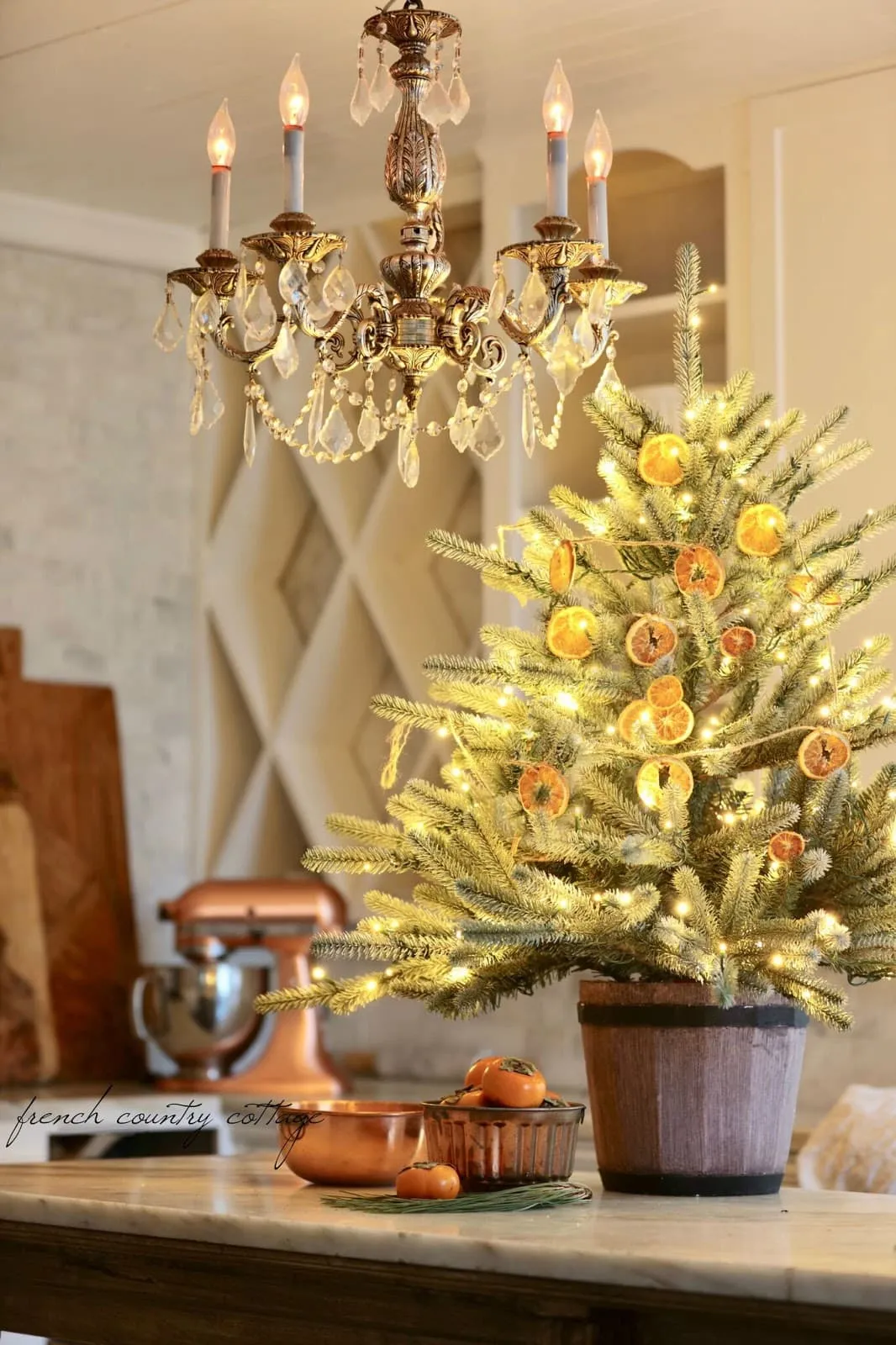
Kitchen trees read best when they’re styled like a vignette, not a mini version of the living room tree. That means one focal ornament size, no ribbon trailing onto the counter, and a base that can take a wipe-down — ceramic, metal or glass, never fabric. Warm white lights only; cool white under kitchen task lighting looks clinical. A 3-foot tree with about 100 warm bulbs is the sweet spot.
19. A Mini Live Tree With a Burlap Bow on the Mantel
Style a small live tree for a mantel:
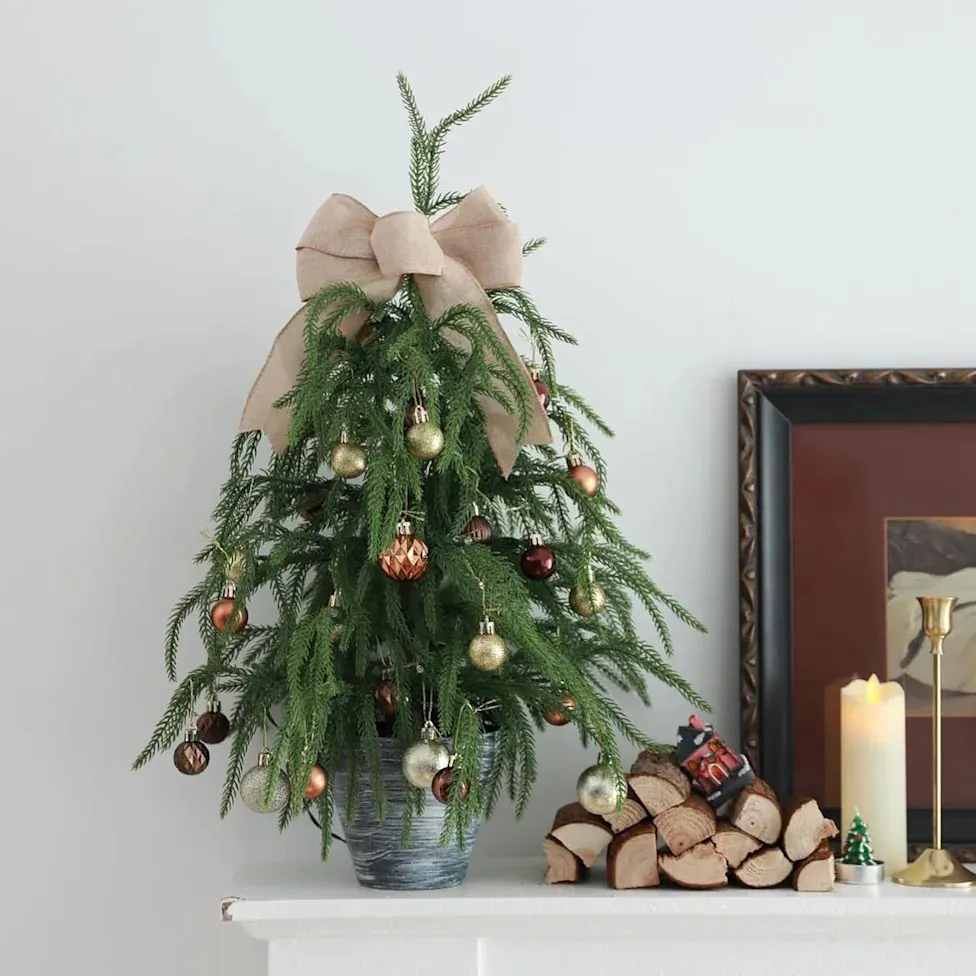
- Choose a potted evergreen under 24 inches — it has to clear the shelf and any art above it.
- Set it in a distressed container slightly smaller than the pot for a snug, intentional look.
- Tie one oversized beige burlap bow at the top third, not at the apex.
- Add 10–14 small metallic ornaments, keeping the bottom third bare so the pot reads.
- Group it with stacked logs and a single candlestick. About 30 minutes; tree and bow, $30–$70.
The burlap bow. Everything else on this mantel is small — tiny ornaments in gold, copper, silver and burgundy, a slim candle, a modest stack of logs — and one oversized bow in beige burlap keeps the arrangement from looking fussy. It’s the only element with real volume. Without it you have a nice small tree; with it, you have a styled mantel.
20. Vintage Beige Santa Charm on a Green Tree
Vintage-style ornaments with tinsel and velvet finishes collect dust in the crevices and can’t be rinsed. A soft makeup brush works far better than a cloth — get into the folds, don’t press. If a piece has real silver tinsel, keep it out of humid rooms; it discolors. Store these in a divided box with acid-free tissue rather than stacked in a bag, and they’ll last decades. Replace the original hanger strings while you’re at it.
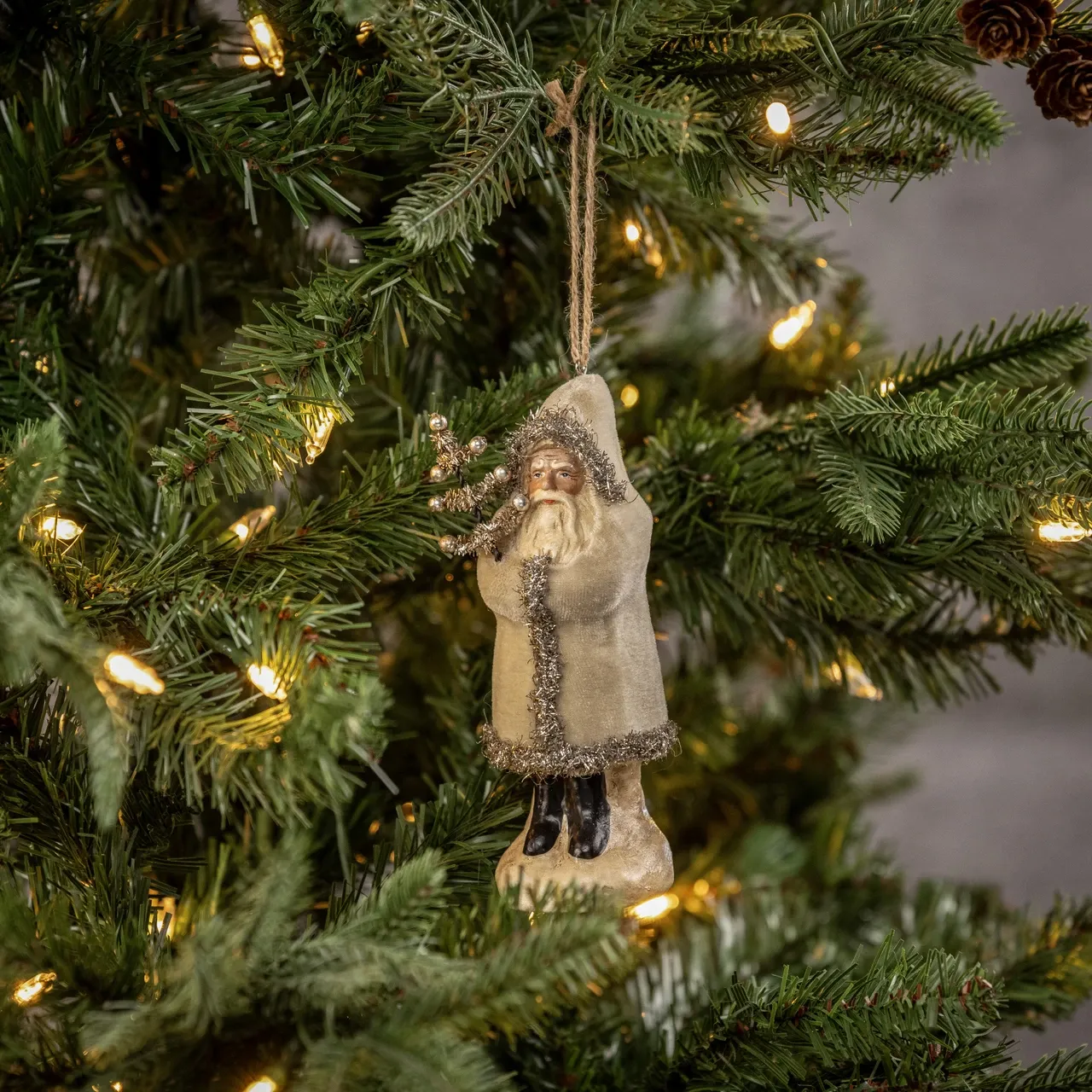
Old-fashioned ornaments work on modern trees because of proportion. A hand-painted Santa in beige and cream is roughly three times the size of a standard bauble, and it’s the only matte, non-reflective piece on the branch. That contrast — big against small, matte against shiny — is what makes your eye stop. Pair it with natural pinecones for texture and warm white lights for glow. Nostalgia, without going full vintage.
21. Oatmeal Tree for a Homestead Holiday
Check these before you commit to an oatmeal tree:
- Your wall color under your actual evening lighting. Beige trees shift yellow under warm bulbs.
- Ceiling height minus tree height minus topper — you want at least 4 inches of clearance.
- Whether you have kids or pets. Felt and fabric ornaments survive; glass and flocking don’t.
- Storage space. A 7.5-foot tree needs a box that fits a closet or garage corner.
- Your ornament budget ceiling. Oatmeal palettes need volume, not one statement piece.
Homestead oatmeal runs on a softer ratio than most neutral trees: 65% oatmeal and linen tones, 20% natural wood and twine, 10% dried greenery, 5% black. That last 5% is what stops it from looking unfinished — a black metal star, dark wire hangers, a dark basket edge. Change the greenery to eucalyptus for a cleaner look, or dried citrus for something warmer.
22. Three Champagne Glitter Bows, One Big Statement
You can absolutely buy this look in pieces. Three glitter bows at $12–$20 each from a discount retailer, a plain champagne ribbon spool at $8, and a bag of mixed gold baubles at $15 gets you most of the way there. The trick is placement, not price: cluster the bows at three heights down the front-right side of the tree, where they’ll actually be seen from the sofa. Repeat the same finish three times and it reads as a coordinated set.
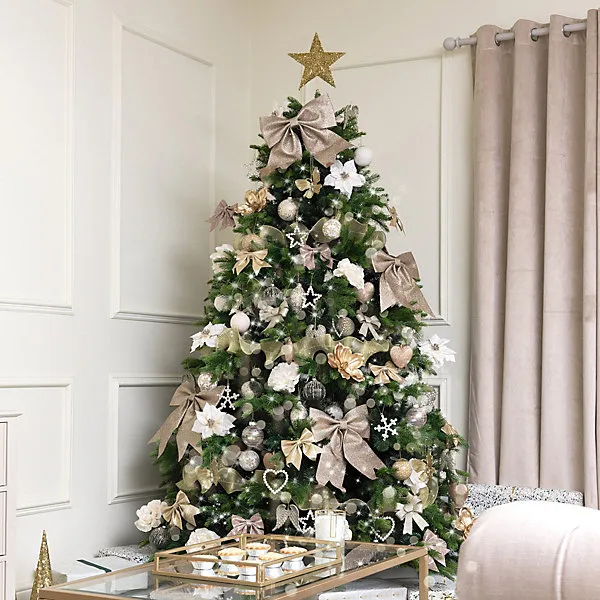
Satin-backed glitter ribbon is the one upgrade worth paying for over craft-store versions. Cheap glitter ribbon sheds onto branches and turns a beige tree dusty within a week; heavier backed ribbon holds its shape in cold rooms and doesn’t curl. Look for 2.5-inch width and cut it into 10-inch strips. One 10-yard spool, roughly $14, makes nine bows with ribbon left over for a wreath.
23. Champagne Tree, Warts and All: The Real Pros and Cons
Champagne sounds universally flattering, and it mostly is — but it can read as grey next to cool-toned walls, and gold-adjacent metallics clash if you mix finishes carelessly. Two finishes maximum on one tree. Also worth knowing: flocked champagne trees are heavy. A 7.5-foot flocked tree can weigh 60 pounds before a single ornament, which matters if you’re hauling it up from a basement every December. Store it where you’ll assemble it.
Champagne tree, real numbers:
- Flocked 7.5 ft pre-lit tree: $200–$650
- Champagne and gold ornaments (60–80 pcs): $90–$280
- Ribbon and bows: $25–$70
- Tree collar or basket: $35–$110
- Tree skirt or rug: $30–$120
- Total: $380–$1,230
Half that budget goes to the tree itself. If you already own a green tree, add champagne ornaments and a champagne skirt instead — see Idea #14.
24. An Ivory Tree Next to a Camel Corduroy Sectional
Putting an ivory tree beside a camel corduroy sectional requires space — this arrangement wants at least 250 square feet of living room, with 10 feet between sofa and tree so both read as separate objects. In a smaller room the two beiges merge and the tree disappears. If you’re working with under 200 square feet, pick one: either the camel sofa or the ivory tree, and let the other go darker. Ceiling height matters far less than floor space here.
It works because the two beiges are different values, not different colors. Camel corduroy is a mid-tone with visible texture; ivory tree decor is lighter and almost entirely matte. Side by side, the corduroy reads as the anchor and the tree as the light. Add one cool element — a grey throw, a black frame — and the corner sharpens. Skip it and the room goes soft and shapeless.
25. Light Brown Branch Details You Almost Miss
Light brown and sandy trees photograph well for one reason: the branch color sits close to the wood of the floor and furniture around it. That continuity lets the ornaments do the talking. On a tree this color, keep metallics in the warm range — bronze, aged gold, copper — because cool silver turns muddy against brown needles. And leave visible gaps between ornaments. On a light brown tree, ornament texture is the visual interest, not density. You want to see branches.
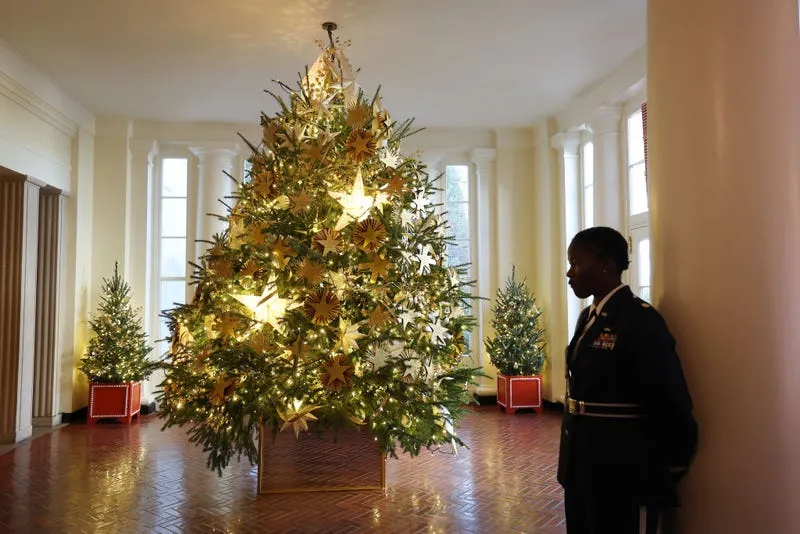
Light brown trees need a darker base to look grounded. Put one on a cream skirt and the whole thing floats. Use a woven basket, a wooden crate, or a dark metal collar instead — anything that reads visually heavier than the tree itself. Then add a small cluster of brass or bronze ornaments near the floor line to bring weight down. It’s a five-minute fix that changes how the entire corner reads.
26. Cream Tree, Neutral Pastel Palette, Up Close
Pastel-neutral trees are hard to buy as a set and easy to build from odds and ends. Start with cream and blush ornaments from a dollar store at $5–$10 per dozen, then add one premium element — a matte ceramic or hand-painted piece — so it doesn’t look assembled. Baker’s twine instead of ribbon saves about $20 and honestly looks more intentional. Total spend for a 6-foot cream-and-pastel tree: $75–$140, most of it reusable next year.
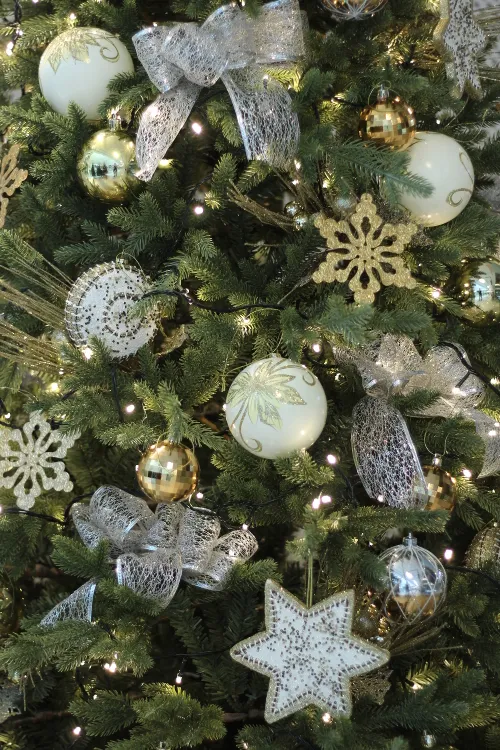
The white space between ornaments. Up close this tree looks sparse, and that’s the design. On a light cream tree, breathing room is exactly what separates a styled look from a cluttered one. Roughly a third of the branches should stay bare, especially at the tips where light catches them. If you can’t see branches, you’ve over-decorated, and the pastel palette will flatten into a blur.
27. A Nostalgic Cream Tree With Old-School Charm
Nostalgic neutral trees are trending because people are decorating for memory rather than for a theme. Old-fashioned shapes, hand-painted figures, wooden beads — the reference point is a grandparent’s tree, just recolored into cream and beige. Saves for nostalgic Christmas styling climbed again this season. This one has real staying power: it doesn’t depend on a color of the year, and it gets better every time you add one piece.
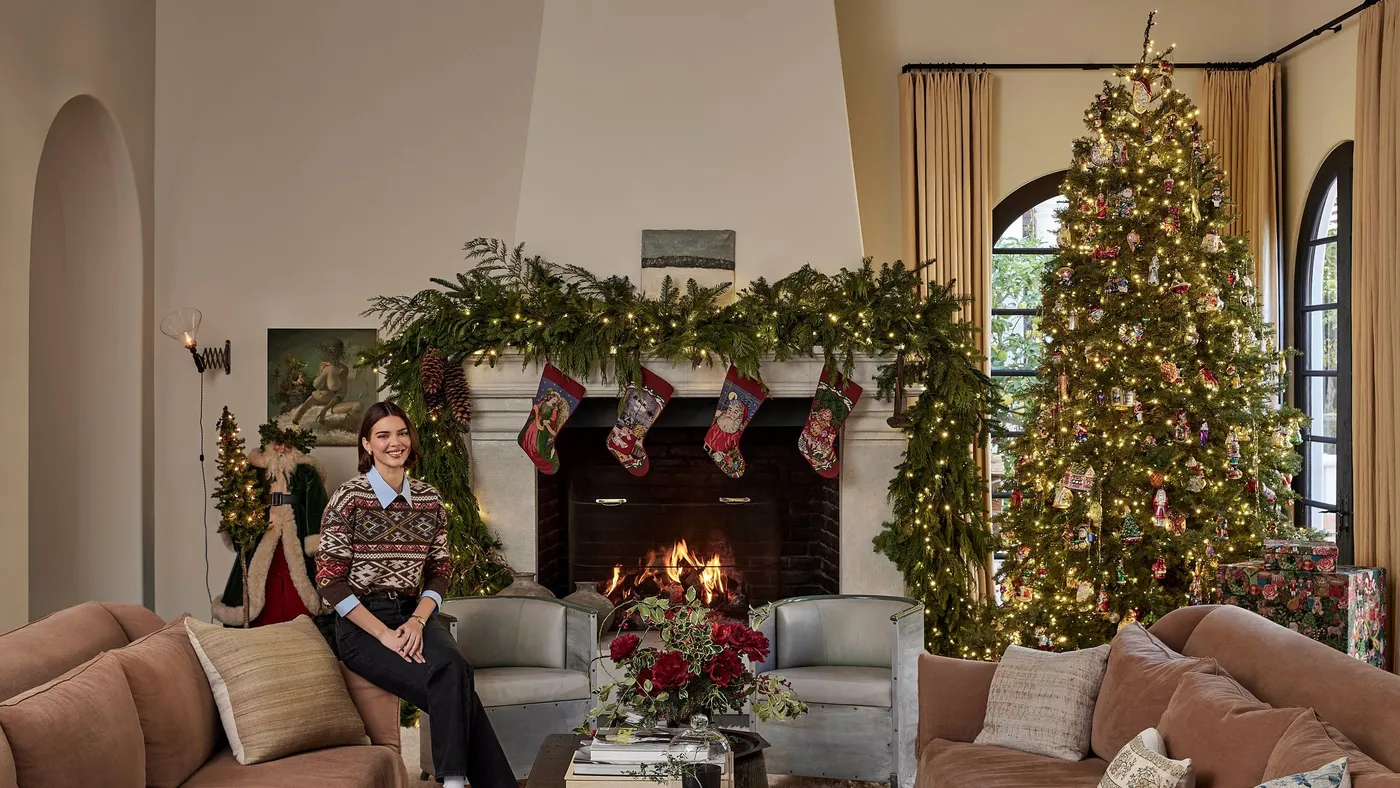
Build a nostalgic cream tree:
- Start with cream and matte white ornaments only — no glitter on the first pass.
- Add three or four vintage-style figures: a Santa, a deer, a snowman.
- Thread wooden bead garland in loops, not spirals — compare with Idea #3 for the flocked version.
- Finish with warm white lights on a dimmer, never color-changing.
- Leave the star off; use a bow or nothing at all. Takes about 90 minutes.
28. Decorating Light Brown Branches in Detail
Before you decorate a light brown tree:
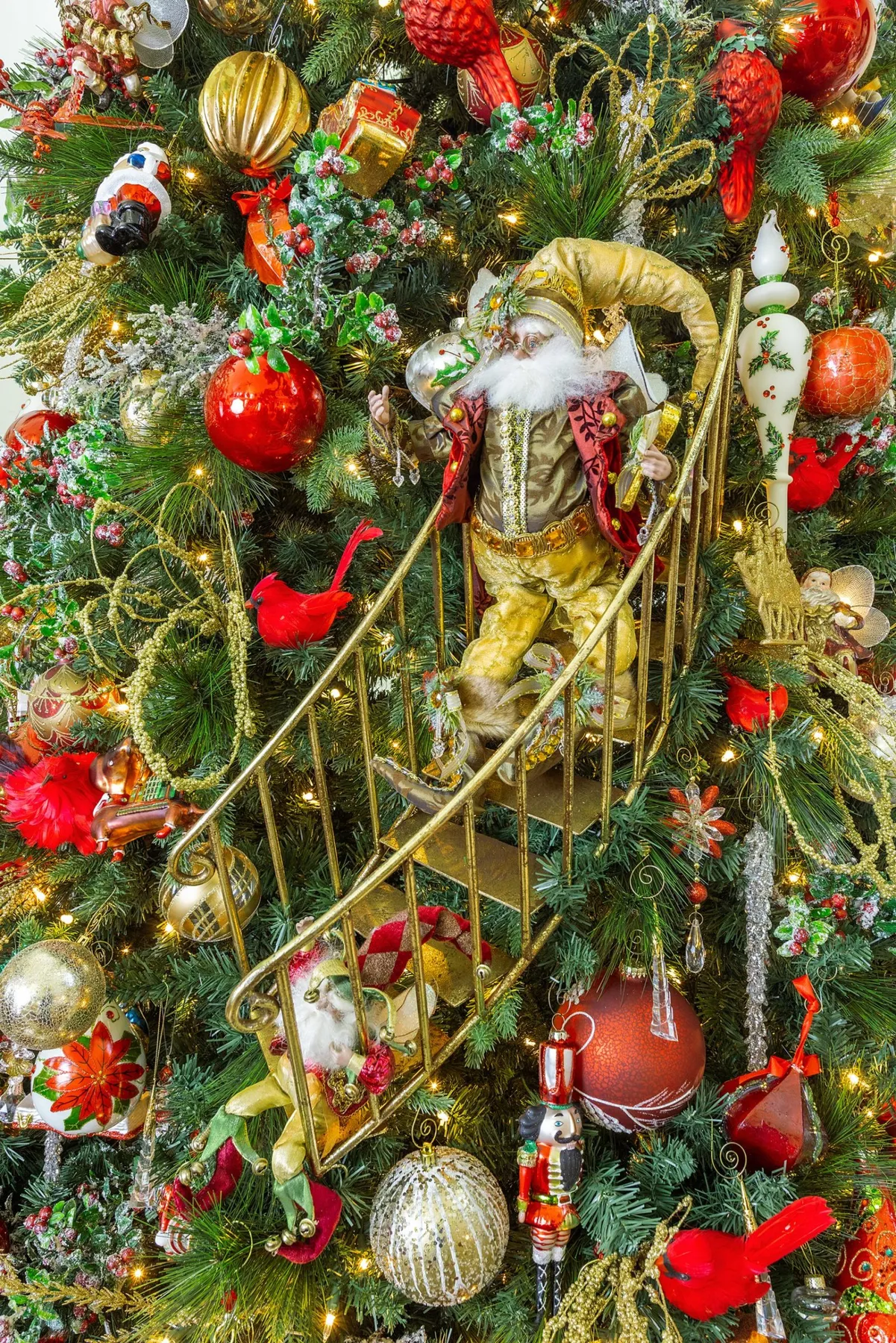
- Photograph your bare tree in the evening with the room lights on. Branch color reads very differently at night.
- Count your ornaments. A 7-foot light brown tree needs 70+ to look finished.
- Confirm your ornament metallics are warm — bronze, gold, copper. Silver reads dull here.
- Decide on one non-metallic texture: wood, felt, linen or dried botanicals.
- Keep a lint roller nearby. Brown needles show dust more than green ones.
Detail is what sells this tree. Instead of buying more ornaments, buy better ones: ribbed glass, textured ceramic, beaded wood. Because the branch color is muted, ornament texture becomes the interest — you’ll actually notice a fluted finish or a matte glaze in a way you wouldn’t on a green tree. Three textures minimum, repeated throughout. Fewer, better pieces always beat more, cheaper ones on this palette.
29. Light Brown Tree for a Lodge-Style Gathering
Lodge-style light brown trees are built for big rooms: 400 square feet or more, vaulted ceilings, and ideally a stone or dark wood element nearby for contrast. In a standard 12×14 living room the same tree feels heavy, because the palette is already earthy — you’re stacking brown on brown. If that’s your space, keep the tree under 7 feet and shift the ornament mix toward bronze and cream rather than copper and rust.
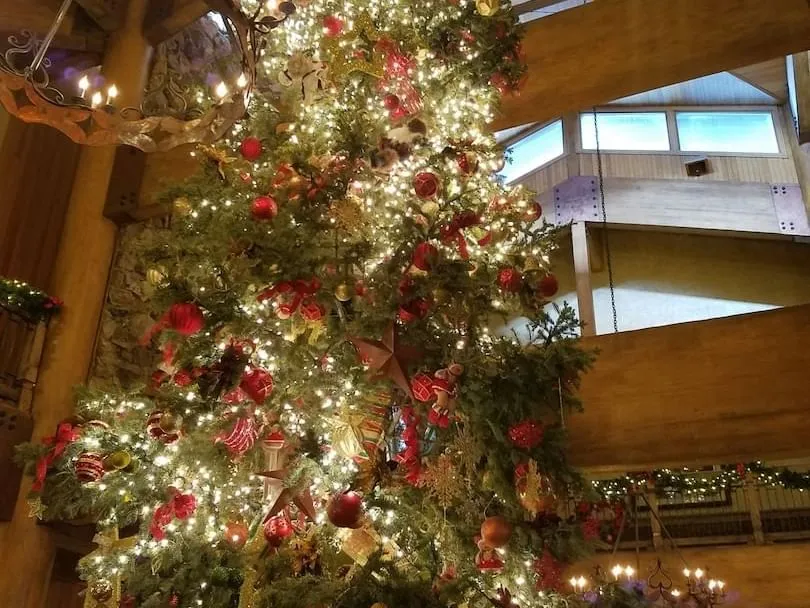
Big gatherings and light brown trees have one practical conflict: people brush against them. Brown needles show crush marks, and faux branches don’t spring back the way fresh ones do. If your tree sits on a main traffic path, either move it against a wall or accept that the lower third will get rearranged. Anchor the base with a heavy collar or crate, and keep gift boxes light — stacked weight pulls branches down permanently.
30. Oatmeal Tree Decorated on a Real Budget
An oatmeal tree on a budget is mostly a discipline problem, not a money problem. Buy 60 ornaments in one finish family from a discount retailer ($30–$50 total), one roll of oatmeal ribbon ($8), and reuse last year’s lights. Skip the topper and use a simple bow. What makes inexpensive neutral trees look expensive is uniformity — same finish, similar size range, repeated evenly across the branches. Chaos costs more than it saves.
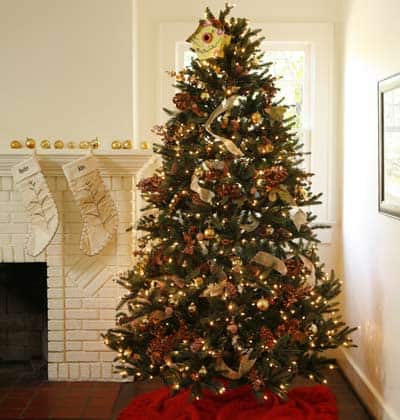
Oatmeal and light neutral ornaments are the most forgiving finishes you can buy. Matte and velvet surfaces hide dust, and pale colors don’t show scratches the way dark glass or painted finishes do. Realistic flocking, on the other hand, sheds for the first two seasons — vacuum the floor around the base, not the tree, and brush loose flocking off with a dry cloth. Expect to replace cheap flocked trees every four or five years.
31. Sandy Branch Angles Plus a Candle-Making Afternoon
Make tree-scent candles while the tree goes up:
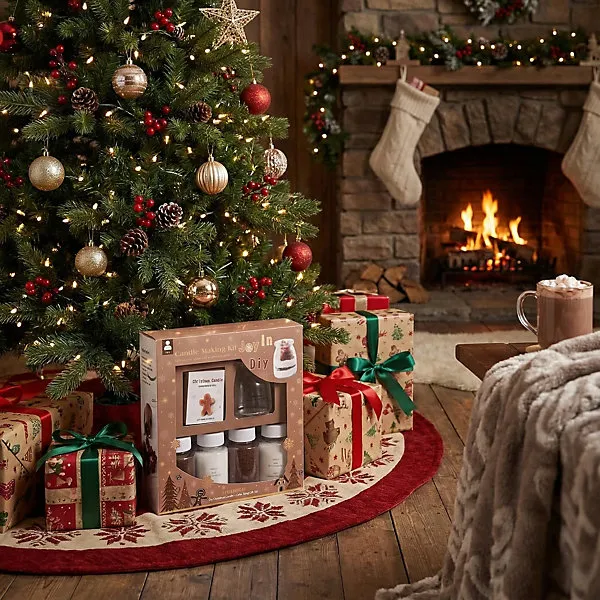
- Melt soy wax in a double boiler — about 1 lb fills four 8-oz jars.
- Add 1 oz fragrance oil at 185°F: fir, cedar, or a warm vanilla-amber.
- Secure wicks to jar centers with a drop of hot wax and let them set.
- Pour at 135°F to avoid sinkholes, then cure 48 hours before burning.
- Label with kraft paper. About 90 minutes; roughly $25 for four candles.
Sandy and wheat-toned trees keep growing because they double as decor after December. That’s the underrated reason this palette has legs into 2026: a sandy tree with pinecones and twine reads as winter-neutral, not strictly Christmas, so you can leave it up into February without anyone blinking. Compare with Idea #1, where the same sandy tone shows up in a much smaller footprint.
From Sandy to Champagne: Your Beige Tree Starts Here
Start with the tree itself — tone, height, proportion — and the ornaments become easy. Pick one idea that matches the light and the wall you already have, steal two or three details, and skip the rest.
📌 Pin this guide to your Christmas board before December sneaks up on you — you’ll want it when you’re standing in the ornament aisle.