You know the feeling: you have pinned forty centerpieces, saved nine of them, and every single one still looks like it belongs in someone else’s dining room. The gap between Pinterest pretty and actually works on my table comes down to a few decisions — height, light, and how much room your plates really need.
We spent serious time browsing IKEA, Target, Trader Joe’s, Amazon, and Facebook Marketplace to bring you only what is worth your attention this year, across price points from about $8 to $600.
Inside you will find 29 curated centerpiece ideas — traditional evergreen, Scandinavian minimal, gold-and-silver glam, and woodland rustic — with budget and luxury versions compared side by side. And stay until the end — we break down the most common mistakes that can ruin these looks.
In 2026, the table has shifted from more-is-more to glow-forward arrangements that people can actually talk across, and Pinterest is full of it. 📌 Save this to Pinterest for later — you’ll want to revisit these ideas.
Some links in this post may be affiliate links. If you buy through them, we may earn a small commission at no extra cost to you.
1. A Garland-and-Taper Centerpiece on a Well-Worn Farm Table
A garland that runs the full length of the table does something a bowl in the middle cannot: it makes a six-foot table feel generous instead of empty at both ends. The red berries and pinecones give you two reds at two different scales, so the color never reads flat, and the lit tapers pull the eye upward without demanding height. White spindle-back chairs with red cushions and cream throws keep all that wood from turning heavy, and the wreath, potted evergreens, and little ceramic house luminaries on the windowsill repeat the candlelight at seated eye level — so the glow happens twice in the room instead of once.
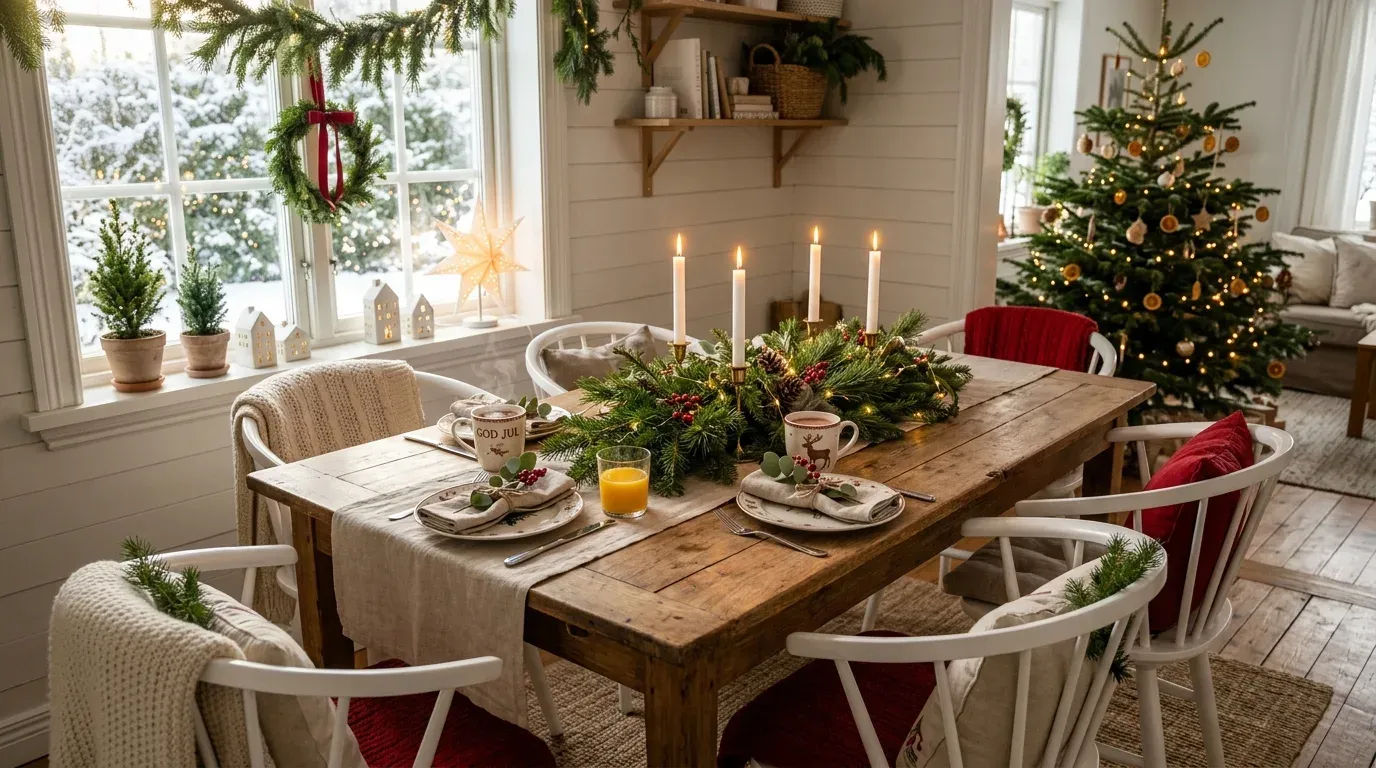
Buy your fresh garland in three-foot sections rather than one long piece, then wire them end to end with green floral wire. You get a fuller, more irregular line, and in week three you can swap out a single dried section instead of the whole thing. Leave fifteen inches clear at each end of the table so plates never fight with greenery, and cluster the tapers in threes at four, six, and nine inches of height. One more thing: press each taper into its holder with a twist of warm wax or a bit of sticky tack. Tall candles tip when someone leans on the table, and that is how tablecloths get ruined.
2. The Centerpiece That Hangs Above the Table, Not On It
Roughly 50% suspended greenery, 20% warm metal from those brass pendants, 20% pale wood, and 10% dried orange. The percentages matter more than the specific plants: keep the greens dominant, keep the metal to one finish, and let the dried fruit be the only thing with real color. To shift the mood, swap cedar for olive branches and brass for blackened steel, and you get a moodier, more architectural version of the same formula. Add pink-tinted glassware and it leans soft and romantic; go all-clear and it reads crisp and modern instead.
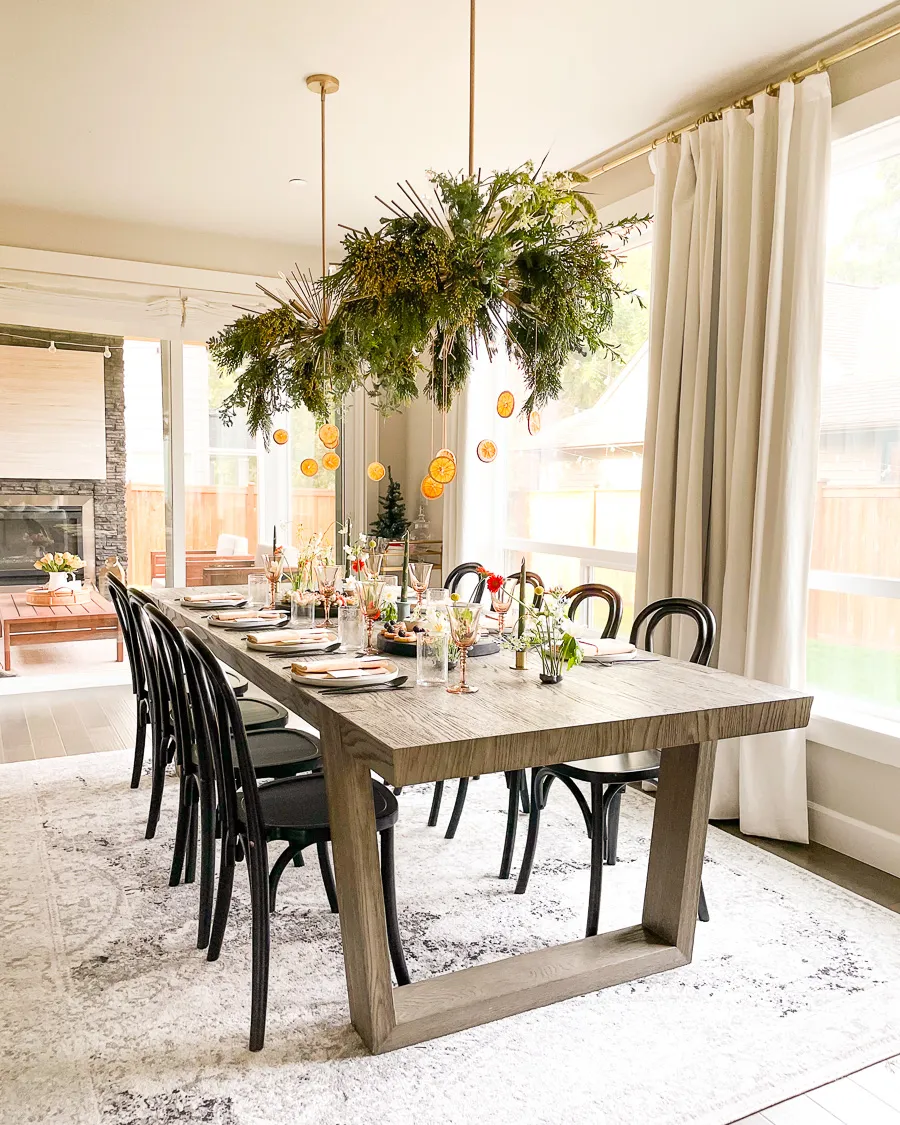
The dried orange slices. Without them, greenery hanging from brass pendants is just a florist install — pretty, a little cold, and weirdly forgettable. The oranges change the temperature of the whole room, and they are the one element that says someone stood at an oven for an afternoon. Remove anything else here — the pink glass, the patterned rug, even the brass — and the design survives. Take away the oranges and it loses its warmth, its smell, and its reason to be remembered.
3. Scandinavian Restraint: Pale Wood, White Candles, Almost Nothing Else
This is the rare holiday look where going cheap does not show. IKEA sells unbleached beeswax-style tapers in packs of six for under $10, and plain white pillars at Target run about $6 for a pair. Thrift stores are lousy with brass candlesticks at $3 to $8 each — buy five mismatched ones and polish them; the mismatch disappears once they share a finish. For greens, clip cedar or spruce from your own yard, or ask a tree lot for trimmings, which are usually free. A pale linen runner from Walmart is around $12.
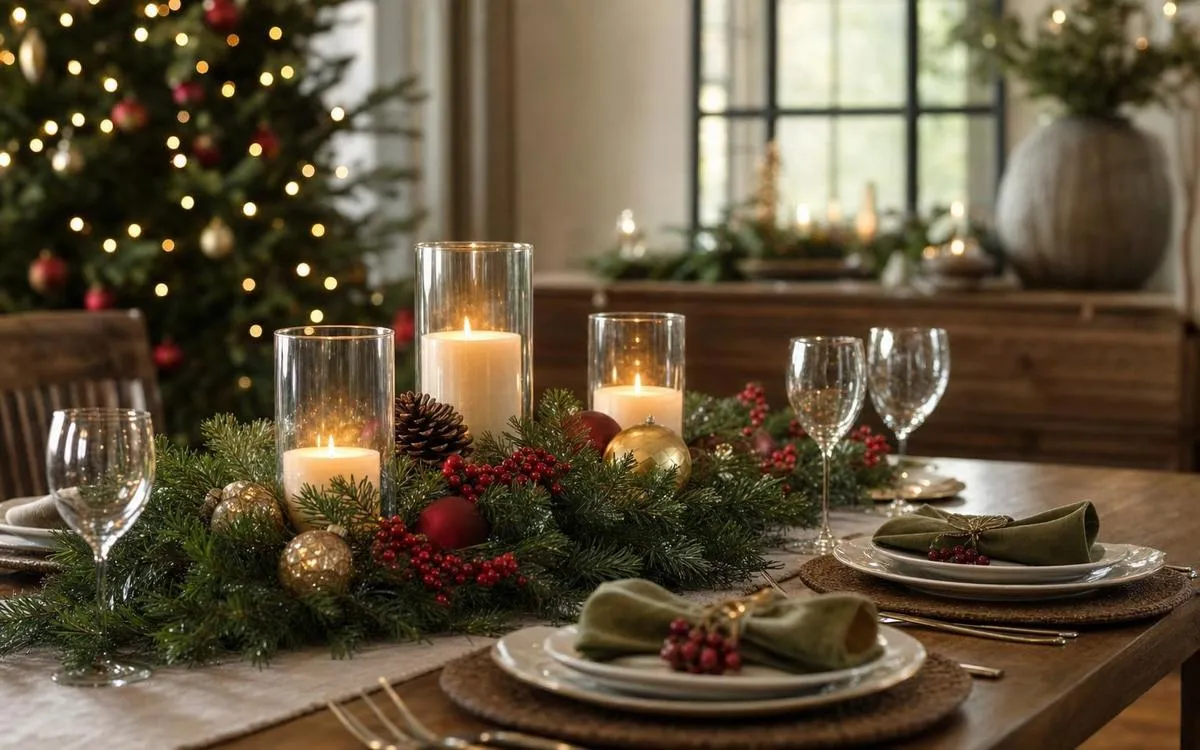
Minimal centerpieces are unforgiving. With nothing to distract the eye, every scratched tabletop, mismatched chair, and harsh overhead light shows up in the room. Cheap tall tapers also burn fast and drip badly, and an open flame sitting directly on bare wood is a wax ring waiting to happen. If your dining room has nothing but a boob light in the middle of the ceiling, this look reads sad after dark. Put everything on a tray or runner, test the arrangement in evening light before guests arrive, and keep a couple of battery candles on hand.
4. Beige Linen Runner, Brass Tapers, and a Low Lush Evergreen
- Linen table runner, 108 inches: $28–$65
- Brass taper holders, pair: $35–$120
- Fresh evergreen, berries, pinecones: $25–$50
- Six dark grey linen napkins with fir sprigs: $30–$60
- Gold-toned flatware, service for six: $45–$110
- Candles: $8–$16
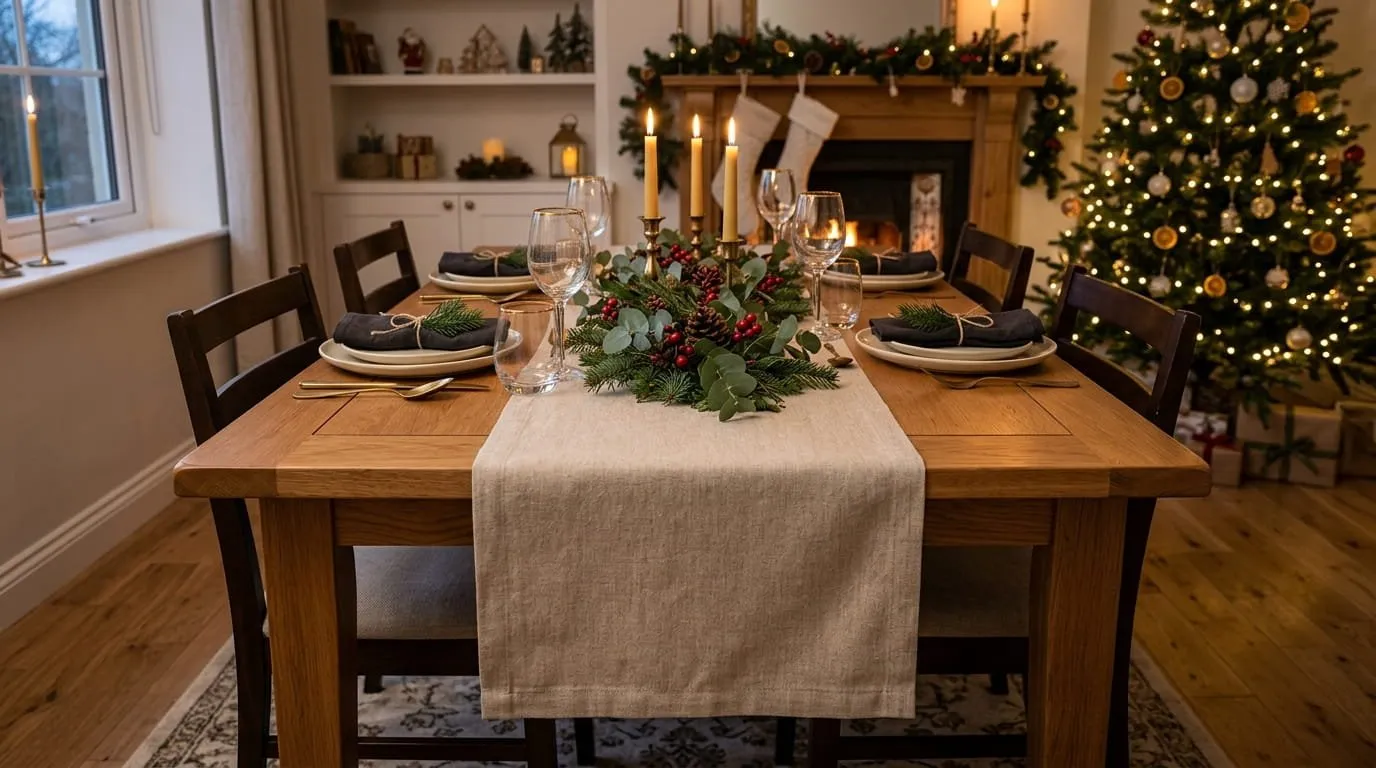
Budget alternative: a cotton runner from Target at $15, thrifted brass candlesticks at $6 a pair, grocery-store greenery at $12, and your everyday silverware — under $70 and nobody will know.
Keep the flame below eye level. When you are seated, your eyeline sits about fourteen to sixteen inches above the table, so tapers should top out around twelve. Anything higher and your guests spend dinner playing dodge. Also resist the urge to make the arrangement symmetrical: put the candelabra slightly off-center, about a third of the way down the runner, and let the greenery spill past it on one side. Off-center arrangements photograph better and leave a clear lane for serving dishes.
5. Hamptons Hosting: Quiet Blue-and-White With Silver and Boxwood
The quiet hosting thing is not going anywhere in 2026. Pinterest saves for understated holiday tables keep climbing while full-on glitter-and-tinsel boards have plateaued, and part of that is practical: people are entertaining smaller and more often, so a table that works for eight in December and four in January earns its storage space. Blue-and-white porcelain with boxwood and silver is the coastal-classic answer. It reads festive without shouting Christmas, and you can reuse the same pieces in spring without anyone noticing.
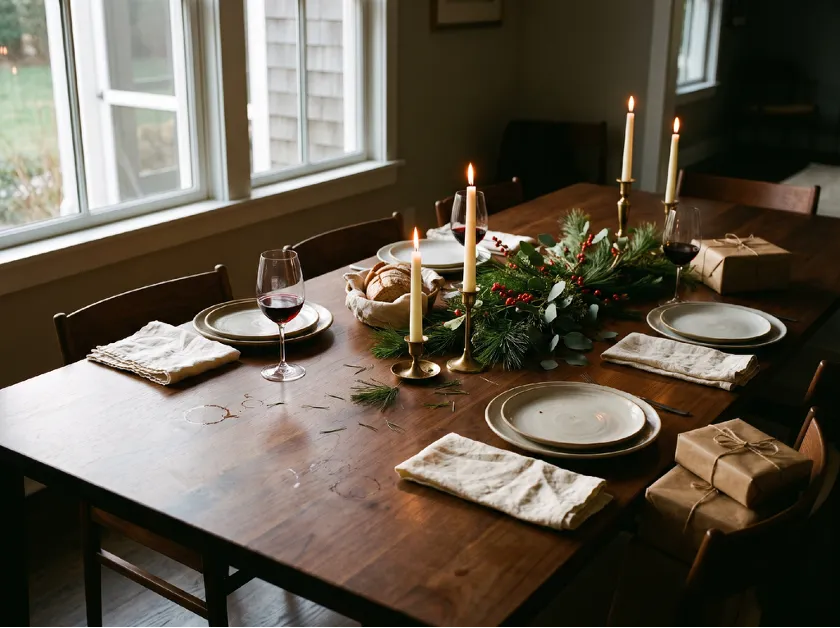
The single low bowl of clipped boxwood. It is the least expensive thing on the table and it is doing the most work, because it is what makes silver and blue-and-white porcelain feel like a garden instead of a china cabinet. Boxwood holds for a week in water, smells faintly green, and gives the whole setup a matte texture that keeps all those shiny surfaces from turning into a glare contest. Swap it for magnolia leaves if you want something heavier for a formal dinner.
6. Wood-Slice Tea Lights and Amber Votives in the Garland
A fresh evergreen garland buys you about two to three weeks indoors — longer if you mist it every other day and keep it away from heat registers. After that, needles start dropping onto the tablecloth and sap finds the fabric wherever a cut end touches it. Amber glass votives soot up after four or five burns and need a dry wipe, and those charming wood-slice tea light bases will scorch if a candle sits directly on bare wood. Line the undersides with felt, or better, use battery tea lights and skip the problem entirely.
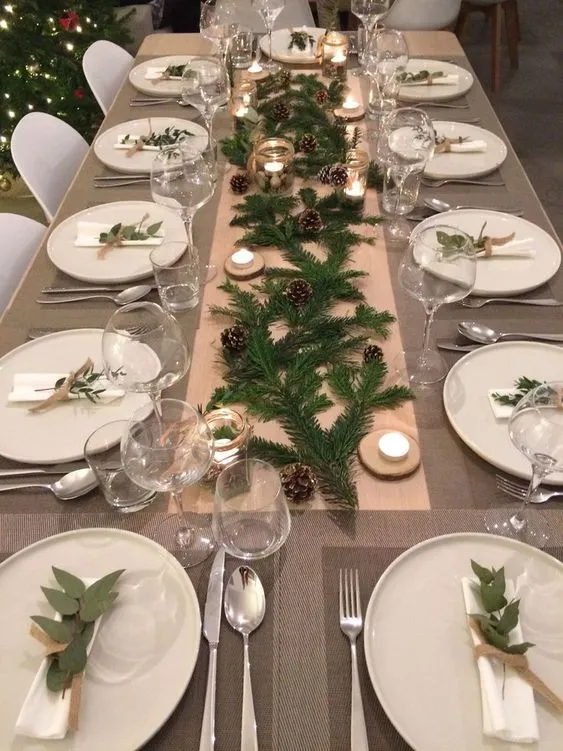
Making the wood-slice tea light bases takes about forty minutes and roughly $12.
- Find or buy a dry branch or small log, two to three inches in diameter.
- Cut one-inch slices with a miter saw; a hand saw works, just slower.
- Drill a shallow 1.5-inch well in each slice with a Forstner bit, no deeper than half the slice.
- Sand the tops and edges with 120-grit, then wipe off the dust.
- Seal with matte polyurethane and let it cure overnight so resin does not seep.
- Drop in the tea light, or a battery version, and you are done.
7. Live-Edge Wood Deserves a Centerpiece You Can See Through
Live-edge tables usually run long and narrow — 72 to 96 inches by 36 to 40 inches — which is exactly the shape that punishes a fat, round centerpiece. You want something linear, and you want at least fourteen inches of clear table on each side of it for plates and elbows. That is why the ceiling-hung greenery in Idea #2 works so well on a long table: it occupies zero tabletop. If hanging is not happening in your house, the runner-style greenery in Idea #11 is the next best thing, because it can be as long as you need and only about six inches wide.
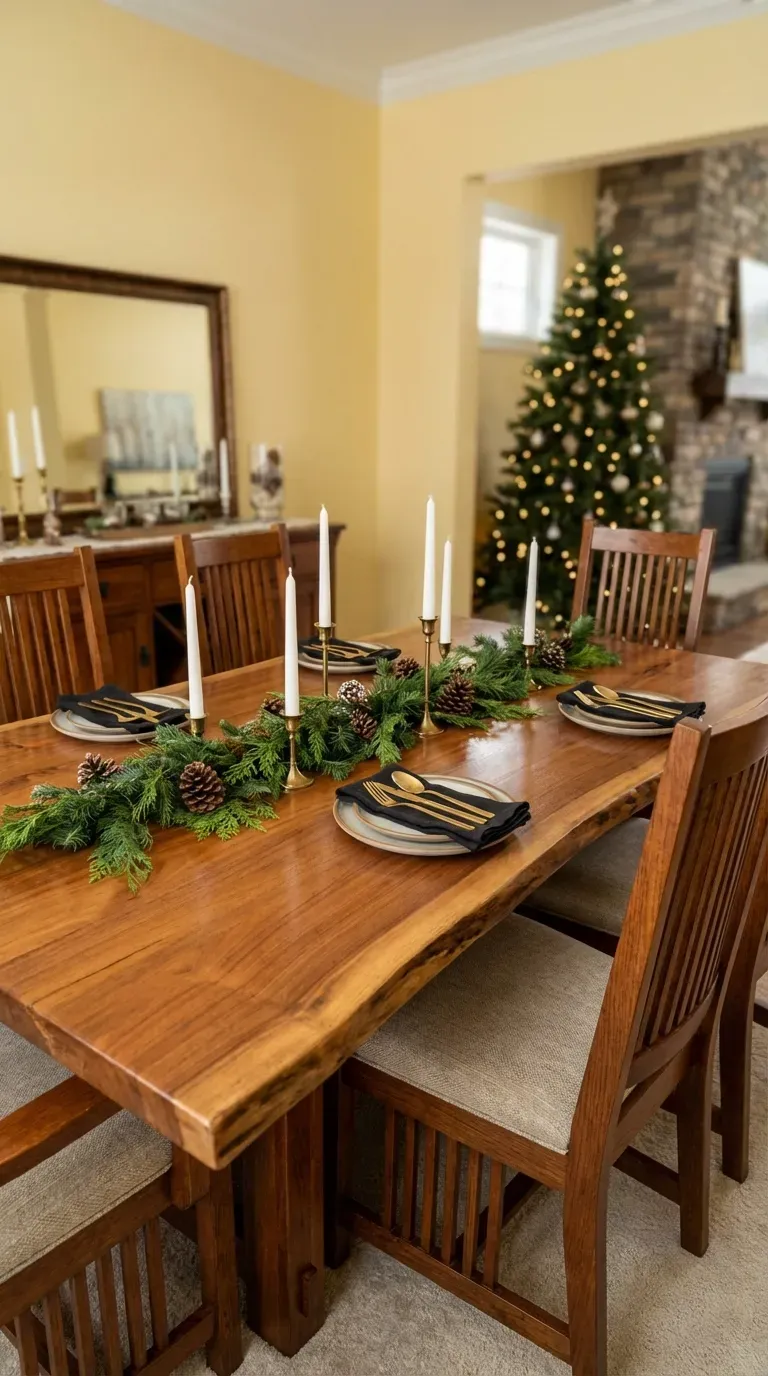
You do not need slab money for the look. Facebook Marketplace is full of oak and butcher-block tables in the $150 to $400 range that read nearly as organic once they are oiled, and a narrow live-edge board used as a runner can cost $40 instead of $400. For the centerpiece itself, thrift stores sell wooden dough bowls and long wooden trays constantly, usually $6 to $20. Fill one with grocery-store greenery and two candles and you have the entire concept for under $50.
8. A Distressed Wood Tray With Three Pillars and Warm Spices
Building the tray arrangement takes about twenty-five minutes.
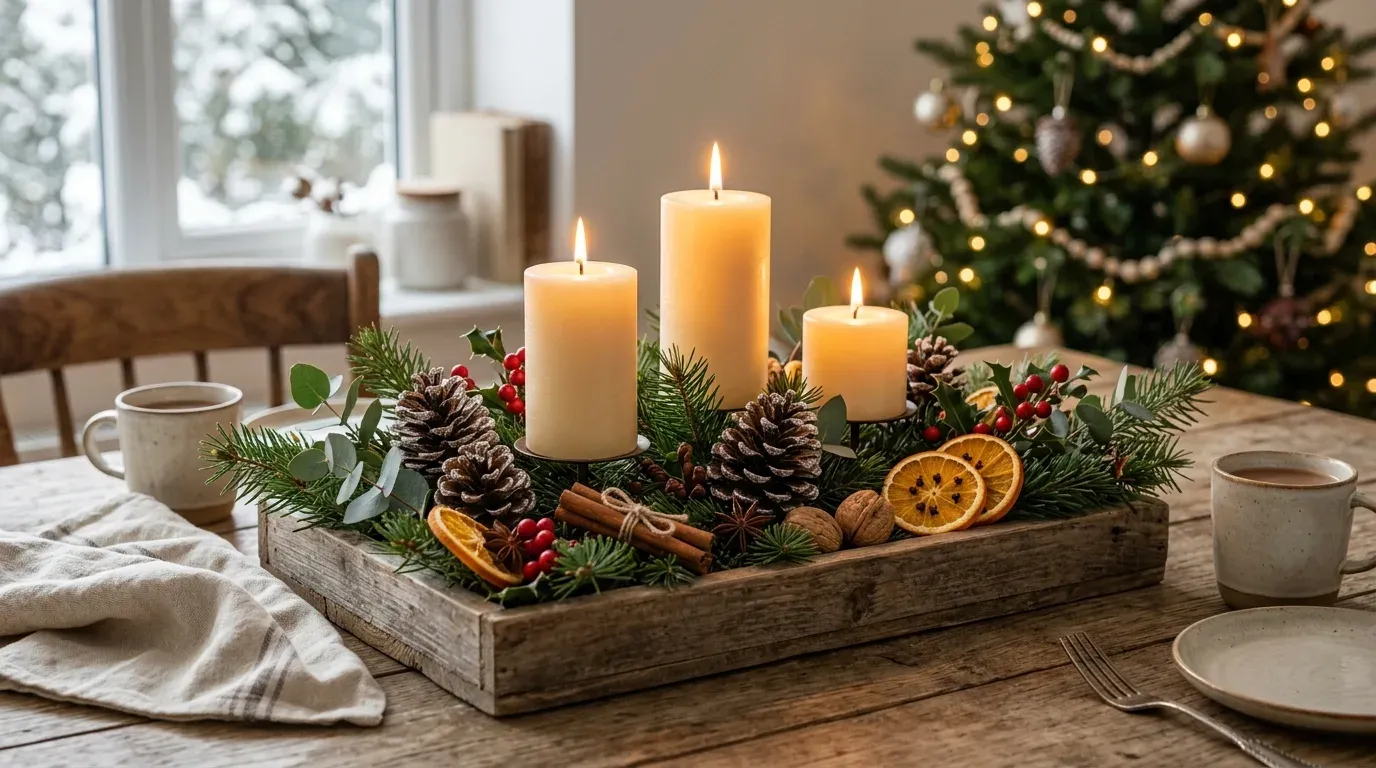
- Line the bottom of a distressed wooden tray with a thin layer of sheet moss so the candles sit level.
- Place three pillar candles, four, six, and eight inches tall, slightly off-center in a loose triangle.
- Lay fir and eucalyptus branches over the moss, bending them to follow the tray’s length instead of piling up.
- Tuck pinecones, walnuts, and cinnamon sticks into the gaps, keeping everything below the candle tops.
- Scatter dried orange slices last, letting a few rest on the outer edge.
- Light the candles, step back, and shift anything that reads too symmetrical.
Three mismatched candle heights do the same job as a staircase: they give the eye a path, so the arrangement feels taller than it actually is. The texture families matter too — soft green, hard cones and nuts, slick dried citrus — and they are spread evenly rather than clumped, which keeps things from looking like a craft bin. The real secret is scent memory: cinnamon and cloves make people think the room is warmer than it is. Keep the flame tips under eye level for seated guests and the whole thing reads generous instead of fussy.
9. An Elegant DIY Centerpiece Starts With the Vessel, Not Flowers
Spend your money on the container and the candles, not the blooms. A heavy, low vessel — a footed bowl, brass compote, or wide ceramic planter, eight to ten inches across — instantly reads more expensive than any bouquet, and it anchors the arrangement so nothing tips. Then build in layers: a base of greenery that extends two to three inches past the rim, mid-height stems for body, and only three to five focal flowers placed in a loose triangle. Compare with Idea #24 — same thinking, way more red.
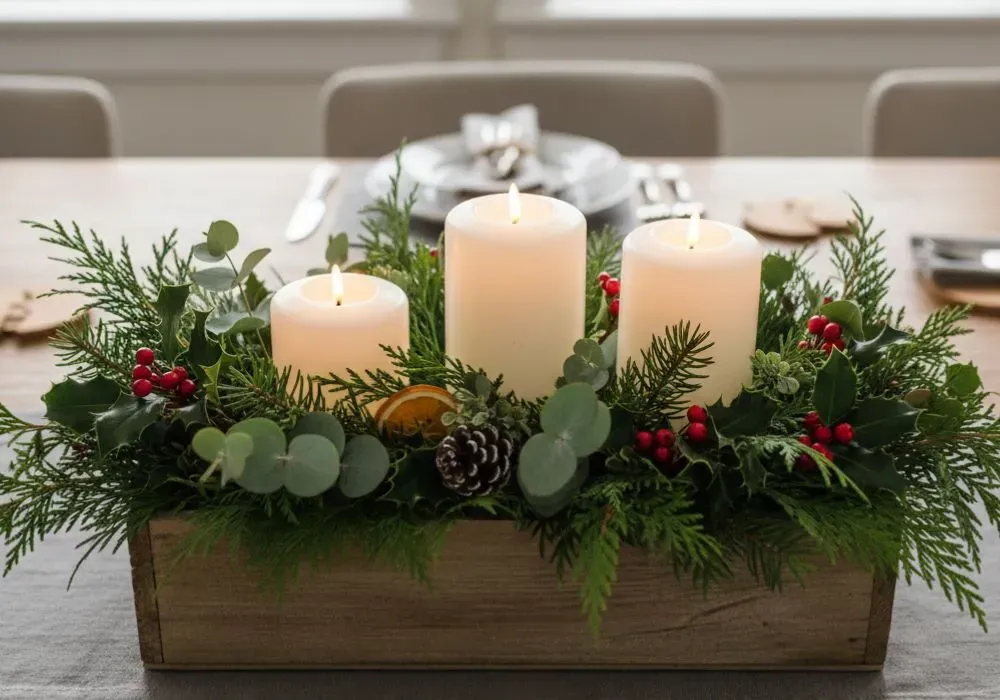
Scale. A centerpiece too small for its table is the most common DIY mistake, and it is the one thing better flowers cannot fix. Aim for an arrangement about one-third the width of your table; on a six-foot table, that is roughly twenty-four inches of length. If yours looks apologetic, do not add more stems — add more foliage on the outer edges to widen the silhouette, and raise the whole thing on a shallow footed tray to give it presence.
10. Three Odd Vessels Read as Collected, Not Bought
- Vintage brass or silver bowl from a thrift store: $4–$15
- Flea-market crock, tin, or dough bowl: $10–$35
- A bowl you already own, repurposed: $0
- Greenery plus three to five stems per vessel: $18–$40
- Battery tea lights or one pair of tapers: $8–$20
- Fabric runner to unify them: $12–$30
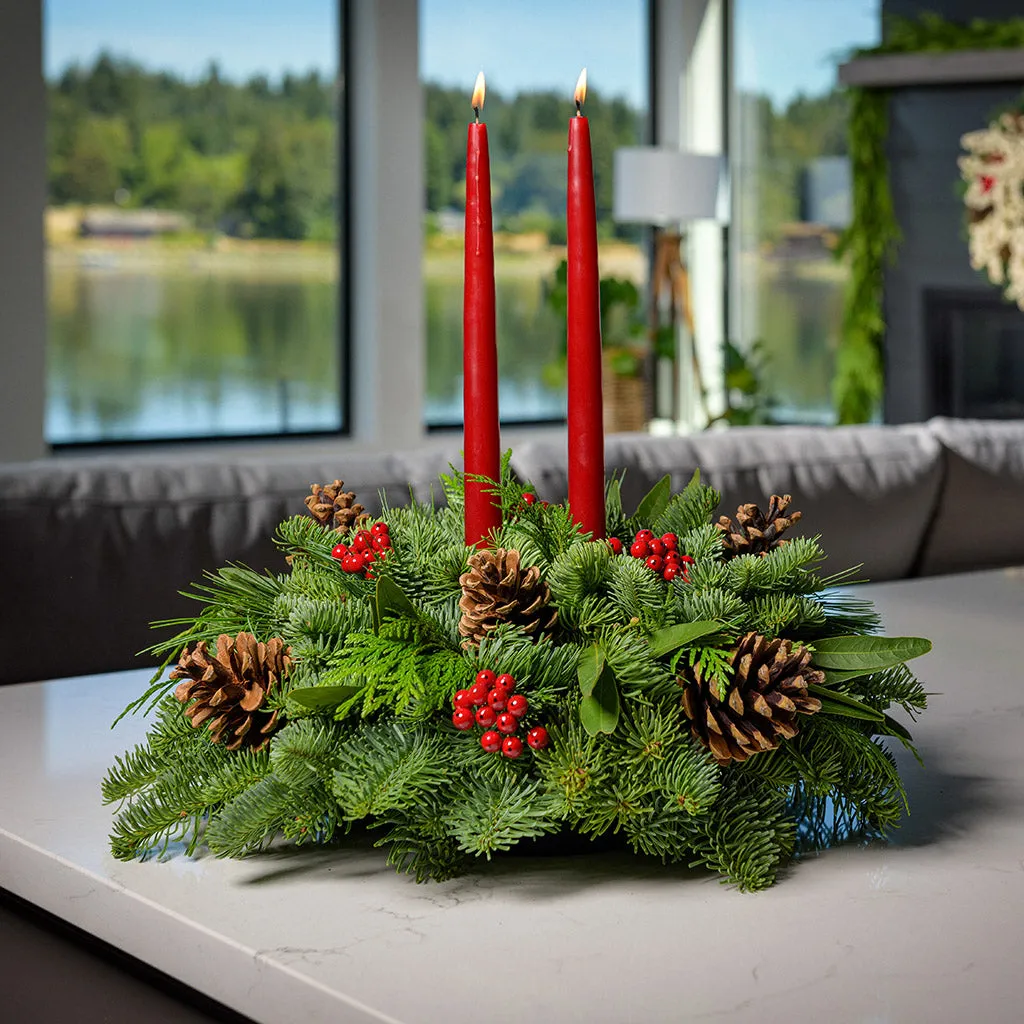
If you would rather buy new, Etsy sellers list repurposed vessels in the $20 to $60 range — still cheaper than three matching florist arrangements.
Matching sets are out; collected over time is in. The shift tracks with a broader 2026 move toward rooms that look personal rather than staged, and tablescaping accounts have followed — the most-saved holiday tables this season mix brass, ceramic, and tarnished silver in the same lineup. The upside is practical. Mismatched vessels let you shop thrift stores and estate sales year-round instead of buying a set you will store for eleven months.
11. White Tapers in Clear Glass Down a Textured White Runner
About 55% white — the textured runner, the dinner plates, the taper candles — 35% green, and 10% clear glass. The green does all the holiday work, so the white has to stay soft and textured rather than bright and flat; that is exactly what the woven runner and the little white flowers are for. Swap in deep green tapers and the formula flips to moodier and more traditional. Swap the white flowers for pale pink and it turns romantic fast. Keep the candle holders clear glass either way, because colored holders steal attention from the greenery.
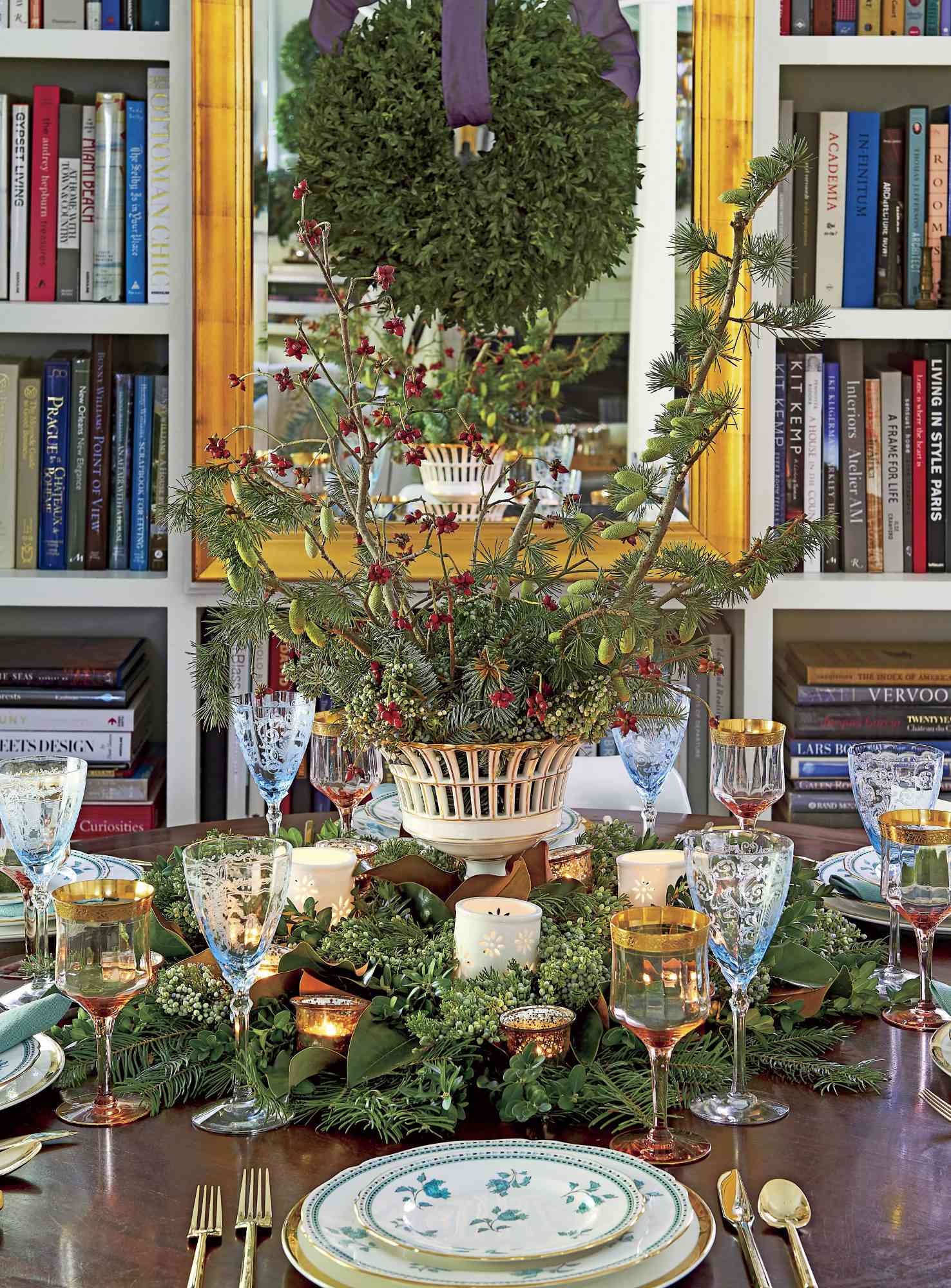
This is built for long tables, 96 inches and up, where you need a line rather than a lump. Space the clear glass candle holders every twenty-four inches down the runner so the light distributes evenly, and use an odd number of them. Five on a ten-foot table looks intentional; four looks like you ran out. If your table is 60 to 72 inches, halve the candles and shorten the runner. Under five feet, a vertical cluster beats a stretched line every single time.
12. Florist Centerpieces: What the Price Tag Is Actually Buying
Florist arrangements are built in floral foam, and foam means the stems cannot drink properly. Expect four to six days of looking good, then a slow collapse you will be photographing around. Delivery timing is the other trap: order for the day before your dinner, not a week ahead, or you will be rescuing a tired arrangement while the oven is on. Red and white flowers also stain. Keep them off linen you love, and be honest about allergies — a fragrant arrangement at the dinner table is lovely right up until someone is sneezing through the main course.
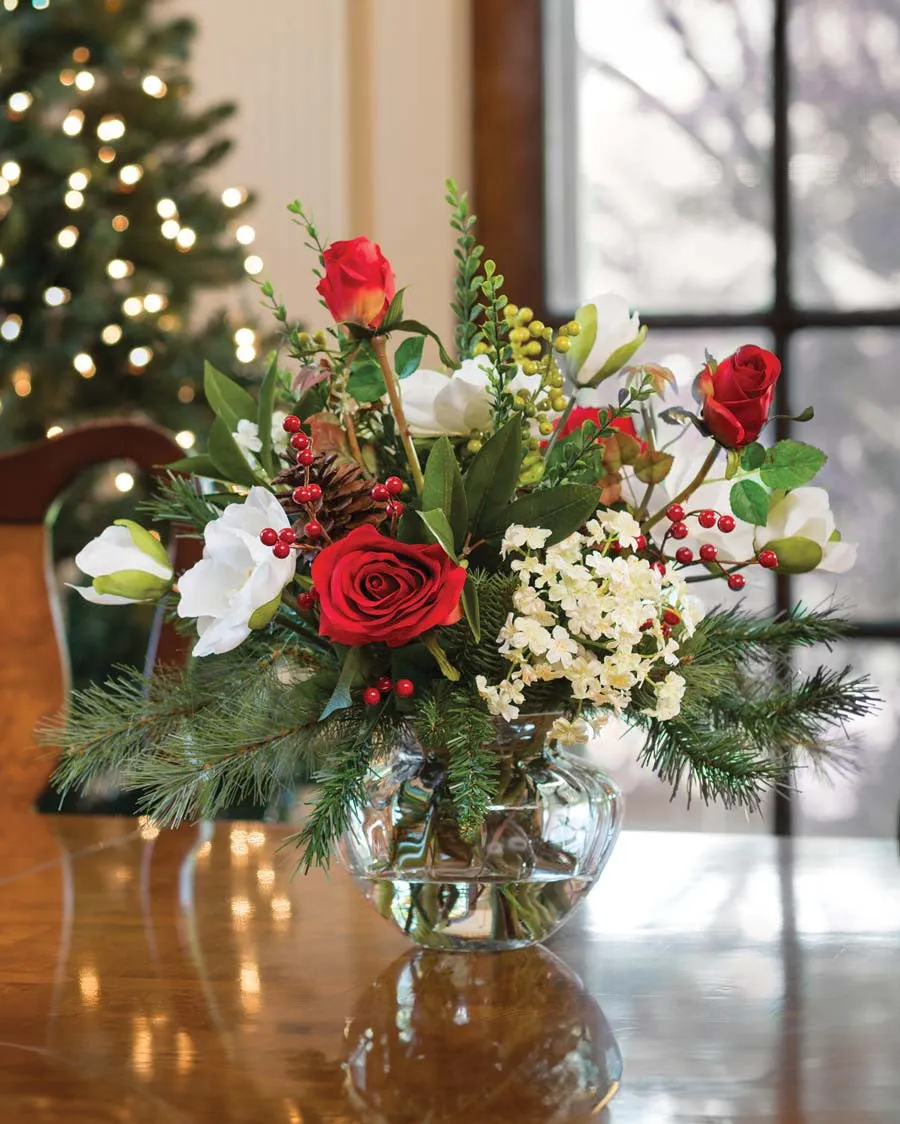
Grocery store flowers plus your own greens get you ninety percent of the way for a fifth of the price. A $12 bouquet from Trader Joe’s, a $9 bundle of mixed greens from Costco, and a bowl you already own will make a twenty-four-inch centerpiece for under $25. Buy two bouquets in the same color family rather than one big one, so you have more blooms to distribute. Add grocery-store eucalyptus for the spill, and tuck in three carnations last; they hold up longer than roses.
13. A Row of Tiny Pine Trees in Rattan Pots
Assembling the mini forest takes about thirty minutes.
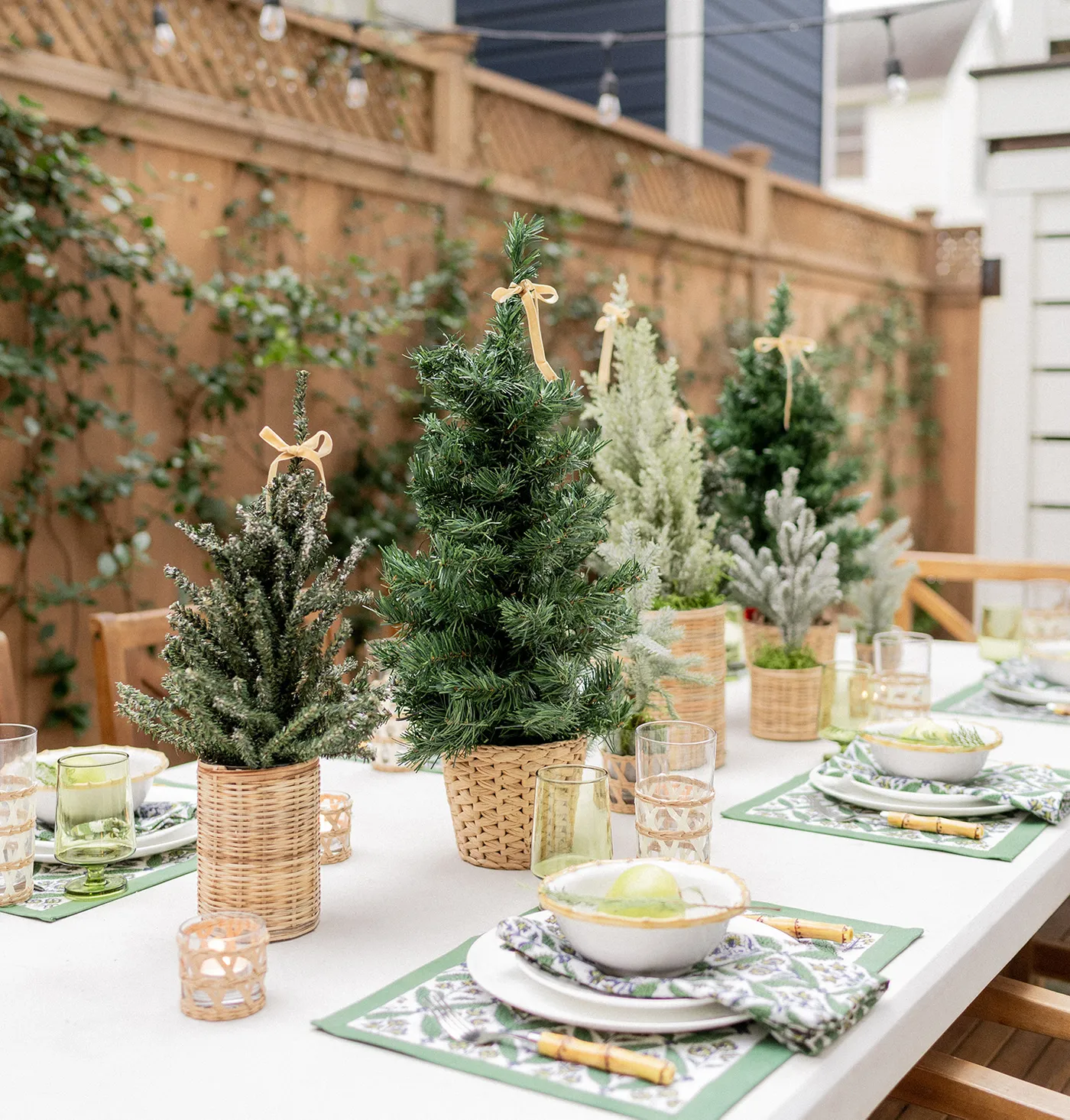
- Gather six to nine small trees, either tabletop artificial pines or cut spruce tips set in wet foam.
- Choose woven rattan or wicker pots in two sizes and repot each tree so the rim hides the base.
- Weight each pot with a handful of pebbles or plaster so nothing tips when the table gets bumped.
- Arrange in a straight line, alternating heights of roughly six, nine, and twelve inches.
- Space the pots evenly, about six inches apart, rather than clustering them.
- Repeat the rattan in your placemats or napkin rings so the row feels intentional.
Treat a row of small objects like a pattern, not a collection. Even spacing beats charming clusters here, and odd-numbered groups always look more deliberate than even ones. The detail most people miss is material repetition: if the pots are rattan, the placemats or napkin rings should pick up that same woven texture, otherwise the row reads like leftovers from three different projects. Keep the tallest tree under fourteen inches so you can still see the person across from you.
14. A Mercury-Glass Forest in Silver, White, and Gold
The tree shape repeats at four or five different heights, which gives the cluster rhythm without a single flower. Mirrored surfaces only work in groups — one mercury glass tree alone looks like a lost object, but seven of them bouncing candlelight around read as a deliberate little forest. The white berry branches soften all that shine, and the gold glitter ornaments are the only warm note in an otherwise cool palette. That single temperature shift is what keeps silver from feeling wintry-cold at a dinner table.
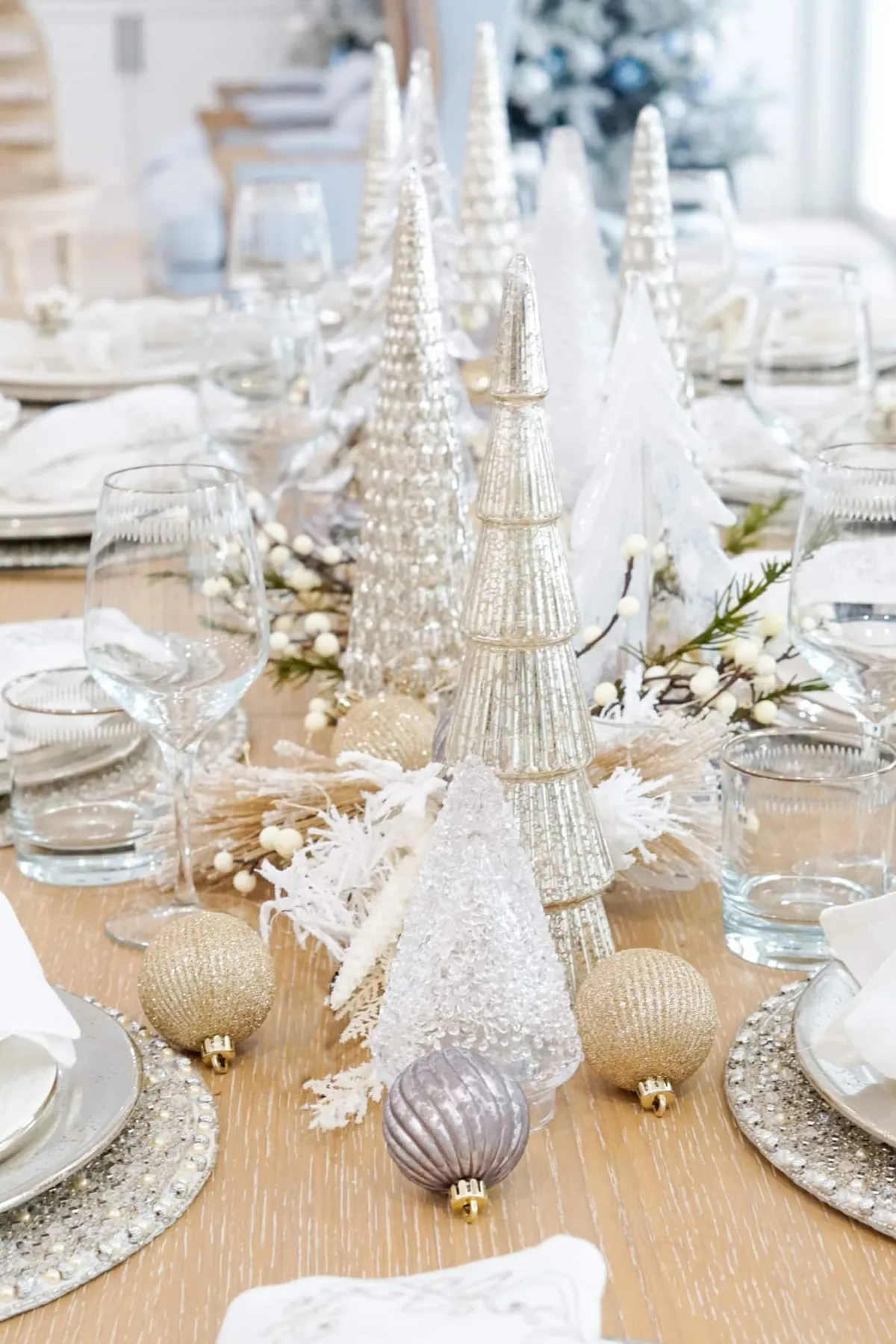
Mercury glass is a fingerprint magnet. Wipe it with a dry microfiber cloth, never glass spray, which gets under the silvered finish and clouds it permanently. Acrylic trees scratch if you stack them, so store them standing in a box with tissue between. And the gold glitter spheres shed; by New Year’s you will find glitter in the napkins and on the floor. If shedding bothers you, swap in matte gold baubles for the same warm accent with none of the cleanup. Annual upkeep cost is basically zero — this is a storage problem, not a maintenance one.
15. One Warm LED Flame Ringed With Dark Green and Cream
The single warm LED pillar at the center. Replace it with three small candles and the arrangement stops being a wreath and starts being a pile — that one centered flame is what gives the greens a job. It solves two practical problems at once: no wax dripping onto a dark wood surface, and no open flame sitting inside a dense nest of dry foliage. If you own nothing else from this list, own this style of candle. It is the cheapest element here and it is carrying the entire design.
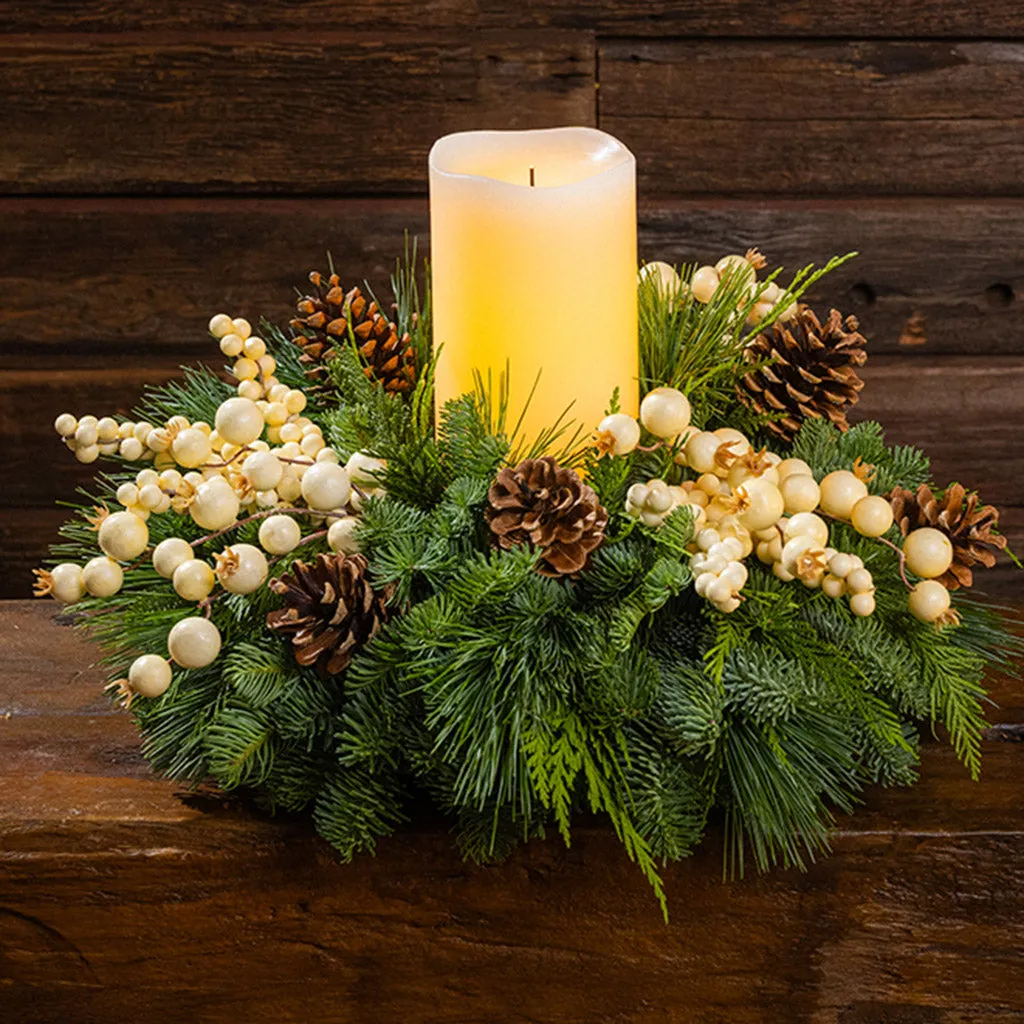
- Fresh or faux evergreen bundle: $18–$40
- Warm-white LED pillar candle, 3×6 inches: $12–$35
- Pinecones, gathered or bagged: $0–$8
- Cream berry sprays, set of three: $6–$14
- Wood slice or tray base: $0–$20
Budget alternative: a dollar-store pillar candle at $5, grocery-store greenery at $10, pinecones from your own yard, and a cake stand as the base — under $25.
16. A Ribbed Gold Vase on a Working Kitchen Counter
- Measure your counter depth — anything deeper than twelve inches will crowd the sink or range.
- Check whether the vase is watertight; if not, drop in a glass liner so pine sap never touches the wood tray.
- Confirm the finished height clears your upper cabinets by at least six inches.
- Note where afternoon sun lands — direct light bleaches the red textile and dries fresh greens in two days.
- Decide up front whether the small gold lidded jar is decor or functional, and keep it above toddler height if it is decor.
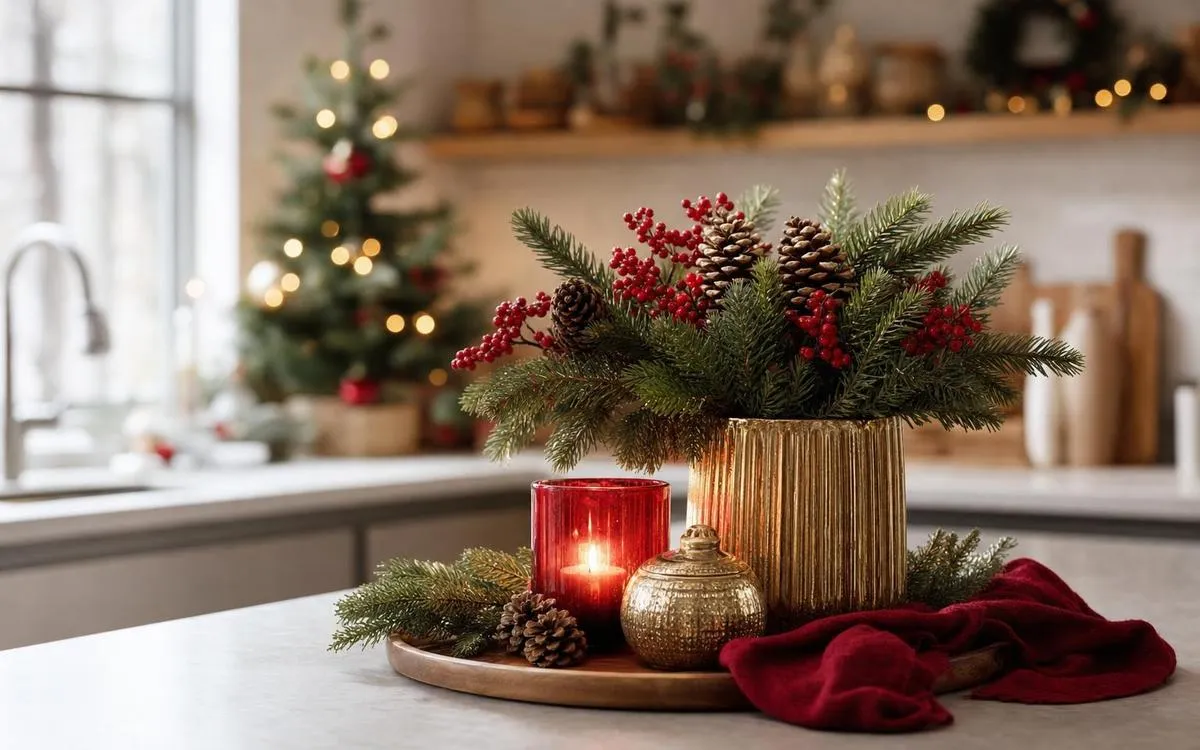
Kitchen centerpieces live a harder life than dining table ones. They get bumped while you reach for the coffee, splattered during prep, and filmed with grease if they sit near the range, which means that ribbed gold vase needs a wipe-down every few days. The red glass votive gets genuinely hot, so set it on the wooden tray, never directly on the counter. And that draped red textile should stay well away from the cooktop. A kitchen vignette you have to step around is worse than no vignette at all.
17. Deep Green Tapers and Plaid Napkins on Dark Stained Wood
Dark tables eat light, so this look needs volume and a lot of flame. Plan on at least five lit tapers across a 72- to 96-inch table, and skip it entirely on anything under five feet. It also wants generous ceiling height and some natural light during the day, or the whole arrangement disappears into the wood. If your dining room is small or dark, go the other direction: the lighter, gold-heavy table in Idea #21 lifts a compact room instead of swallowing it.
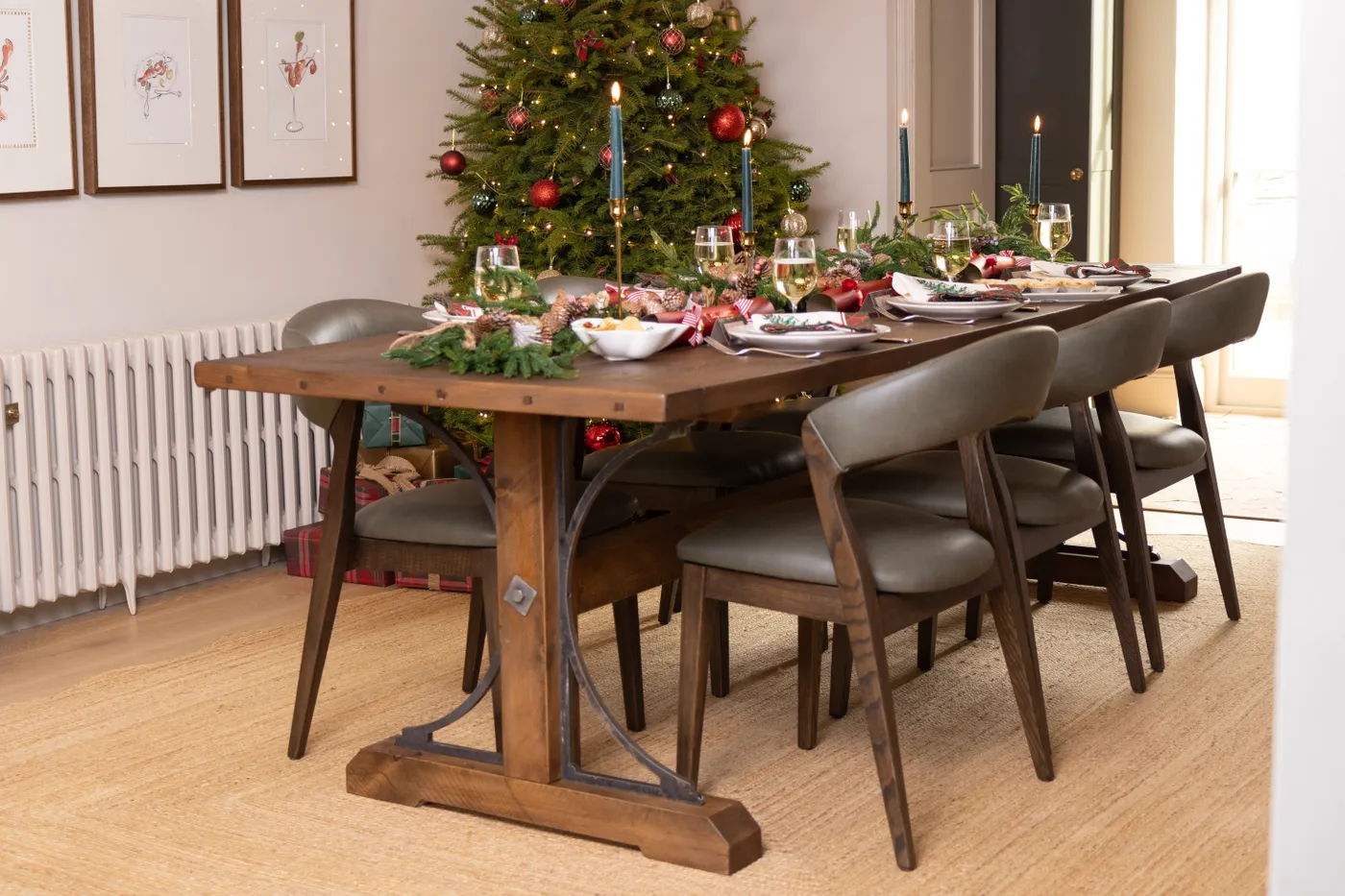
Deep green tapers vanish against dark stained wood. Set them in gold or brass holders with a cup at least one and a half inches wide, because narrow holders let tall tapers wobble, and raise the flames so they clear the top of the garland by six to eight inches. Widen each candle base with a thumbprint of sticky wax or museum putty before you light anything. It takes ten seconds and it is the difference between an elegant dinner and a ruined tablecloth.
18. Green Tapers and Layered Placemats in a Formal Dining Room
Roughly 40% dark wood, 25% evergreen, 20% red, 10% white, and 5% gold. Red and green is usually a hard sell in small doses, but the white dinnerware and the gold flatware dilute it enough to keep the table from looking like wrapping paper. The formula is easy to reroute, too: change only the placemats and the stemware and you have silver and blue, or cream and copper, without touching the garland. Keep the tapers green either way — they are the thread tying the two halves of the palette together.
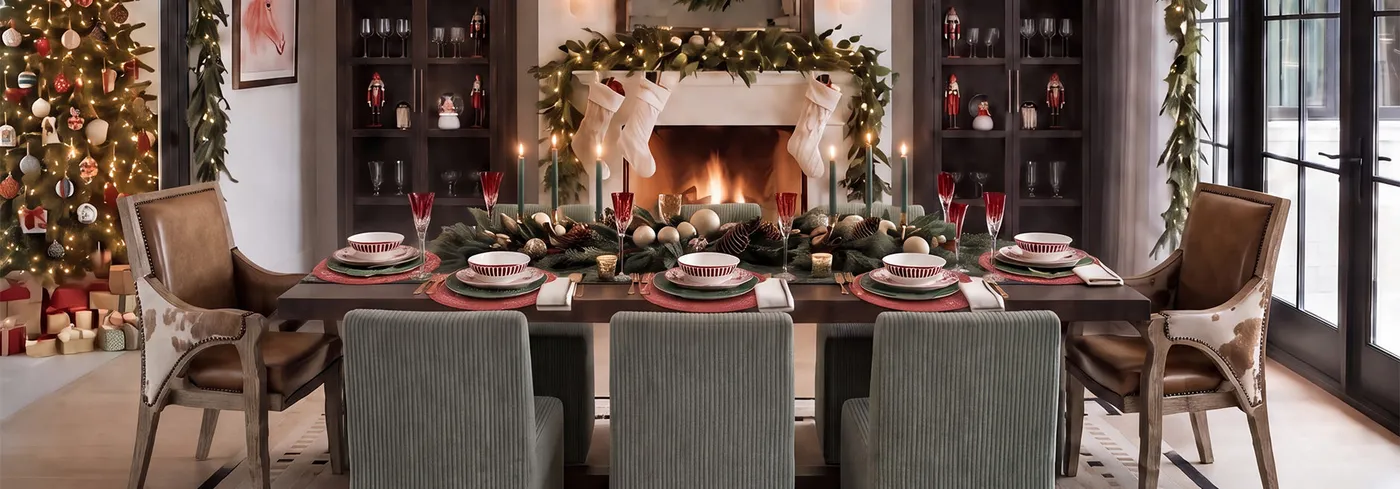
Layering a green placemat over a red one creates a crisp edge that makes the whole table feel designed rather than decorated, and it costs nothing but storage space. Everything else here repeats. The white dinnerware with red stripes picks up the garland’s two colors, the green tapers answer the greens overhead, and the mantel garland and tree in the background scale the same idea up. That is why this room reads as a system instead of a pile of Christmas things: nothing on the table introduces a new idea.
19. Fairy Lights Woven Into the Garland, Plus Red Pillars
Weaving lights into a fresh garland takes about twenty minutes.
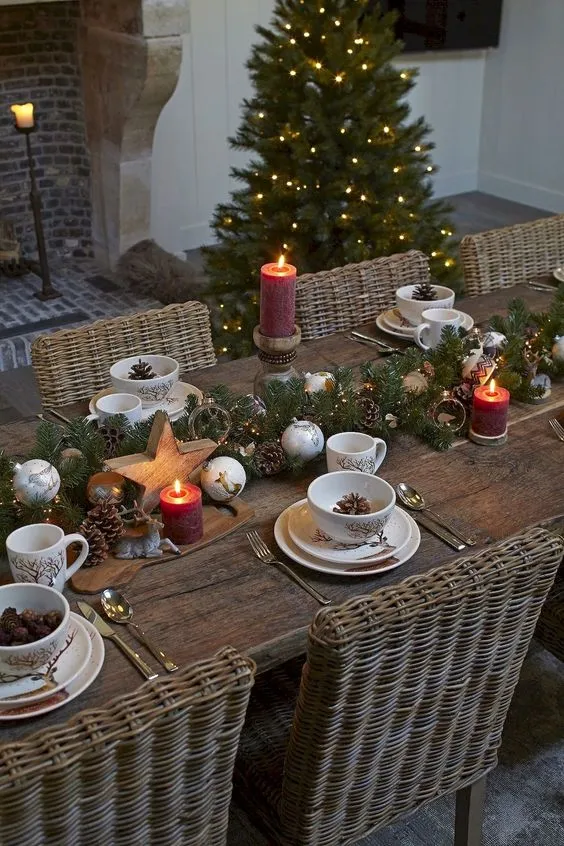
- Lay the garland flat on the floor and untangle your battery fairy lights alongside it.
- Start at one end and wind the wire in a loose spiral, letting it ride on top of the branches rather than under them.
- Secure with 1-inch zip ties or green floral wire every twelve inches; tape will not hold on fresh greenery.
- Tuck the battery pack behind the garland, hidden by a pinecone or a wooden candle holder.
- Set the red pillar candles in wooden holders, keeping the flame tips below seated eye level.
- Turn the lights on before you style the ornaments, so you arrange around the actual glow.
This whole look can land under $150 if you shop in the right order. Costco and Trader Joe’s sell ten- to twenty-foot fresh garlands for $18 to $25, and IKEA’s faux cedar garland runs about $15. Battery fairy lights are $8 to $12 for a two-pack at Walmart. Thrift stores always have red pillar candles still in the wrapper and wooden candlesticks for $2 to $5. For the woodland-motif plates, check Facebook Marketplace in November. See Idea #17 for the dressier version of the same idea.
20. Grand Centerpieces Look Amazing Until Someone Tries to Talk
The rule nobody tells you: anything between fifteen and twenty-four inches tall blocks conversation across a table, and that is exactly where most dramatic centerpieces land. Either go low, twelve inches or under, or go high, above thirty inches, so people can see beneath it. Width matters just as much — leave fifteen inches of clear table on both sides of the arrangement or your plates end up balanced on napkin corners. Walking around your finished table and sitting down at every seat before guests arrive is the ten-second test that saves an entire dinner.
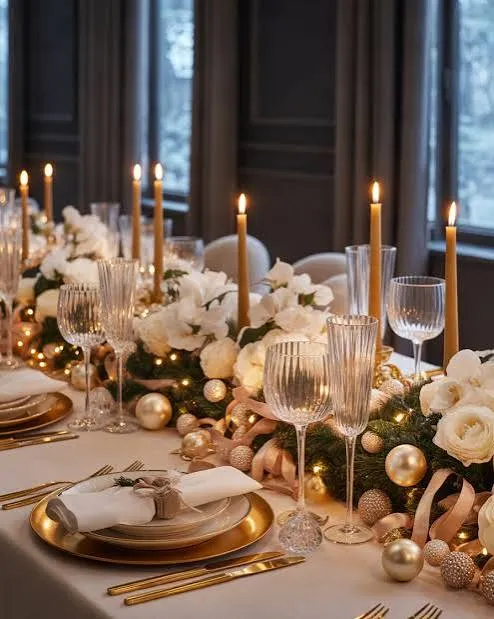
Tablescaping photos are built for cameras, and cameras hover at a completely different angle than a seated human. That mismatch explains why the most-saved grand centerpieces on Pinterest in 2026 are also the ones most likely to end up pushed onto a sideboard mid-meal. What is rising instead: conversation-friendly arrangements with height on the ends and open space in the middle, plus a growing habit of styling a second look — a simple bowl that goes down once the plates come out.
21. Twin Frosted-Evergreen Centerpieces With Gold and Fairy Lights
- Twelve gold charger plates: $60–$140
- Two frosted evergreen centerpieces: $80–$240
- Battery fairy lights, two strands: $12–$30
- Crystal-look stemware, service for eight: $60–$180
- Cream linen napkins, eight: $30–$70
- Dark tablecloth: $25–$60
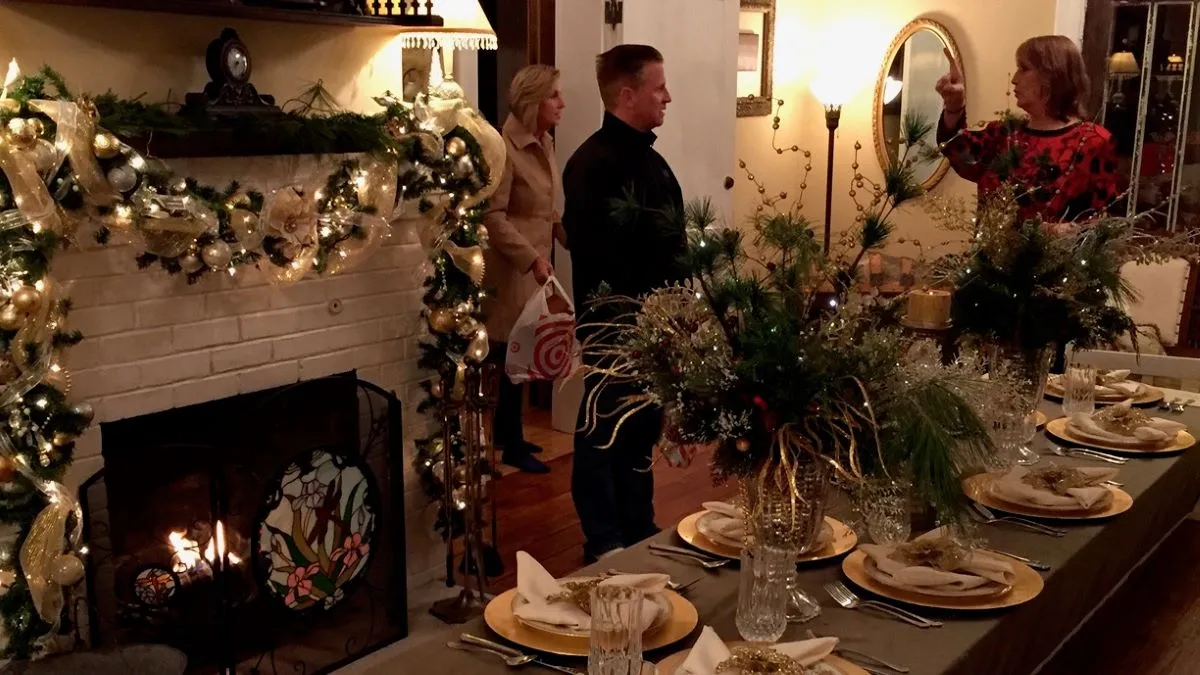
Budget alternative: Dollar Tree chargers run about $18 for twelve, IKEA faux evergreen pieces are around $15 each, and a set of glassware from Target lands near $40. Same table, closer to $140.
Two separate centerpieces need a long table — 96 inches minimum, ideally 120 — with each arrangement running about 30 to 36 inches and a clear 24-inch gap in the middle for serving dishes. Pair it with a white brick fireplace mantel if you have one; the gold ribbon and light ornaments up there will do more for the room than anything on the table. For a smaller table, skip the pair and use one cluster, like the silver forest in Idea #14.
22. The Candle-Only Centerpiece and the Clearance Rule
The cluster of flames at different heights is the entire design. Remove it and you have a bare table. But the thing that actually makes or breaks a candle-only centerpiece is what sits underneath: a non-flammable base. Glass, metal, or stone, every time. A wooden tray with candle stubs is fine; a wooden tray with tapers that lean once they burn down is a genuine hazard. Get the base right and you can build the rest with dollar-store candles and still look like you hired someone.
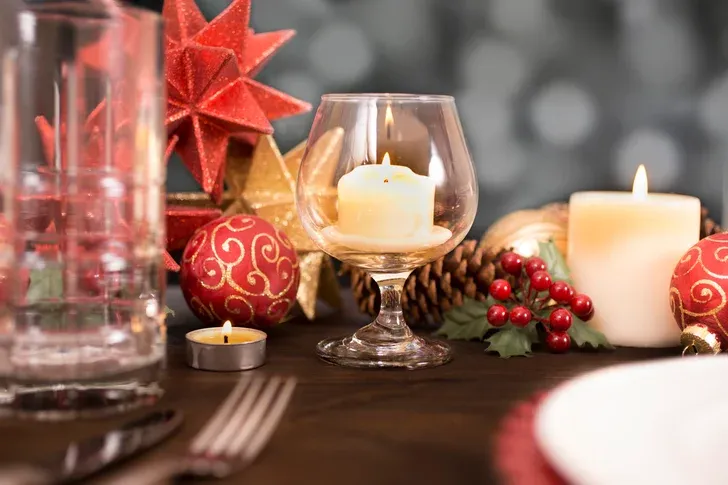
- Measure vertical clearance between each flame and the nearest greenery — twelve inches minimum.
- Set the arrangement on a non-flammable base, never directly on a runner or bare wood.
- Turn off ceiling fans and close nearby vents so nothing drafts a flame sideways.
- Test-burn for one hour before guests arrive and watch for leaning or dripping tapers.
- Have battery candles on standby for the end of the night.
23. Nutcracker Styling: The Figurines Do the Work
Nutcrackers give a table verticality without any floral mechanics, so the whole trick is hierarchy. Three figures at three heights — say eighteen, twelve, and eight inches — read as a cast of characters; five at the same height read as shelf stock. Repeating the red and black across the napkins and candle holders ties the figures to the table instead of letting them float above it like toys. And keeping the florals low and green gives the eye somewhere to rest between all those painted uniforms.
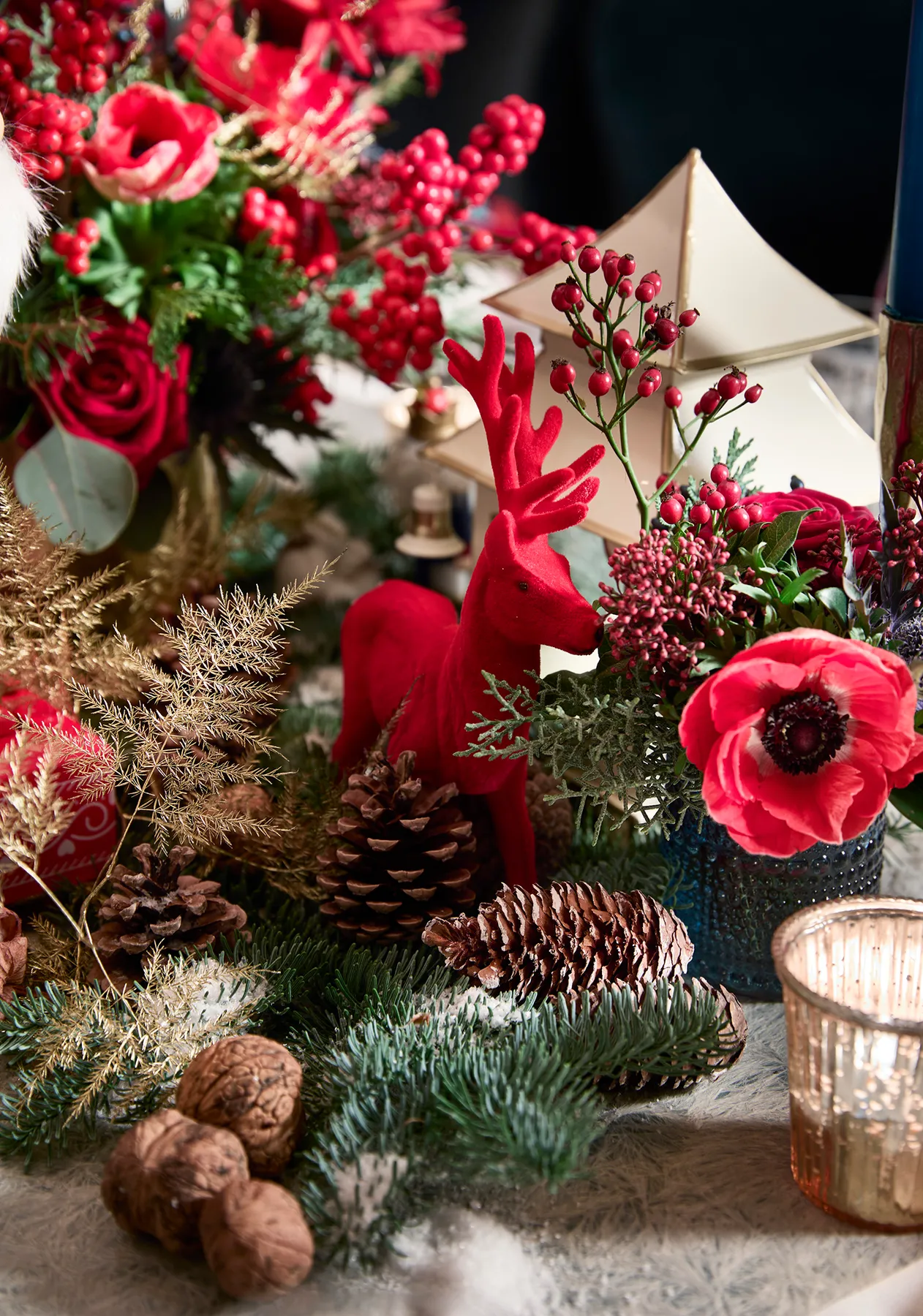
Keep any painted figurine at least eighteen inches from an open flame, because the finishes are usually lacquer over wood and they do not take heat well. Group in threes, never pairs, and put the tallest one off-center by about a third of the table’s length; dead-center placement makes the arrangement look like a store display. If you are mixing patterns, choose nutcrackers in a single color story and let the cloth carry the pattern. Check that the paint is lead-free before setting a vintage one within reach of kids.
24. Red Blooms, Frosted Pinecones, and Berries Dusted in Snow
Call it 45% green foliage, 30% red between the blooms and the berries, 15% natural brown pinecones, and 10% frosted white. The frost is the wildcard — it is what keeps a heavy red arrangement from tipping into valentine territory. To modernize it, swap the bright red blooms for burgundy or deep plum and keep everything else identical. To lighten it for a January table, replace the frosted pinecones with plain ones and drop the frosted berries. The greenery and the oval shape carry the design either way.
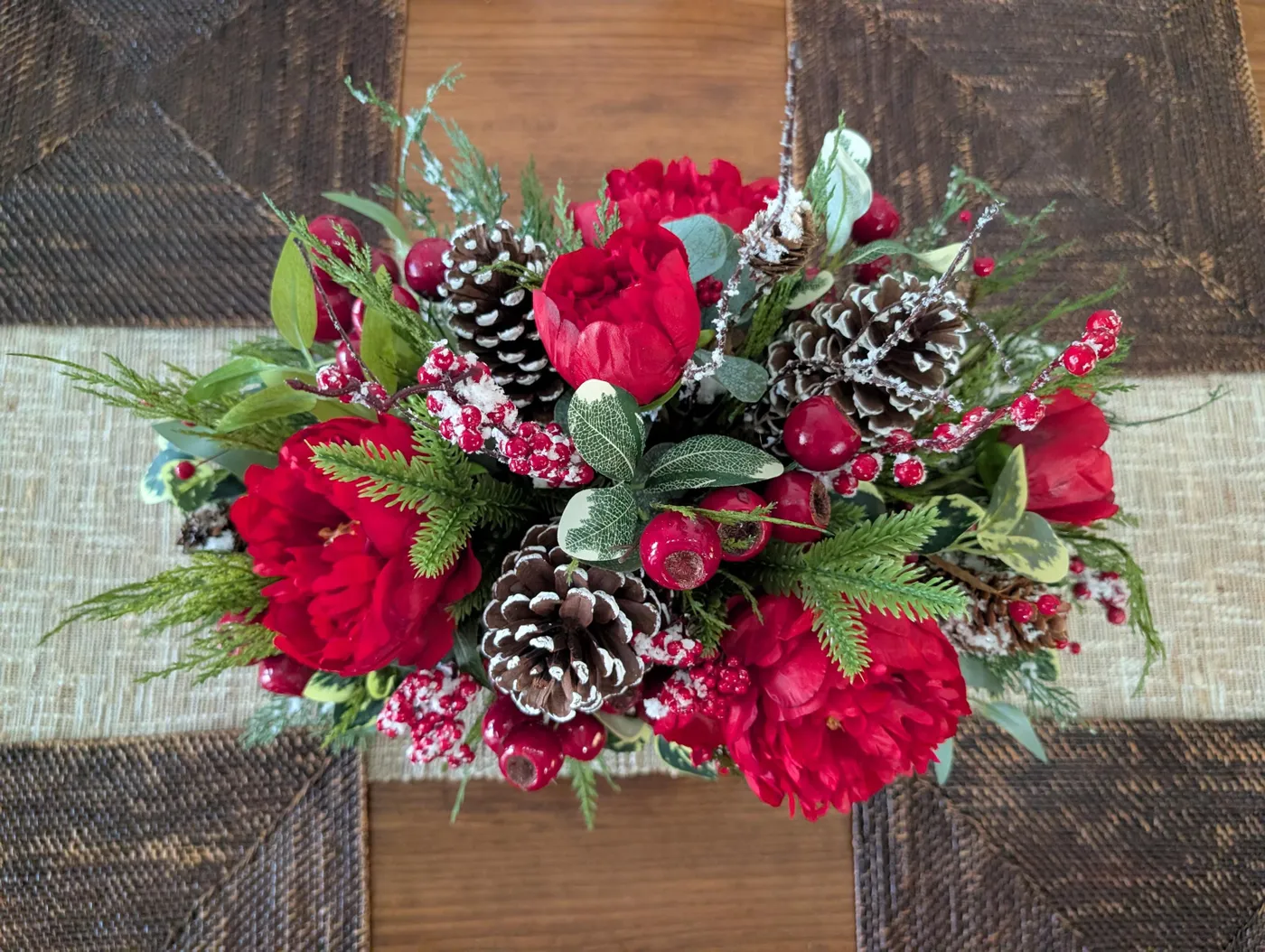
Frosted anything sheds. Expect a light dusting of fake snow on the runner within a day, and pinecones that lose their coating if you handle them while arranging. Fresh blooms in an arrangement this dense last three to five days; after that, pull the spent ones and the greens will carry the look for another week. Do not mist the flowers, no matter how dry the house feels — it spots the petals. And keep the whole thing away from heat vents, because red berries leave marks on light fabric when they warm up.
25. Bay, Cedar, and Juniper Instead of the Usual Fir
Coastal-style arrangements are the cheapest kind to fake, because the greens in them grow everywhere and dry beautifully. Trader Joe’s sells bay and cedar bundles for $10 to $14 most of December, and your own yard probably has juniper or arborvitae you can clip for free. A woven basket from a thrift store runs $4 to $10, and that is your vessel. Total for a generous centerpiece: under $30, compared with $80 or more for the same size arrangement in fir. The fir-heavy version in Idea #11 costs more simply because those branches bruise faster and must be fresh.
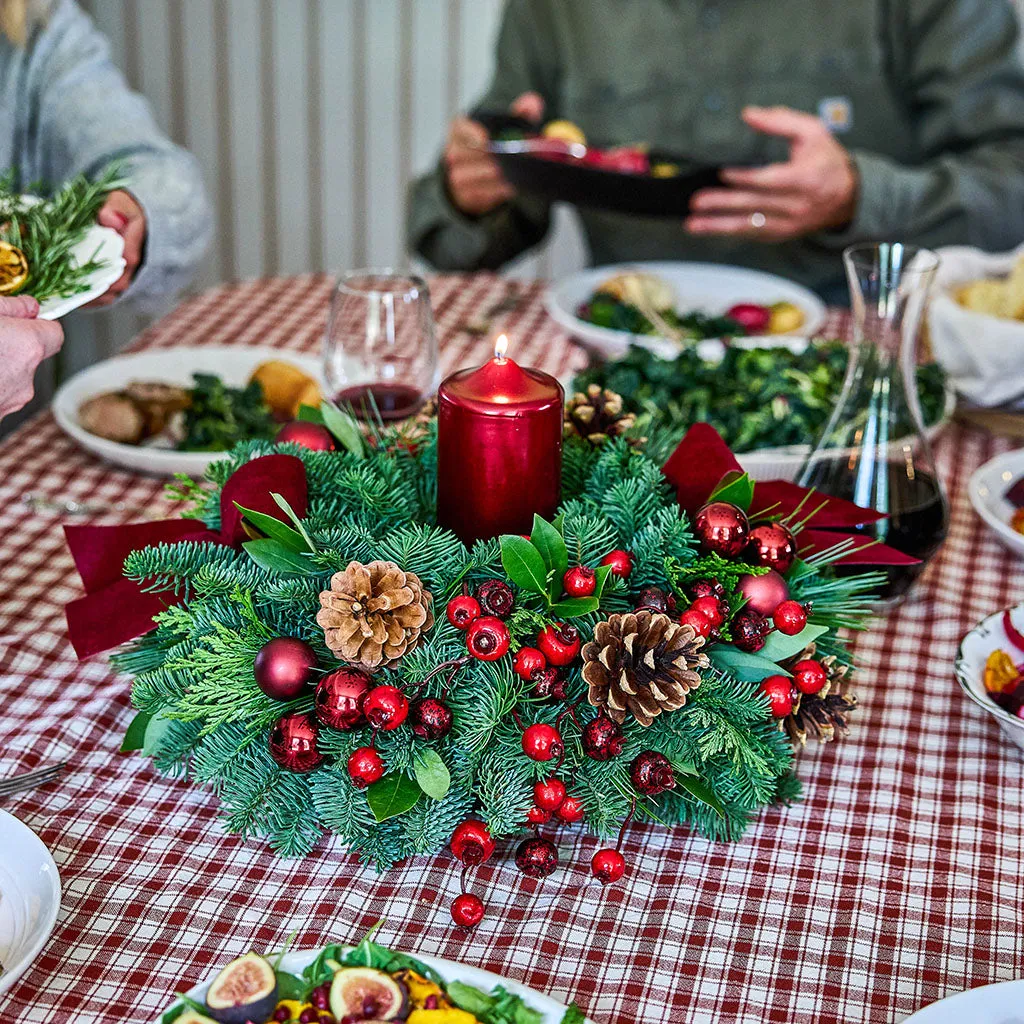
Bay leaves dry and curl within about a week, so if you want the arrangement to hold through New Year’s, build the base from cedar or juniper and use bay only as an accent on top. Tuck sprigs into a water-soaked block hidden by the basket rim rather than wrapping them around the outside, and refresh the water every two days. A teaspoon of bleach per quart of water keeps the stems from going slimy in a warm room.
26. Red, Silver, and Gold Without Looking Like a Store Window
Three metallics work when each one has a job. Silver handles the cool highlights, gold warms the red, and the deep green greenery is the neutral holding it all together. What separates this from a department store display is restraint in shape: pick one ornament form — a round bauble, a teardrop, a finial — and repeat it in all three finishes at three sizes. That repetition is what makes mixed metals read as a collection rather than the leftovers of three separate shopping trips.
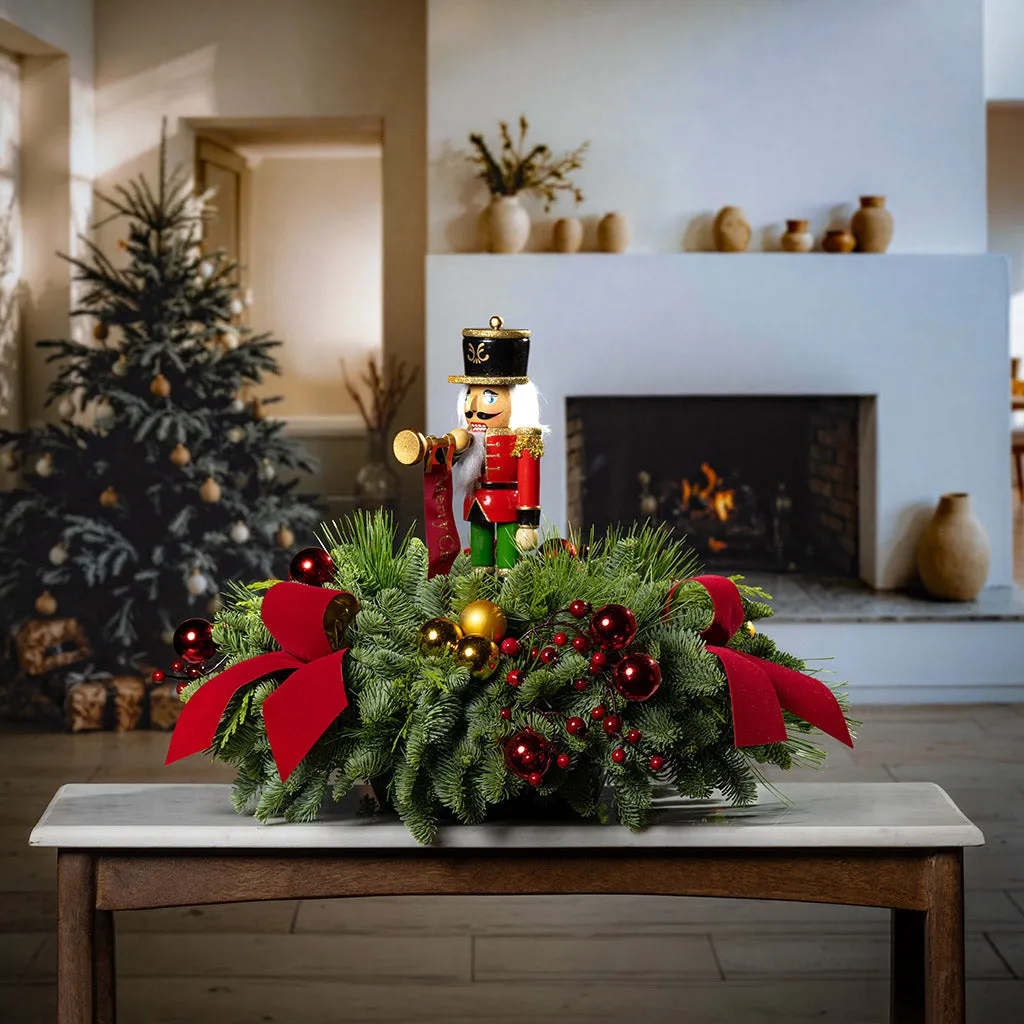
- Red velvet table runner: $25–$70
- Silver or brass candelabra: $40–$180
- Gold-rimmed charger plates, set of eight: $50–$150
- Glass ornaments, mixed 40-piece set: $20–$45
- Greenery and red berries: $25–$60
- Wide shallow bowl or footed compote: $20–$65
Budget alternative: thrifted brass candlesticks at $5 each, ornaments from Dollar Tree at $1.25 for six, and a red runner from Walmart at $12 — the look for under $80.
Mixed metals with red want space. This is a table for 96 inches and up, in a room with at least a nine-foot ceiling, and it gets better with a sideboard or mantel in eyesight carrying the same palette. On a smaller table the metallics crowd each other and the red starts to feel heavy, so drop to two metals and one size of ornament.
27. Party Elegance in Twenty Minutes With One Low Bowl
A party-ready centerpiece in twenty minutes.
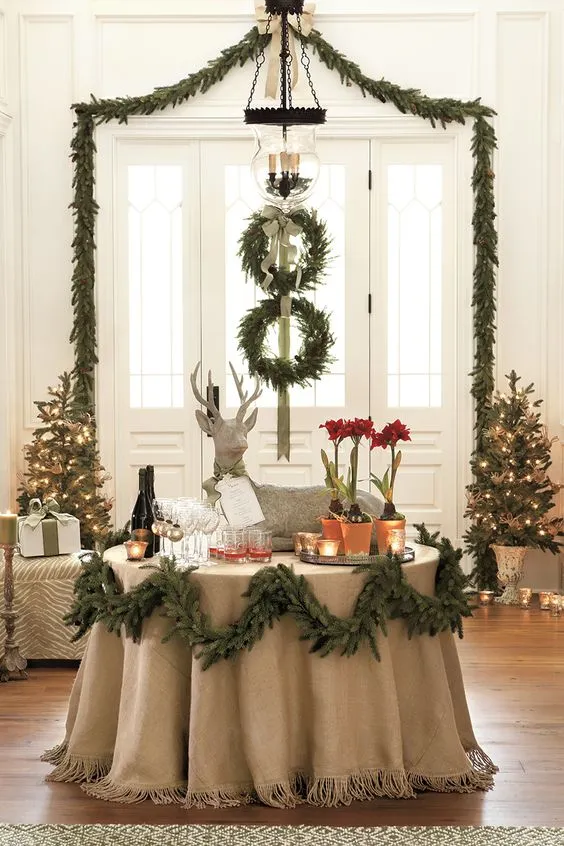
- Set a shallow footed bowl or wide compote in the middle of the table and fill it two-thirds with water.
- Crisscross three or four leafy branches so they fan past the rim and create a wide base.
- Add five to seven stems in one color family, cutting them at staggered heights.
- Place a single contrasting bloom off-center, then step back before adding anything else.
- Set two glass candle holders beside the bowl, flames below eye level.
- Wipe the rim, remove stray leaves, and resist the urge to add more.
Staying under twelve inches tall. That is the whole design. An elegant table is a table where people can see each other, and no amount of beautiful flowers compensates for six guests craning around a bouquet. Keep everything low and wide, then put the height where it does not matter: a tall arrangement on the sideboard, the mantel, or the entry your guests walk through first. The table itself should feel open, generous, and a little under-filled.
28. Ornament-Filled Centerpieces: Pretty and a Little Fragile
- Measure the bowl’s interior — ornaments need roughly 1.5 times their diameter in depth to look full rather than cramped.
- Weigh the bowl empty, then think about carrying it. If it is an heirloom, set it on a tray first.
- Decide now whether glass ornaments are safe with kids, pets, or a wobbly table leg in the house.
- Add a felt pad or cloth layer under the bowl — glass on wood scratches both surfaces.
- Count how many ornaments you actually own before you plan the arrangement.
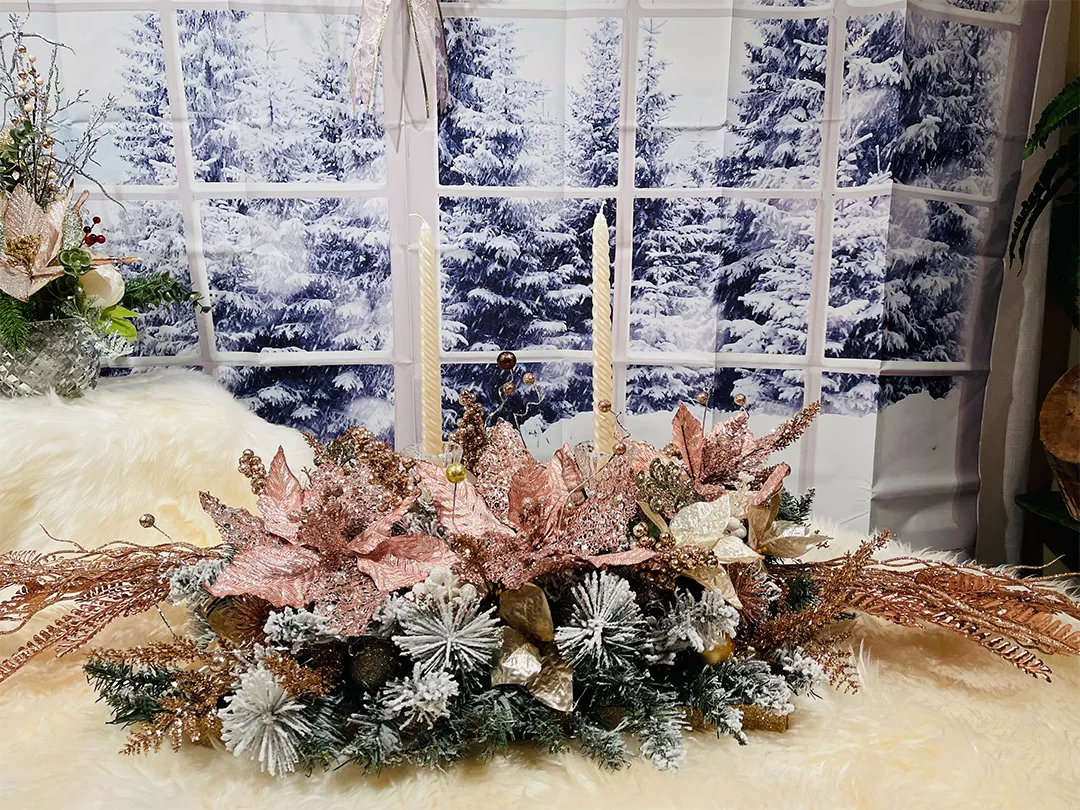
Mix three sizes and at most three finishes, and put the largest pieces in first so the small ones settle into the gaps instead of sitting on top. If the bowl is clear glass, line it with a folded piece of linen or a strand of fairy lights; an empty vase full of loose baubles looks unfinished without something behind it. For a table you actually eat at, swap the bowl for a shallow tray — the same ornaments read as a scatter instead of a mound, and you can move it with one hand.
29. DIY Centerpieces: What Actually Survives a Real Dinner
Three things fail on homemade centerpieces, every time. Hot glue lets go on cold glass, so use floral clay or wire instead. Dollar-store candles burn down in ninety minutes and drip, so buy better tapers even if everything else stays cheap. And soaked floral foam crumbles into green crumbs you will be wiping off the tablecloth for a week; use a watertight liner and chicken wire if you want stems to stay put. Compare with Idea #8, where the whole arrangement sits in a tray and lifts off the table in one motion.
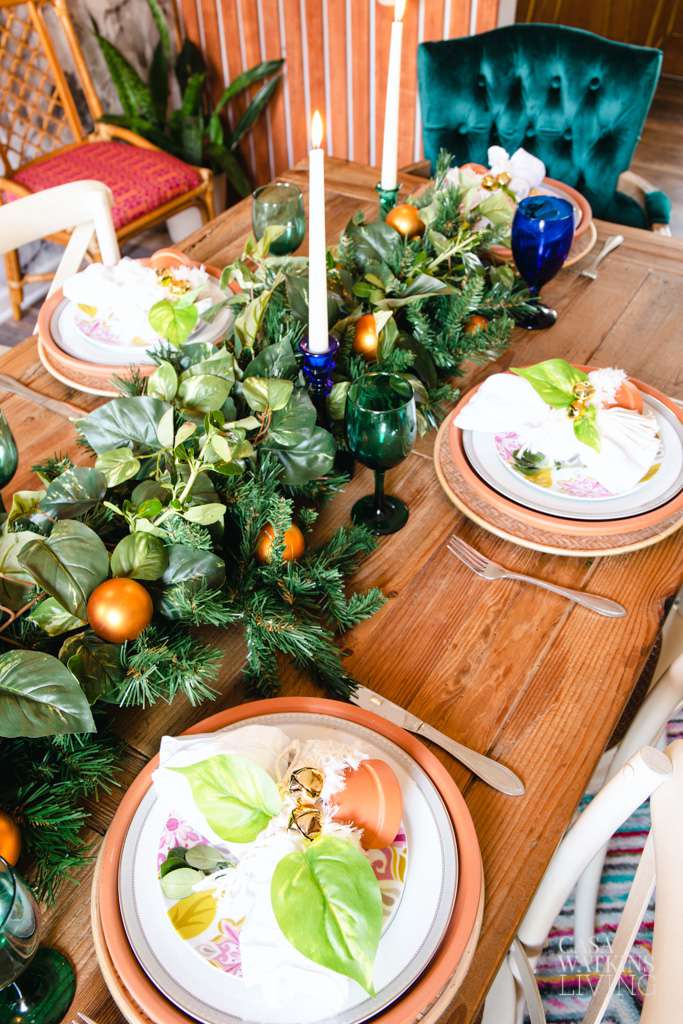
A workable DIY formula: 50% base greenery, 30% mid-height filler, 20% focal elements. That is ten stems of greenery, six of something textural like eucalyptus or pinecones, and four things that draw the eye — a bloom, a berry cluster, a candle. The ratio keeps arrangements from looking either sparse or like a craft store exploded. Swap the focal 20% and you change the entire holiday: red berries for traditional, dried orange for natural, white roses for elegant. The greenery layer stays constant, which is why it is worth buying in bulk.
Your December Table Starts With One Good Centerpiece
You do not need the biggest arrangement in the room — you need one that lets people see each other, smells faintly of cedar, and takes twenty minutes to put together on a Tuesday. Start with one of these, live with it for a week, then layer in the candles and the berries once you know it fits your table and your people.
📌 Pin your favorite to a holiday board now — come December 20th, you will be very glad you did.