You know that feeling when a Pinterest photo stops your scroll cold — a flocked tree glowing in the corner, garland climbing a staircase — and you think, my house could look like that. Then you close the app and have no idea where to actually start.
So we did the digging. After filtering through hundreds of options at Michael’s, HomeGoods, Target, Walmart, and Amazon, we narrowed it down to 31 ideas that genuinely deliver — running from about $18 up to $2,400, so there’s a version for every budget and every square foot. You’ll find traditional red-and-gold grandeur, quiet Nordic minimalism, romantic blush pastels, and modern holiday styling that skips the tinsel entirely — with budget and luxury versions compared side by side.
The 2026 shift? Decorating at eye level — mantels, consoles, and tablescapes people actually sit next to — instead of filling every surface in the house.
Pin this guide for later — your future self will thank you when it’s time to actually do this. And stay until the end, because we break down the three most common mistakes that quietly ruin otherwise beautiful holiday rooms.
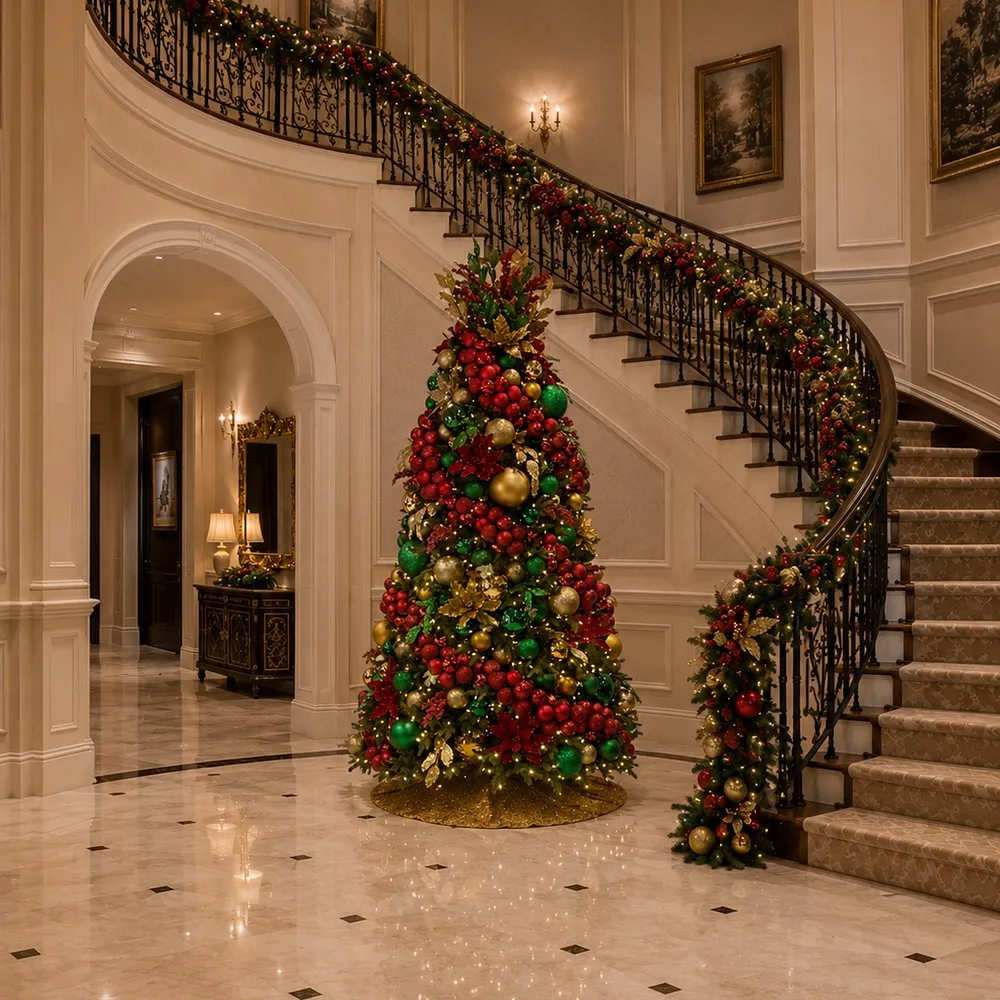
1. Red-and-Gold Christmas Tree in a Grand Marble Foyer
Garland on a curved staircase reads as one continuous ribbon only if you tie it, not drape it. Secure the greenery with clear zip ties every 14 to 18 inches, and pinch the railing between two twisted strands so the black iron balusters stay visible — a single garland hung flat looks thin from below. String your lights onto the garland before it goes up, so you’re not chasing a cord around a spiral. And stop the garland at the newel post, not the floor. Letting it puddle is what makes a grand entrance look tired.
- Tree and ornaments: $450–$1,400
- Staircase garland and warm white lights: $180–$600
- Console table and gold mirror: $350–$1,600
- Zip ties, ribbon, and floral picks: $25–$70
- Wall paint touch-ups: $0–$90
Total: $1,005–$3,760
Budget alternative: a 7-foot tree with red berries and gold baubles from Walmart ($120), two 9-foot garlands twisted together from Michael’s after Thanksgiving ($70), and a thrifted mirror repainted gold ($35). Same foyer, about $300.
2. Modern Holiday Living Room With Room to Breathe
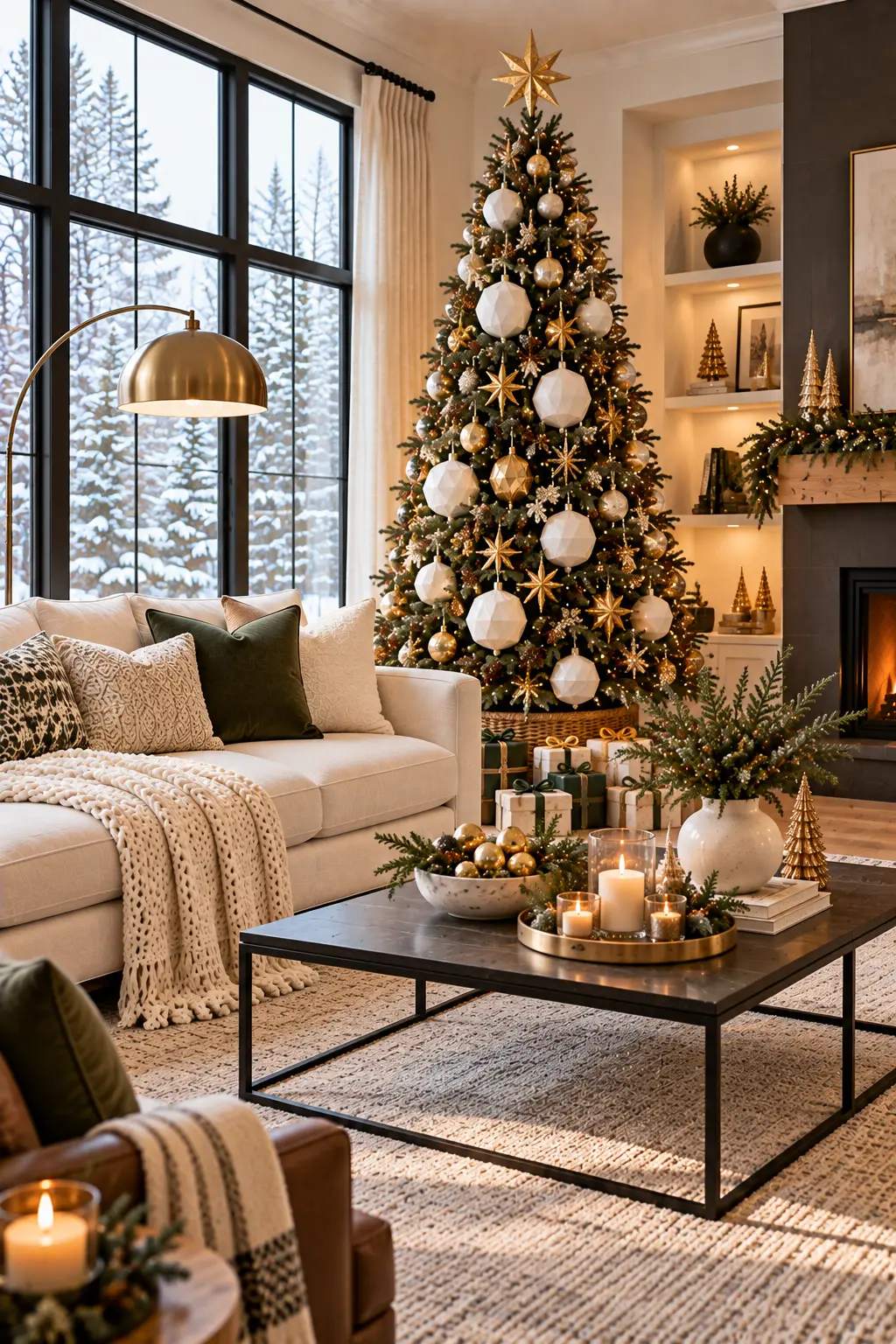
Modern holiday rooms work because of what’s missing. Three things do the heavy lifting here:
- Negative space — a tree, a mantel, one console, not every surface
- A single metallic — brushed brass or matte black, never both
- Matte finishes, which photograph softer under string lights than high gloss
Notice the restraint carries through the whole room: no tinsel, no flocked garland, no competing color story. Texture does the work that sparkle usually does.
The catch with a minimal holiday room is that every object is on stage. One crooked branch or a wrinkled tree skirt becomes the first thing anyone notices. It also photographs better than it lives — without scent and low music, it can feel less like Christmas in person. Put the breakables on the top third of the tree if you have kids, and keep one soft throw within arm’s reach of the sofa.
3. Lit Garland and a Golden Urn on the Dark Wood Console
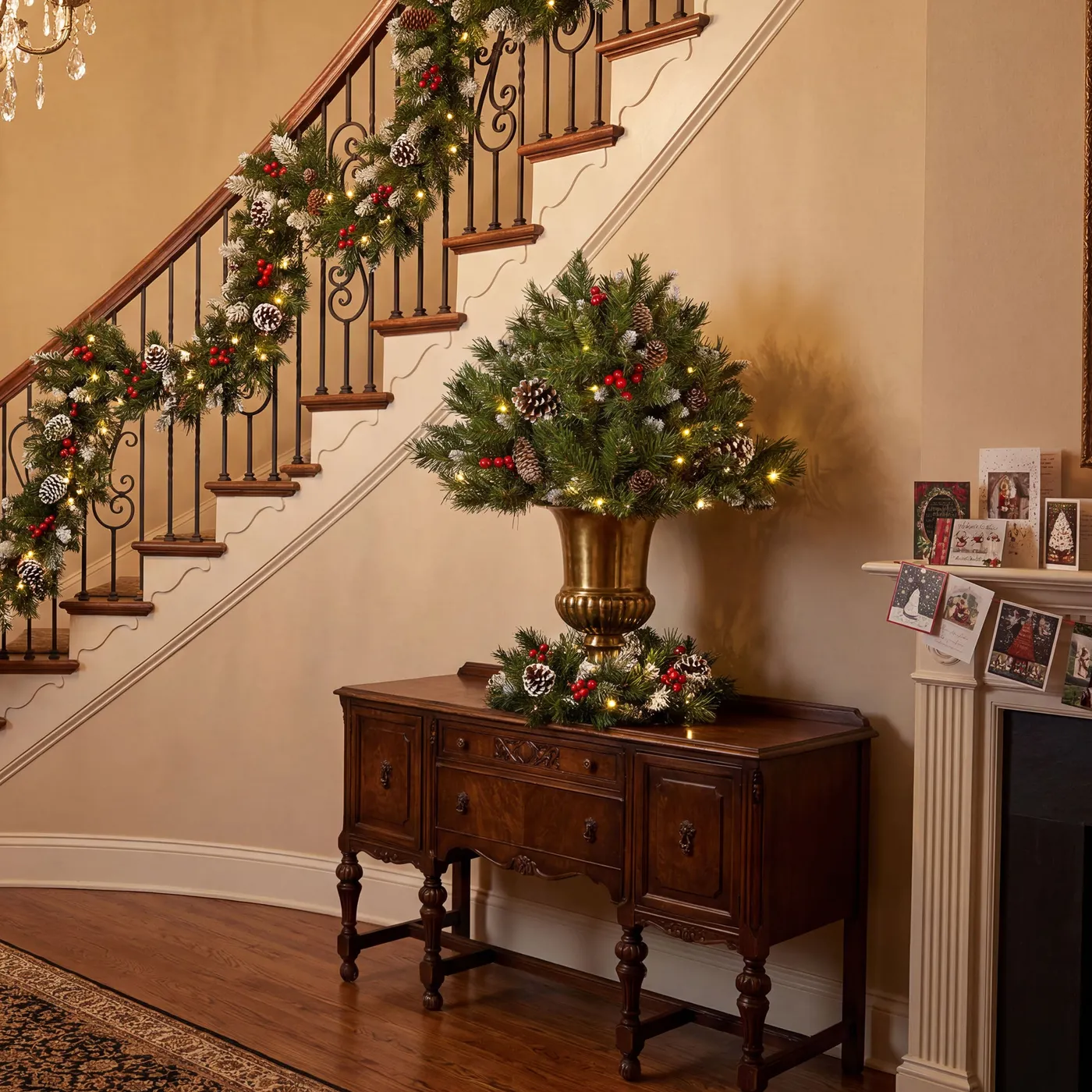
The fluted golden urn is the piece that lifts this from nice to considered. It takes the same ingredients as the garland — evergreen, frosted pinecones, red berries — and repeats them at a completely different scale and height, so the eye travels from railing to console as one story. Remove the urn and you just have a decorated staircase. Keep it and the whole entry reads as a designed room. This is the same red-and-green narrative as Idea #1, told at half the volume.
How to build the urn arrangement:
- Line the urn with a plastic liner or floral foam soaked overnight.
- Start with three or four long evergreen branches, angled outward like a tripod.
- Fill gaps with shorter sprigs, keeping the shape wider than it is tall.
- Tuck frosted pinecones in at eye level where light catches the tips.
- Add red berry picks last, in odd numbers — threes and fives.
Time: about 40 minutes. Cost: $45–$90 if you reuse the urn.
4. Elegant Holiday Staging That Still Looks Lived In
Staging-style holiday decor is mostly restraint, and restraint is cheap. A pre-lit tree from Walmart ($59), a grapevine wreath with a wide velvet ribbon from Target ($22), and three pillar candles on a tray from IKEA ($18) will read far more elegant than a trunk full of dollar-store novelties. Shop thrift stores in January for silver trays and glass vessels — they’re marked down 80% and photograph like mercury glass. You don’t need a $5,000 decorator to get this look. You need fewer, larger things.
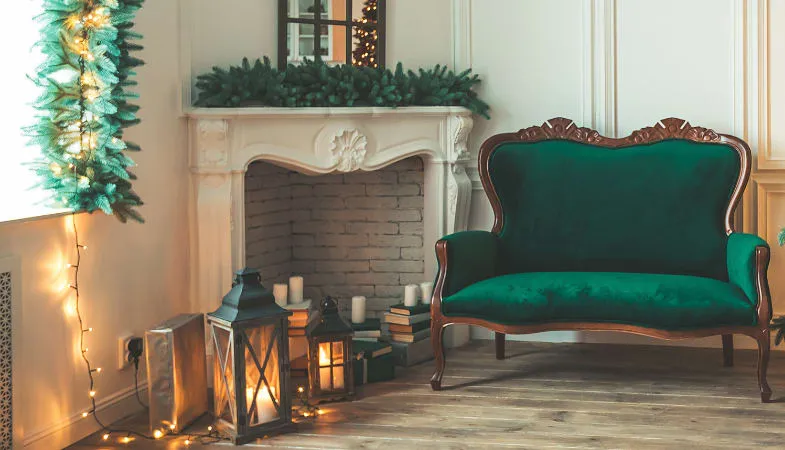
The visual formula runs about 70% neutral (walls, sofa, floor), 20% evergreen, and 10% metallic warmth. Swap the evergreen for eucalyptus and it turns modern; swap the gold for pewter and it goes winter cabin. Keep the ratios and you can change every object in the room and still land the same feeling. That’s the whole point of style math — the proportions do the work, not the price tag.
5. Indoor Holiday Arrangements That Don’t Look Like Lobby Flowers
For arrangements that hold up indoors, skip the foam dome and build a mechanical base instead: a low bowl, a small frog or ball of chicken wire, and a tape grid stretched across the top. Then work in odd numbers — three branches, five stems, seven berries — and keep the whole thing about 1.5 times the height of its container. Anything taller blocks conversation across a table, which is the fastest way to turn a beautiful arrangement into an annoying one.
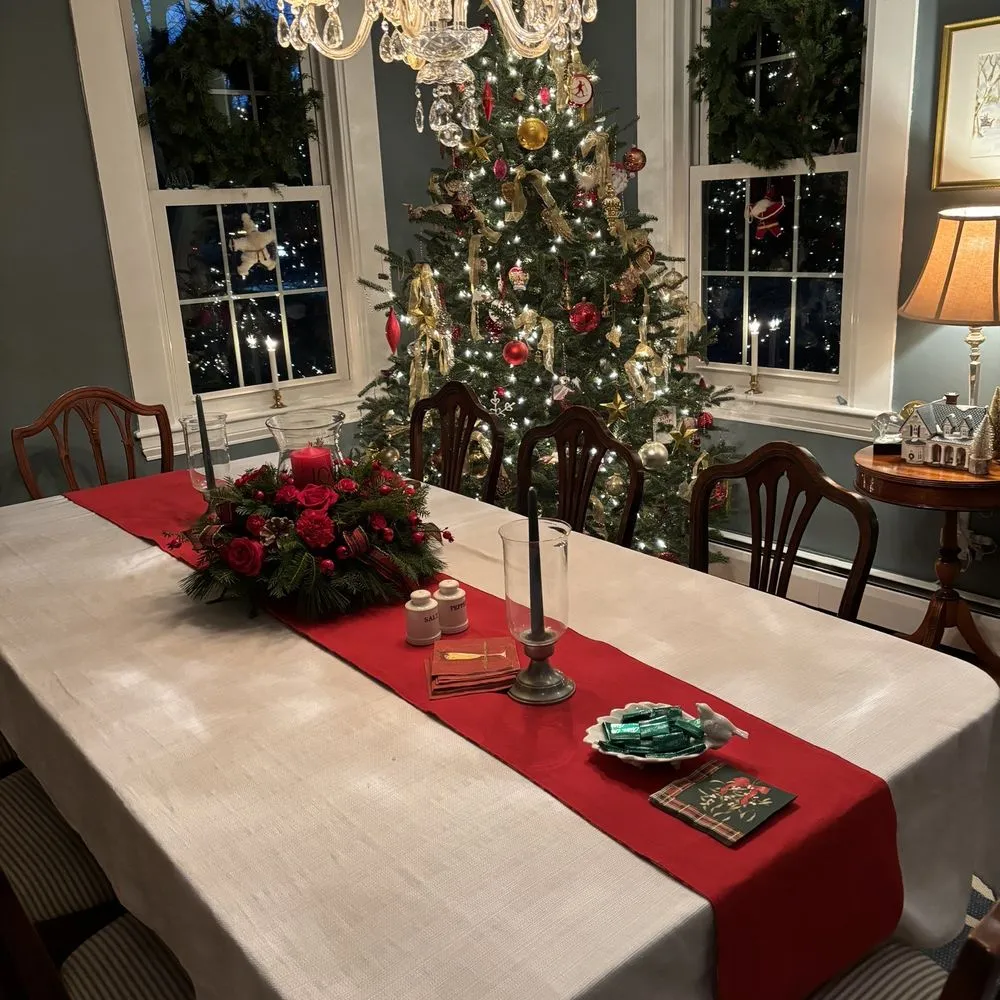
Arrangements scale to the surface beneath them. On a 48-inch round dining table, stay under 14 inches tall so people can see across. On a 60-inch console, you can go to 24 inches. In an entry with 9-foot ceilings, a 30-inch floor arrangement anchors the space; under an 8-foot rental ceiling, that same piece crowds the door. If your room is tight, a low tray vignette on a side table gives you the same festive hit without eating a single square foot of floor.
6. Holiday Staging Where the Decor Packs Away in One Box
Holiday staging isn’t just for sellers anymore. Through 2026, renters and downsizers have been treating December decor like a capsule wardrobe — a tight set of pieces that all speak to each other and store in one bin. Designers have started calling it the one-box holiday, and it’s a direct reaction to years of accumulating mismatched ornaments. The upside is real: less storage, faster setup, and a room that always looks intentional. It has staying power because it’s less about trend than about editing.
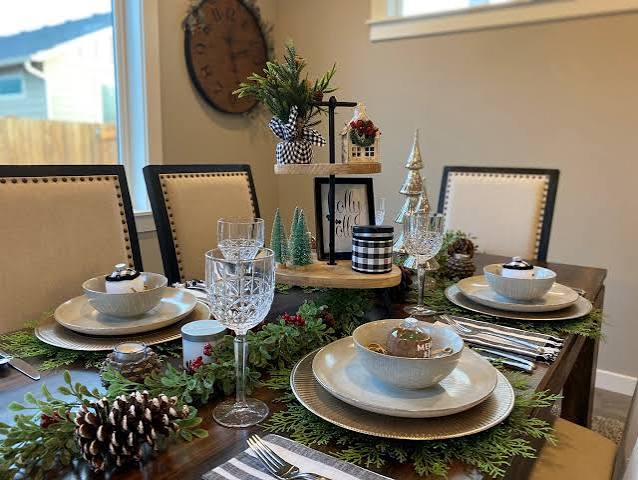
One honest warning: staged rooms can feel a little cool to actually live in. If this is your family home and not a listing, add one sentimental thing that doesn’t match — a kid’s ornament, a chipped heirloom Santa. A room with zero mess reads as a showroom, and guests relax less in a showroom. And if you’re selling, keep decor under roughly 20% of any surface so buyers can still see the architecture they’re paying for.
7. Flocked Tree in Champagne Gold, Reflected in an Arched Mirror
Two things make this corner feel expensive. First, the ornament palette is limited to just two finishes — matte white and a shiny champagne gold — so a heavily flocked tree never turns into visual noise. Second, the arched mirror behind it doubles the light and effectively gives you a second tree for free. The wrapped gifts in beige and cream continue the same palette down at floor level, which is why the whole vignette reads as one composition instead of a tree plus some boxes.
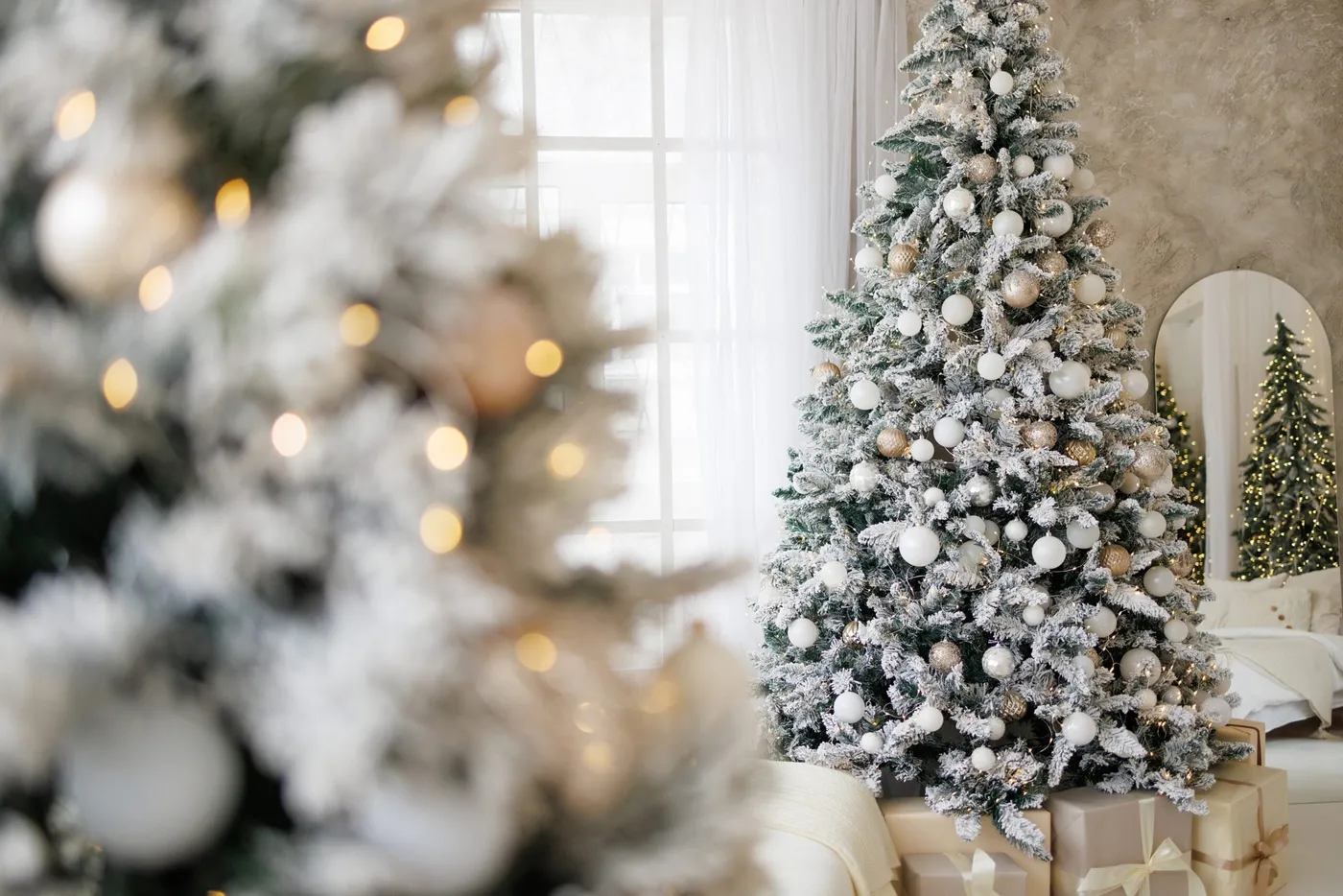
Flocked trees shed. Expect a light dusting of fake snow on the floor every time you brush past, and vacuum it with a brush attachment rather than a beater bar, which grinds the coating into the carpet. Store it in a zippered tree bag, not a cardboard box, or the flocking yellows within a season. Keep it away from real fireplaces and hot vents too — the coating gets tacky. If you love the look but hate the cleanup, a lightly frosted tree gives you 80% of the effect with half the shedding.
8. Blush Pink and Cream Living Room With Cable Knit Stockings
The formula is 60% cream (walls, sofa, crochet tablecloth), 30% soft blush, and 10% gold. That last 10% matters more than it sounds — without the gold-framed mirror and the gold ornament caps, a pink Christmas can tip straight into nursery territory. Keep everything matte except the gold, and spread the pink across at least three textures: rose blooms, satin ribbon, and a chunky knit stocking. Swap blush for sage and the same math gives you a completely different, equally pretty room.
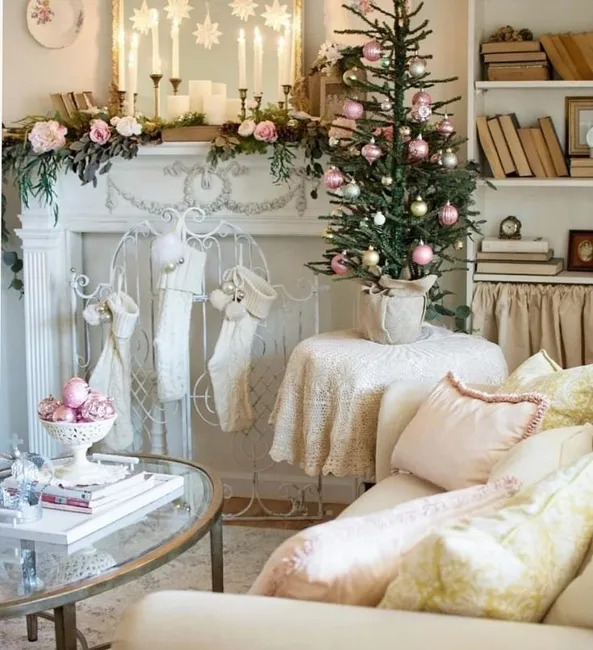
Hang stockings so the bottom sits 6 to 8 inches above the hearth — closer is a fire risk with a real flame, higher and they float. On a mantel with a floral garland, run the greenery first, then nestle the candles into it rather than setting them in front. Use white pillar candles in odd heights like 4, 6, and 9 inches, and light them ten minutes before guests arrive; the wax pools unevenly, which is exactly what makes it look real.
This palette works best in rooms under 300 square feet with at least one large window, because pastels need daylight to stay crisp. In a north-facing room or a basement, blush reads gray — add a warm 2700K lamp and it comes right back. For rooms over 400 square feet, the deeper palette in Idea #7 holds up better at a distance.
9. Silver Candelabras and Blush Tapers Against a Mirrored Wall
- Candelabras (two to three, thrifted or Amazon): $60–$220
- Blush taper candles: $14–$40
- Mercury glass globes and glitter ornaments: $45–$150
- Cut-glass stemware, set of six: $40–$180
- Evergreen garland runner: $35–$120
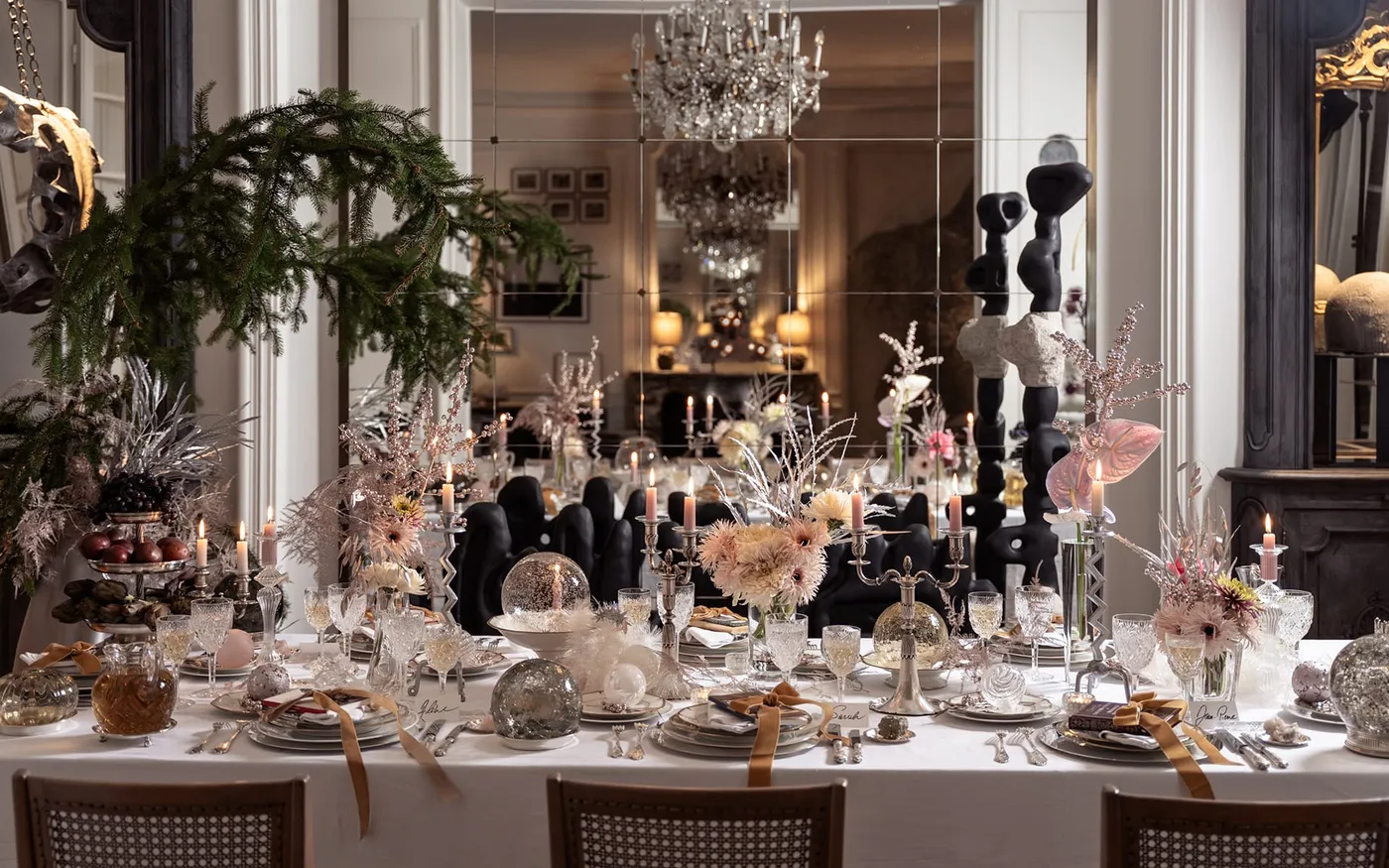
Total: $194–$710
Budget alternative: dollar-store candlesticks spray-painted chrome ($12), IKEA tapers ($6), and mirrored candle plates from a thrift shop ($8). Roughly $60 for the same sparkle, and nobody at the table will know the difference.
The mirrored wall does more here than any ornament. It doubles the candelabras, doubles the chandelier, and turns a single garland into a whole room of greenery. Take it away and this table is still lovely, but flat. Think about that before you invest in centerpieces: a large mirror, a glass-topped table, or even a framed mirror leaning behind the buffet gives you twice the decor for the same money.
10. Berry-and-Candle Garland With a Flocked Tree Behind It
Garland runner, start to finish:

- Lay the garland on the table first and let it settle for an hour so the branches relax.
- Weave in a thinner second garland of eucalyptus for texture and a softer green.
- Wire in red berry clusters in three groups rather than scattering them evenly.
- Set candles on small glass or brass plates so wax never hits the greenery.
- Light everything, then build place settings around the candles — never the other way around.
Time: about 30 minutes. Cost: $40–$110 for a 6-foot table.
Compare with Idea #9 — same palette, completely different energy. Where that mirrored table is cool and silver, this one is warm and wooded: a flocked tree soft-focused behind, gold accents instead of chrome, and candles doing all the lighting work. The depth of field is the real secret. Keep the tree slightly out of the way, lit only with warm string lights, and the table stays the star of the room.
11. Frosted Tree and Snowflake Stockings by a Candlelit Hearth
Check these before you commit:
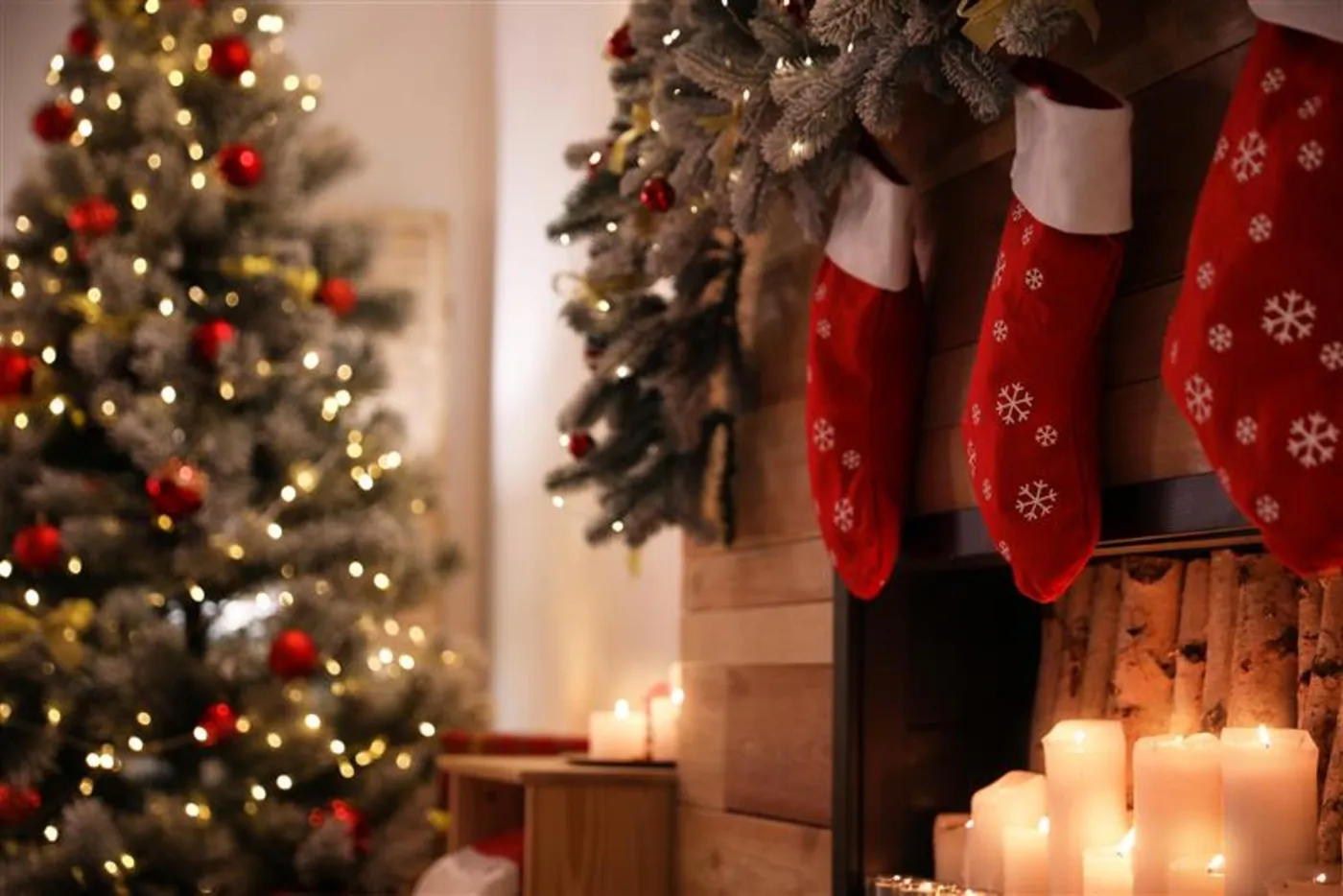
- Measure mantel depth — you need at least 8 inches for garland plus stockings.
- Confirm the hearth is decorative or the fire is off before hanging anything flammable.
- Count your outlets; birch logs and candles need no power, but a pre-lit tree does.
- Decide your red in advance — bright cherry reads playful, deep cranberry reads traditional.
- Check ceiling height for a topper; a star needs roughly 10 inches of clearance.
Real birch logs are gorgeous and mostly inert — they dry out, they don’t rot, and they’re safe around a decorative hearth. Pillar candles are the actual maintenance item: keep wicks trimmed to a quarter inch or they tunnel and smoke the wall above the mantel. Faux fur skirts and frosted garlands both collect dust, so shake them out at the start of every season. And if you use real candles, never leave the room — no decor is worth that.
12. Staging the House for the Holidays Without Stripping It Bare
A good rule for holiday staging: decor should touch no more than three surfaces per room, and every room should keep at least two undecorated horizontal planes. In a 12×14 living room, that means the tree, the mantel, and the coffee table get decorated while side tables, bookshelves, and windowsills stay clear. In rooms under 150 square feet, drop to two decorated surfaces. If you want a richer, fuller, more maximalist look, that’s a different job entirely — one where the tree itself becomes the entire event.
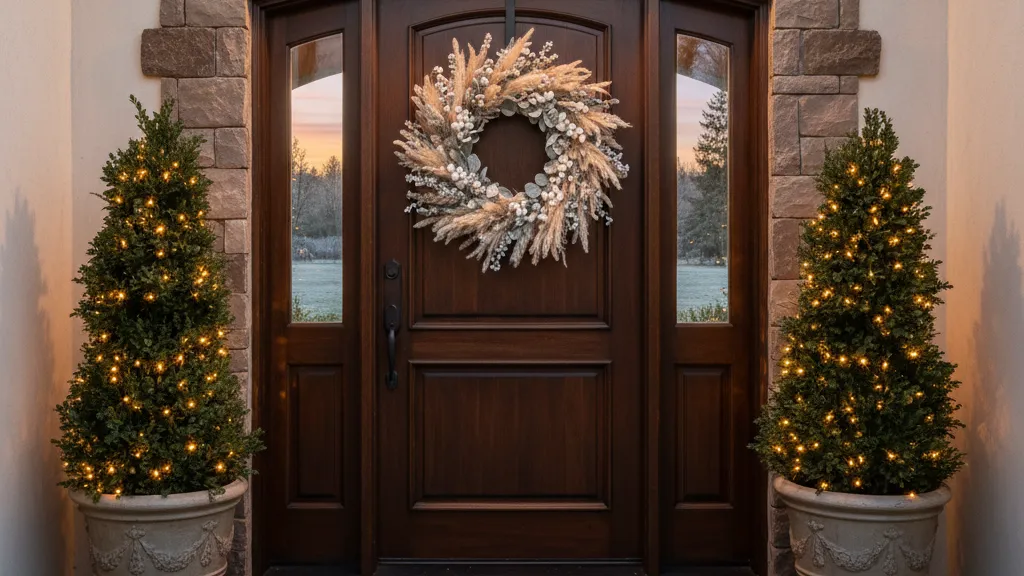
Staging doesn’t have to cost anything you don’t already own:
- Shop your own house first — pull the plain white dishes, a silver tray, a linen runner.
- Target and Walmart sell pre-lit garlands for $15–$35 that read fine from six feet away.
- Facebook Marketplace is full of used artificial trees in early December, $20–$60.
- Skip the ornament set; one color family from the dollar store, hung densely, beats a mismatched collection.
Total: about $80 to stage an entire living room.
13. Densely Dressed Flocked Tree in Gold, Silver, and Rose Gold
When you want a full, layered tree, decorate in layers and count them: lights first (100 bulbs per vertical foot), then ribbon, then large ornaments, then medium, then small filler picks last. Most trees look sparse because people hang everything at eye level where it’s comfortable. Deliberately place a third of your ornaments in the bottom third and another third in the top third — the two zones nobody wants to reach for — and the tree instantly reads as professionally decorated.

The formula is about 55% flocked white, 25% warm gold, 15% silver, and 5% rose gold. That sliver of rose gold is what keeps a classic gold tree from feeling dated. Swap the rose gold for pearl white and it goes full winter wedding; swap the silver for bronze and it warms up for a rustic room. Keep the flocking as your neutral base and you can rotate accent metals every year with just a few new ornaments.
14. A White Tray, Eucalyptus, and Candles on a Side Table
Tray styling, step by step:
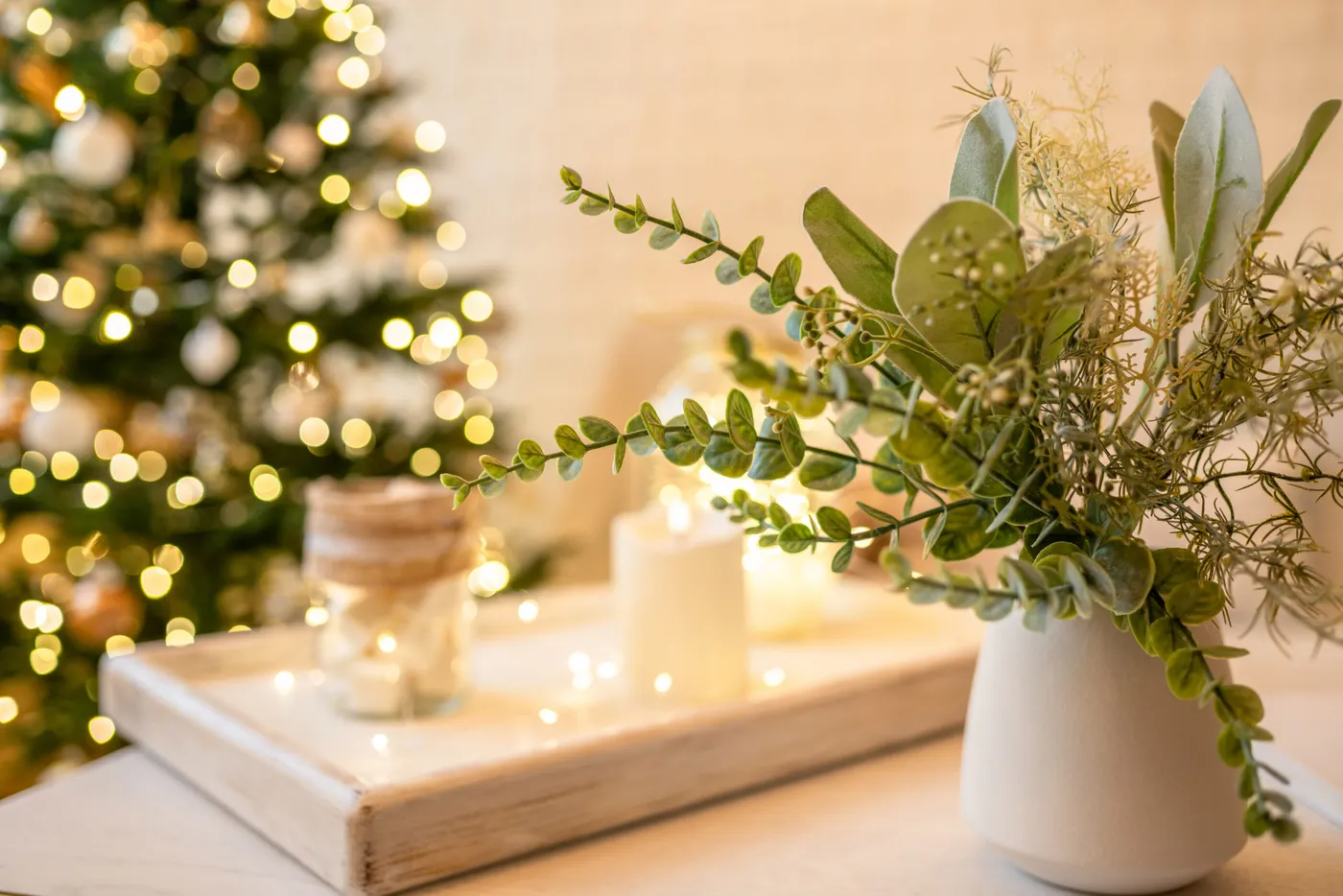
- Choose a tray with a lip — distressed white wood, or any tray you already own.
- Place the tallest item (a ceramic vase with greenery) off-center, not in the middle.
- Add two pillar candles at different heights on the opposite side.
- Tuck a glass jar of fairy lights into the last corner for a low, discreet glow.
- Leave one third of the tray empty. That empty space is what makes the rest look styled.
Time: 10 minutes. Cost: $0–$45.
The distressed white tray is the quiet hero. It gathers four unrelated objects — vase, candles, jar, lights — and gives them a boundary, which is why the group reads as a single vignette instead of clutter on a table. Set those same items directly on the surface and it looks like you just put things down. One inexpensive tray can rescue a whole room’s worth of leftover decor, which is exactly why the centerpiece in Idea #15 starts with the container, not the contents.
15. Three Gold Deer in an Evergreen Wreath Centerpiece
- Gold deer figurines, set of three: $25–$90
- Evergreen wreath, 20 to 24 inches: $22–$70
- Berries, moss, and floral wire: $10–$30
- Votive candles and glass holders: $12–$35
- Battery fairy lights, warm white: $8–$20
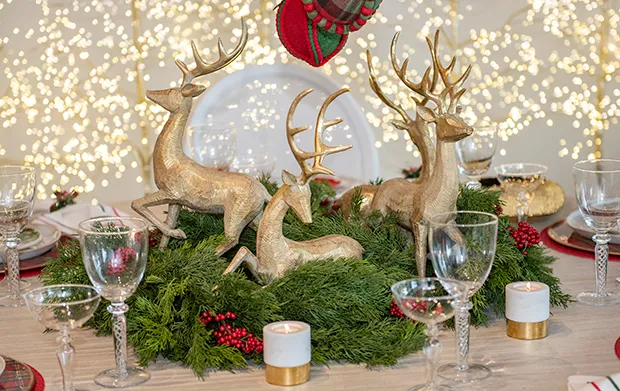
Total: $77–$245
Budget alternative: thrift store brass deer ($6 total), a wreath from Walmart ($14), and dollar-store votives ($5). Under $30 total, and recycled brass often reads more expensive than new gold resin.
Use a wreath as a ring, not a hanging. Laid flat with a mirror or a plate of glass set inside, it becomes an instant centerpiece base that holds candles, figurines, and berries with no foam block in sight. Keep the deer in odd numbers and varying heights — one standing, two seated — and leave the wreath’s inner circle at least half visible so the greenery reads as a deliberate shape rather than a pile.
16. Flocked Tree With Plaid Ribbon and Standing Nutcrackers
Tall gold nutcrackers are dramatic and they are also a tipping hazard. Put them against a wall, on a stable surface, or weighted at the base — a 30-inch figurine on a table edge plus one curious dog equals a broken nose. Plaid ribbon needs discipline too: pick one plaid and repeat it everywhere, because two competing tartans in a single room looks like a holiday aisle, not a design choice. And the burgundy ribbon on a textured canvas is a great trick, but only if the canvas is at least 24 inches wide. Otherwise it reads as a wrapped present nobody can open — one of the mistakes we cover at the end of this article.
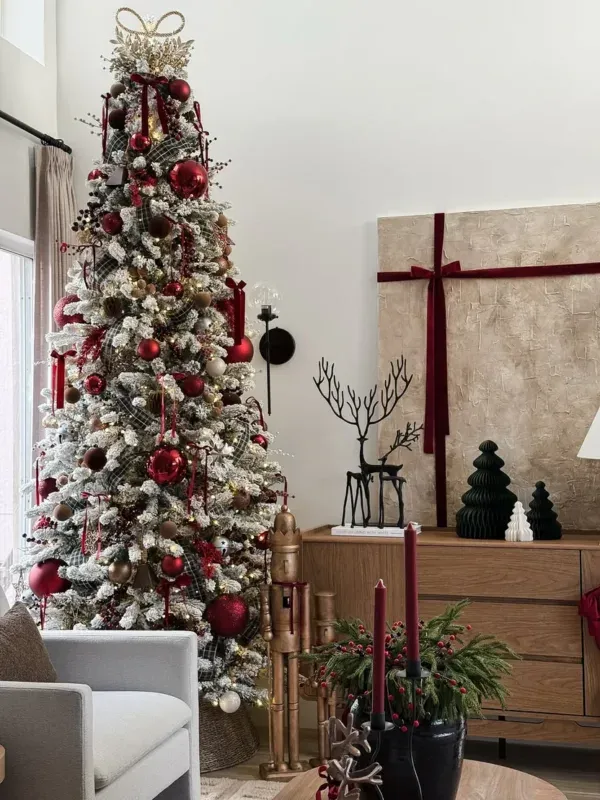
What really sells this room is scale contrast. A very tall tree, oversized nutcrackers, and then small, precise details: red velvet bows, gold baubles, an evergreen centerpiece with slim red candles. Big shapes first, tiny details last. The light oak furniture matters just as much — against white-and-red decor, warm wood keeps a traditional palette from turning cold and candy-cane-ish.
17. Pine-Print Napkins and Velvet-Tied Gold Cutlery
Here’s the math: neutral base 50% (white plates, gold placemats, natural wood table), forest green 30% (moss runner, napkin print, eucalyptus sprigs), red 15% (pomegranates, berries), gold hardware 5%. The clever part is how the gold shows up in tiny repeated hits — cutlery, mirror frame, deer figurine — so nothing shouts. Swap the pomegranates for clementines and you have a sunny Mediterranean table; swap the moss runner for white linen and it reads modern.
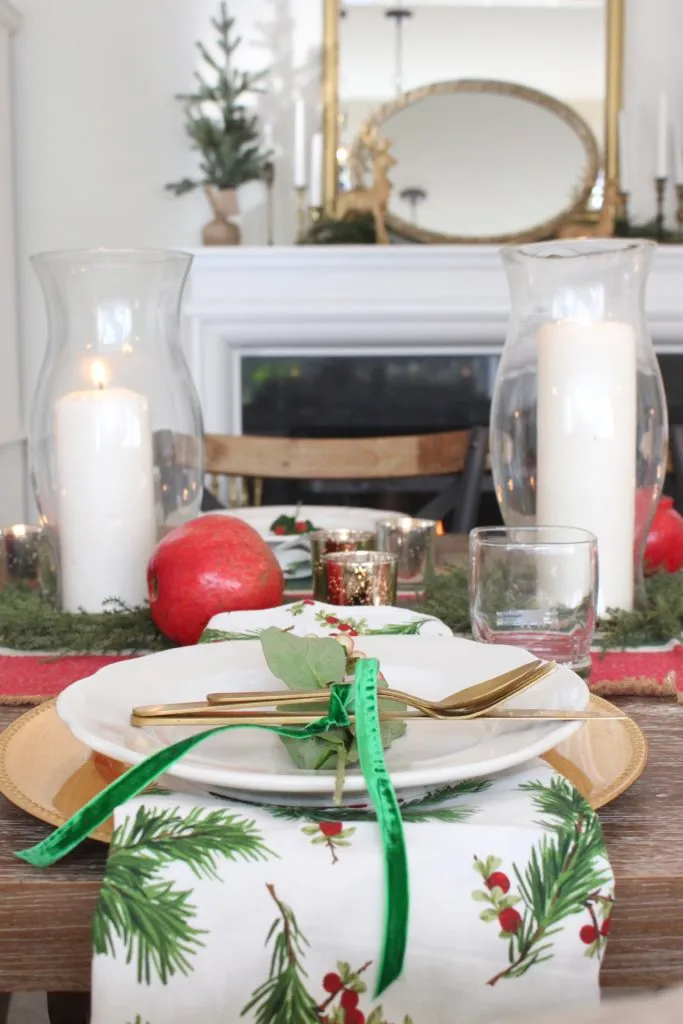
Most of this table is achievable for well under $100. Gold placemats from Dollar Tree ($5 for four), white plates you already own, printable pine-print napkins on cardstock (ink and paper only), and inexpensive gold flatware from Amazon ($25 for a set of 20). Cut eucalyptus from a supermarket bouquet ($8) and tie it with green ribbon. The moss runner? A roll of moss sheet from a craft store, about $12. Compare with Idea #21 — same idea, but that one leans entirely silver, cream, and peach.
18. An Elegant Table Setting Built Around a Nutcracker and Layered Light
is the light layer. An elegant holiday table doesn’t get its glow from a single source — it gets it from three: candles at eye level, a string of warm lights woven low through the runner, and whatever is already overhead, dimmed. The nutcracker is the fun part, but it only feels charming when the light around it is soft and low. Remove the layered light and that same nutcracker looks like a toy sitting on a plate.
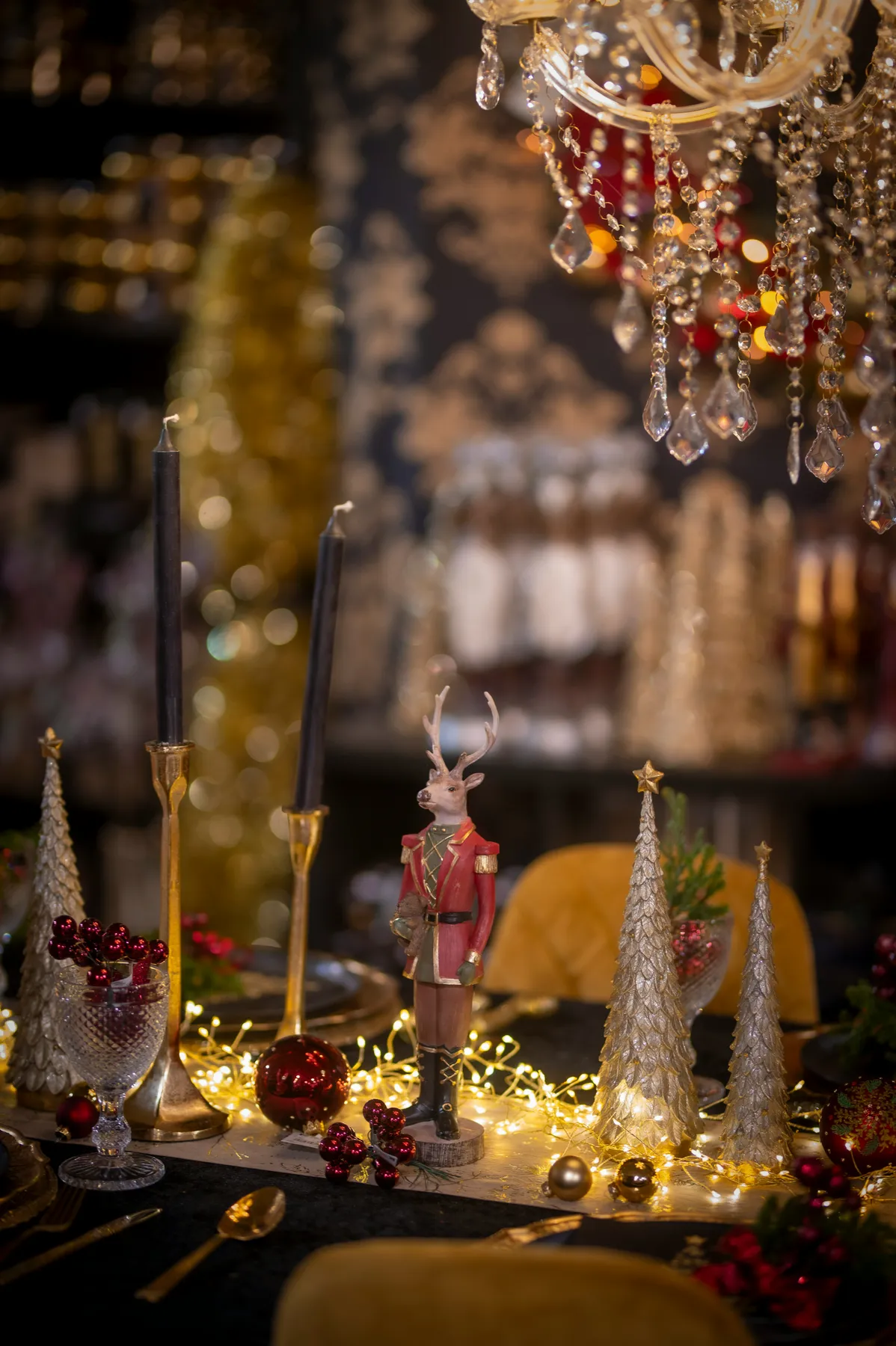
Layer table light at three distinct heights: 4 to 6 inches (votives), 8 to 12 inches (tapers), and 16 to 20 inches (a small nutcracker or figurine). Anything above 20 inches on a dining table blocks sightlines. This works on tables 48 inches and wider; on a narrow 36-inch table, drop the tallest layer entirely and keep everything below 12 inches. If your table is on the narrow side, a low tray vignette on the sideboard carries the height instead.
19. Marbled Crackers and Colored Cut Glass on a Floral Cloth
Mixed glassware looks intentional when you follow one rule: keep the stems the same shape and let color do all the varying. Three amber tumblers, two green, one clear — all the same silhouette. Random shapes plus random colors just looks like a tag sale. The same discipline applies to your cloth: when the tablecloth is patterned, keep the plates plain. That’s the pattern-plus-solid rule, and it’s why the white plates with painted green rims work here while fully floral plates would fight the cloth.
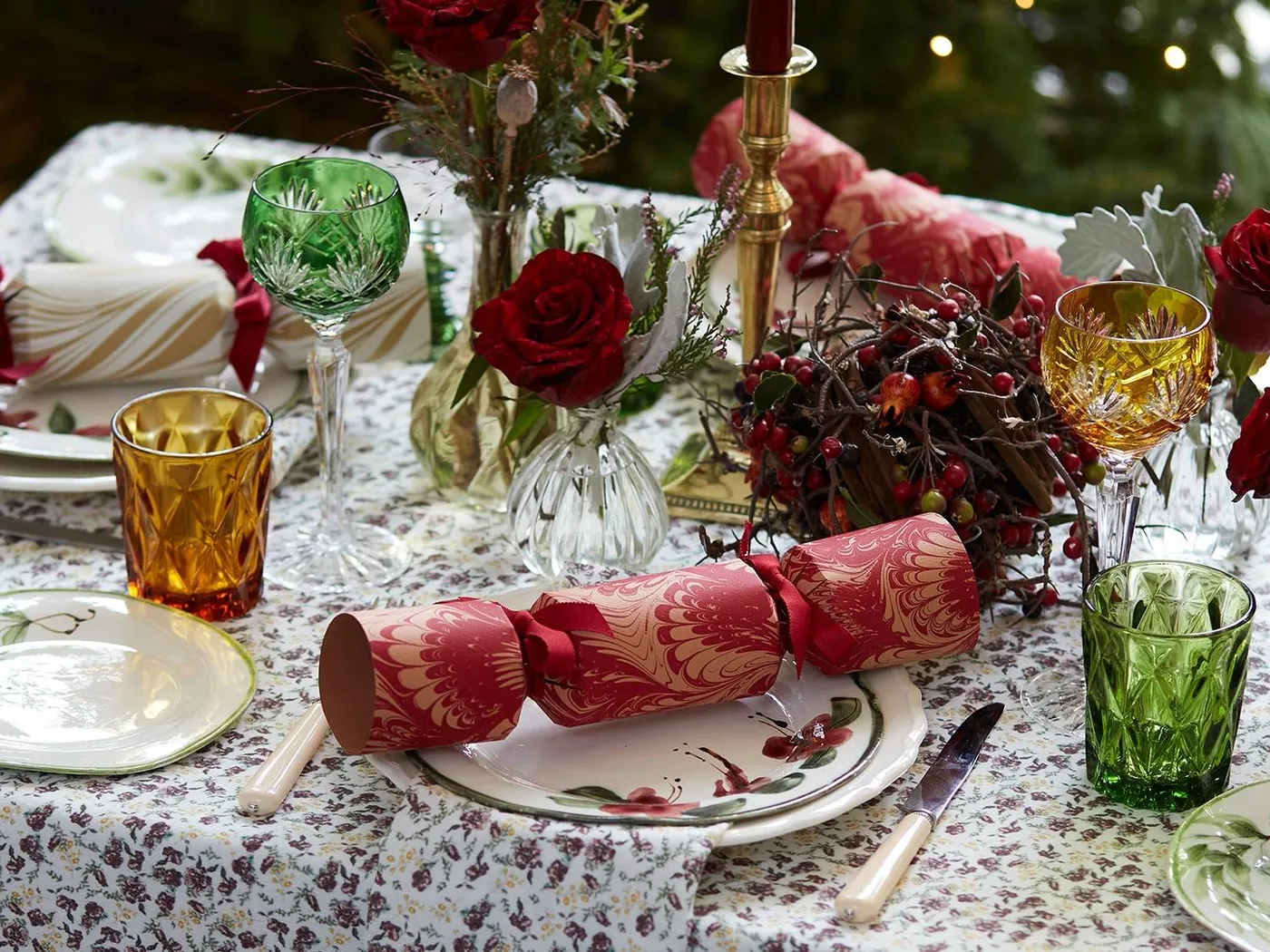
Setting this table:
- Iron the cloth and place a runner down the center for a visual spine.
- Set plates first, then glassware to the upper right, then cutlery.
- Group the mixed glasses by color family instead of scattering them.
- Build three small arrangements rather than one big one — they’re easier to talk over.
- Add crackers last, tied or propped, one per setting.
Time: 25 minutes. Cost: $0 if you own it, $60–$150 if you’re starting fresh.
20. Green Velvet Sofas Around a Live-Edge Table Under the Tree
- Pre-lit 7.5-foot tree: $180–$650
- Ornaments and red beaded garland: $90–$300
- Window garlands with fabric accents: $60–$200
- Reindeer figurines and candles: $40–$140
- Tree skirt and star topper: $35–$120
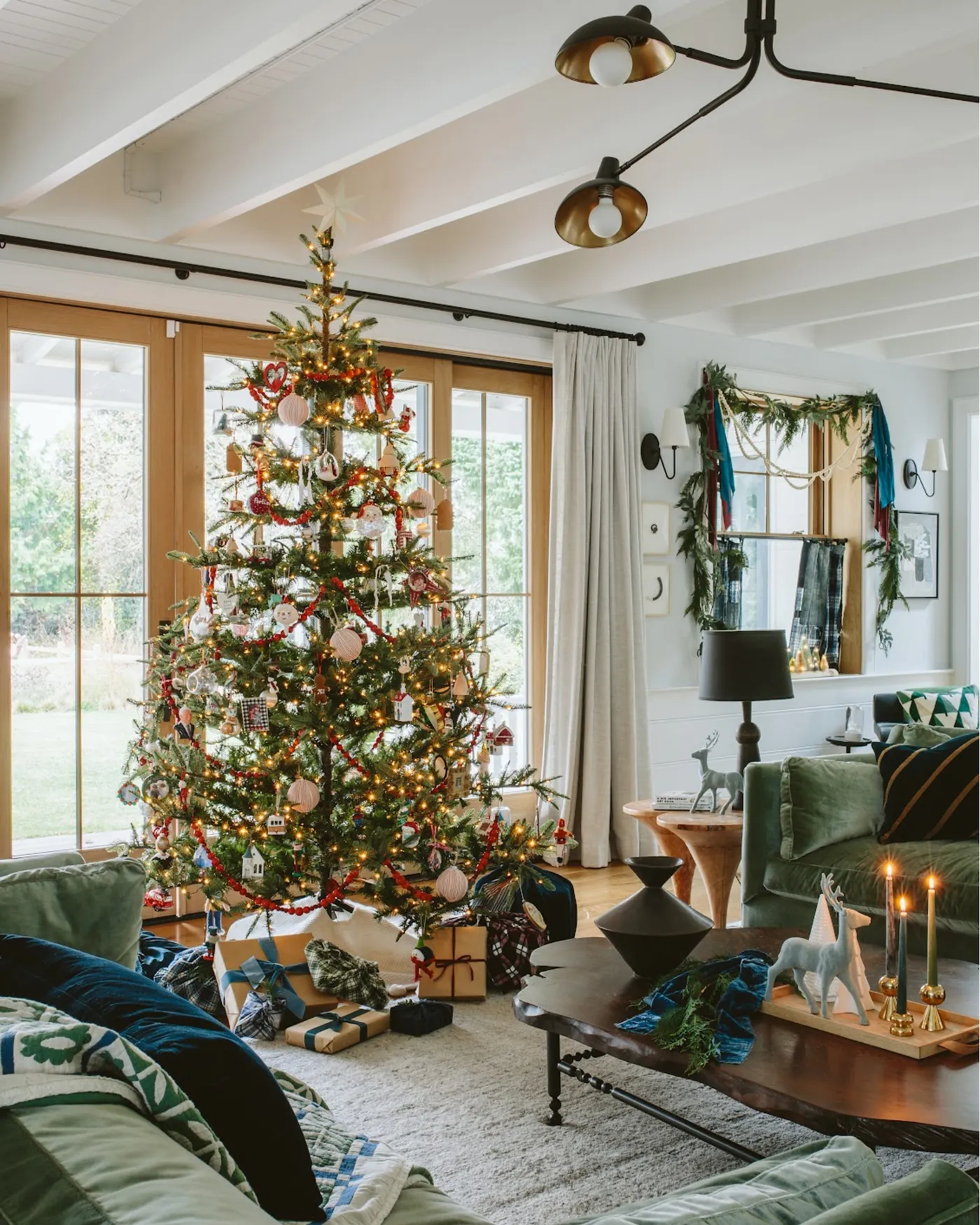
Total: $405–$1,410
Budget alternative: a Marketplace tree ($60), a bag of assorted ornaments from a thrift store ($15), and homemade bead garland from a craft store ($12). Under $100, and nobody notices once the lights are on.
Two realities here. Velvet and pets don’t mix well — green velvet shows every bit of fur and every watermark, so a house with a golden retriever means a lint roller in the side table drawer. And live-edge wood tables and candles are enemies: wax finds the grain and never fully comes out. Use glass hurricane holders or LED pillars instead, and put a cork coaster under anything that melts.
21. Lace Runner, Silver Candlesticks, and Peach Candles
Three principles are doing the work here. Contrast: dark forest garland against pale cream, white, and peach, so the greenery reads like jewelry. Repetition: silver appears in candlesticks, ornaments, and votives at least six times across the table. And restraint: plain white plates on gold chargers, which gives all that metallic detail somewhere quiet to sit. Take away the lace runner and the table still works. Add a patterned plate and the whole thing collapses.
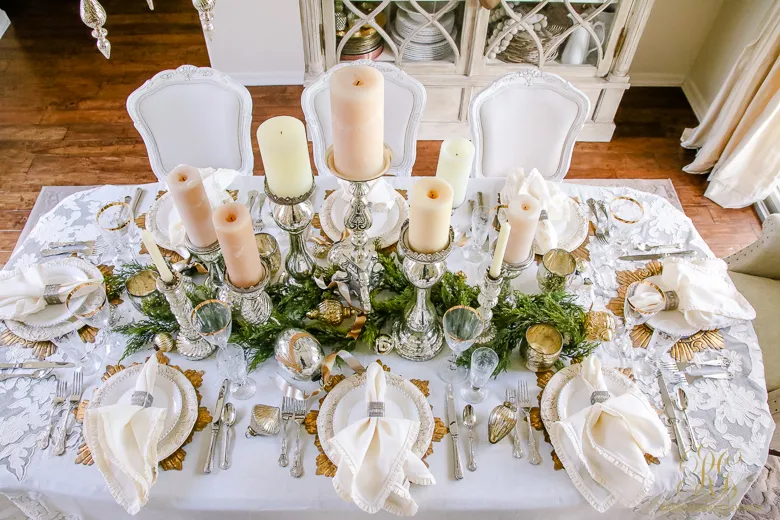
The silver candlestick look is the easiest one to fake. Thrift stores sell brass and silver-plated candlesticks for $3–$8 each, and one can of metallic silver spray paint ($7) unifies a mismatched set in an afternoon. Cream and peach tapers run $10–$16 a pair at Target. Gold chargers from Dollar Tree are $1.25 each. Total for a table of eight, about $60. Buff the candlesticks with a dry cloth once a season and they’ll hold up for years.
22. Brightly Lit Tree With Candy Canes and a Red Faux Fur Skirt
Faux fur skirts are the dust magnets of Christmas. Shake yours out every couple of weeks and spot clean with a damp cloth — never machine wash a fur skirt with a bonded backing or it’ll shed into a bald patch. Candy canes have a shelf life, too; after two seasons they turn cloudy and soft, so buy fresh ones and store them sealed in a cool spot. And if you’re using an artificial tree, budget for replacing the light string every four to six years, which is usually cheaper than hunting down one dead bulb.
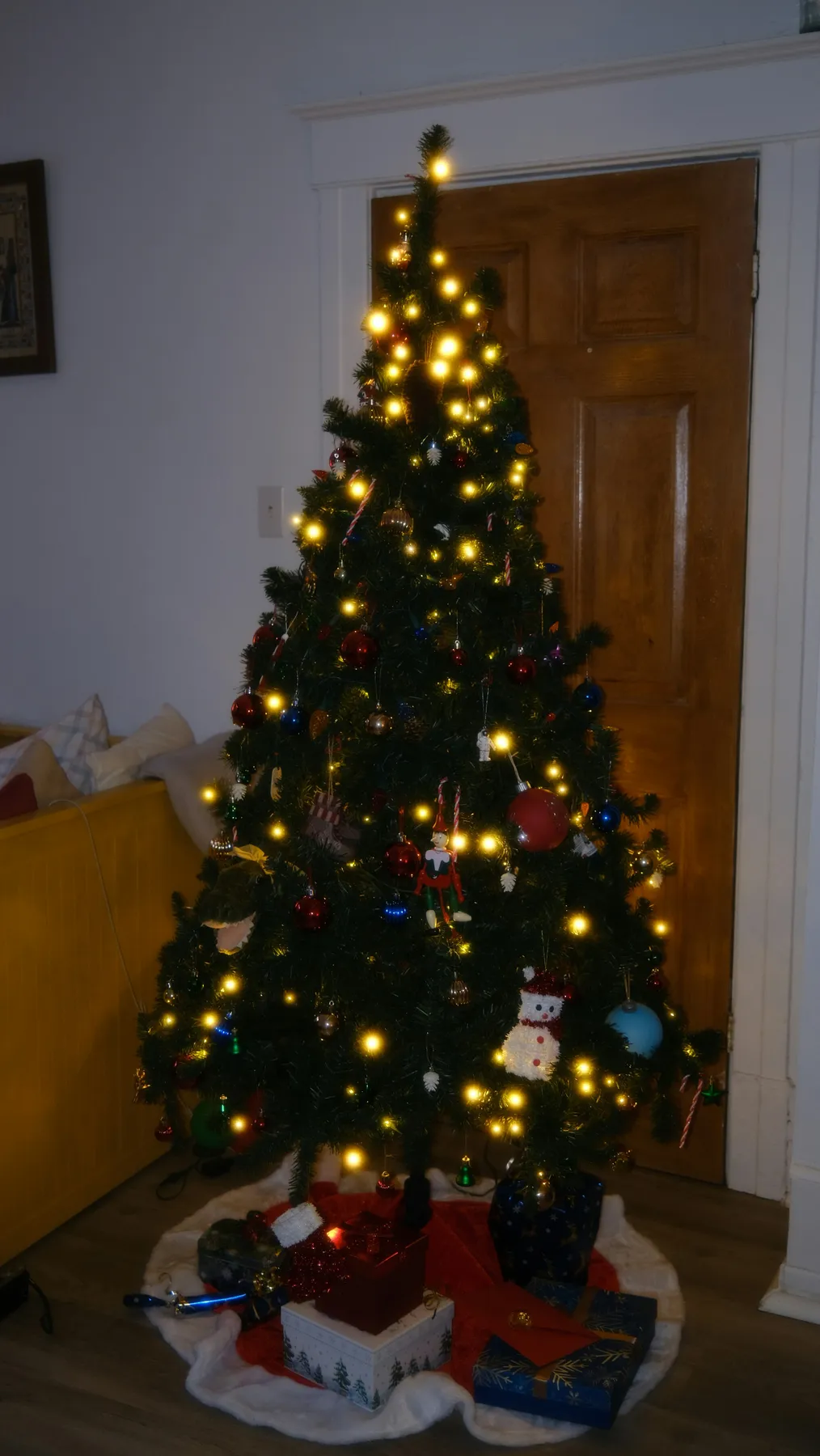
Quick checks before the tree goes up:
- Check tree-to-ceiling clearance; a star topper needs about a foot.
- Confirm your outlet is on a wall switch, or add a foot pedal — crawling under a tree gets old by week one.
- Weigh down the base if you have pets or toddlers.
- Decide colorful or tonal before you hang a single ornament.
- Have a storage bin ready before the tree comes down.
23. Sixteen Ornaments in Gold Glitter, White, and Striped Glass
Ornament sets work like a playlist: 40% solid gold glitter, 30% white with gold detailing, 20% clear glass with gold stripes, 10% wildcard. The patterned pieces need the plain ones to breathe, and the clear glass is the quiet trick that makes a tree look expensive — it catches light without adding visual weight. If you buy a box like this, resist adding a random red or blue ornament to it. Two years from now you’ll want a second matching box, not a mismatched tree.
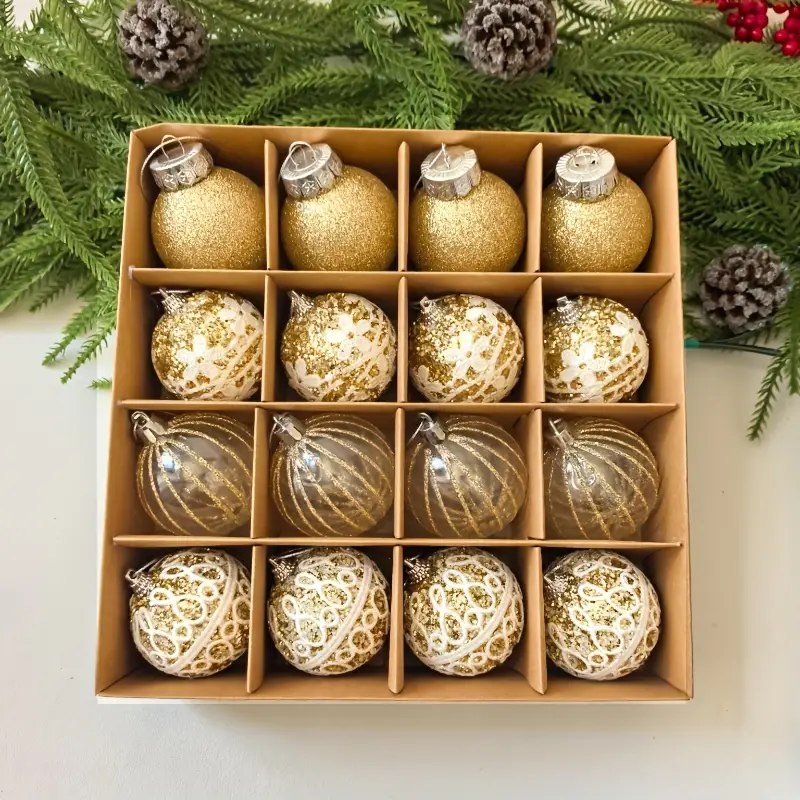
The clear glass ornaments with gold stripes are the one thing worth paying full price for. Solid baubles reflect light; glass ornaments transmit it, which means they glow from the inside when string lights pass behind them. That’s the whole difference between this box of sixteen reading as elegant and reading as department-store. If you upgrade only one category of ornament this year, make it the glass.
24. Victorian Christmas Details, Layered Close and Low
Victorian-inspired Christmas decor keeps circling back because it’s essentially the original Pinterest aesthetic — dense mantels, real ribbon, fresh greenery and fruit, and almost nothing plastic. In 2026 it’s being revisited by people who are tired of monochrome minimalism. What’s changed is the delivery: instead of a whole Victorian room, it’s Victorian details in modern doses. A single heavy swag, a wide velvet ribbon, a pair of brass candlesticks. It has staying power because it’s rooted in how Christmas was actually decorated, not in a trend cycle.
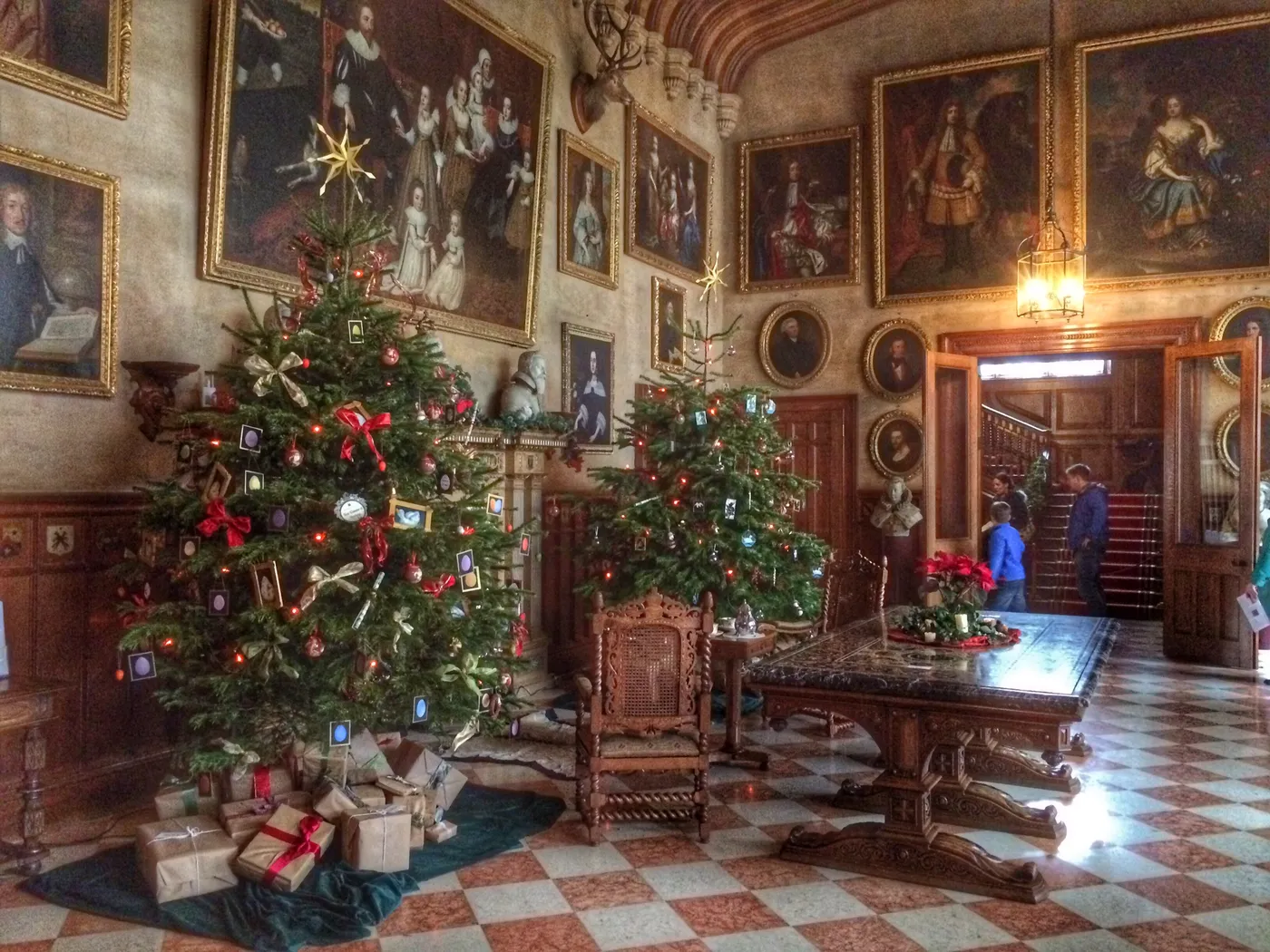
Victorian-inspired decor lives at eye level and below. That means heavier garlands with visible mechanics — wire, ribbon, ribbon-wrapped stems — no plastic picks, and layering by depth rather than spreading things out evenly. Cluster three objects within a 12-inch area, then leave a 24-inch gap. If you’re translating this into a modern home, choose one surface, a mantel or a buffet, and layer it densely rather than spreading Victorian details thinly across five rooms.
25. Elegant Holiday Dining Without the Formal Fuss
Formal dining decor should scale to the room, not the table. In a dining room under 120 square feet, keep the centerpiece under 12 inches tall and skip floor arrangements entirely. In a 150-to-200-square-foot room, you can run a garland runner and use tapers. Over 250 square feet is where tall candelabras and a second surface (a buffet, a bar cart) really earn their keep. Compare with Idea #19, where the same elegance is achieved with pattern instead of height.
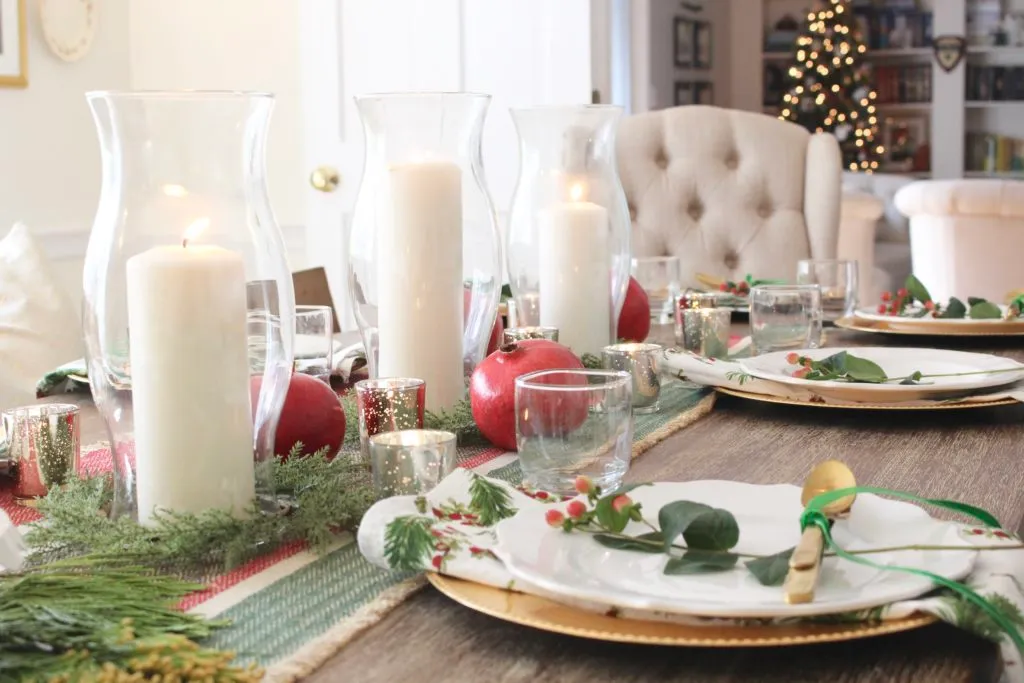
The most common failure in elegant dining is simply too much on the table. Guests need a landing spot for a glass, a phone, and their elbows. If you can’t set a dinner plate down without moving three objects, you’ve over-decorated. Set the table, then remove one thing from each place setting and see if it looks better — nine times out of ten it does. And if you use tall tapers, don’t light them until people are seated.
- Linen tablecloth and napkins: $40–$160
- Garland runner or centerpiece: $35–$150
- Candlesticks and candles: $30–$120
- Charger plates: $25–$90
- Glassware: $0–$120 (use what you have first)
Total: $130–$640
Budget alternative: a white flat sheet as a tablecloth, Walmart chargers, and discount-store candles. About $45, and the table reads just as formal once the lights are dimmed.
26. Victorian Christmas in a Historic House, Room by Room
Translating a historic Victorian look into a modern home:
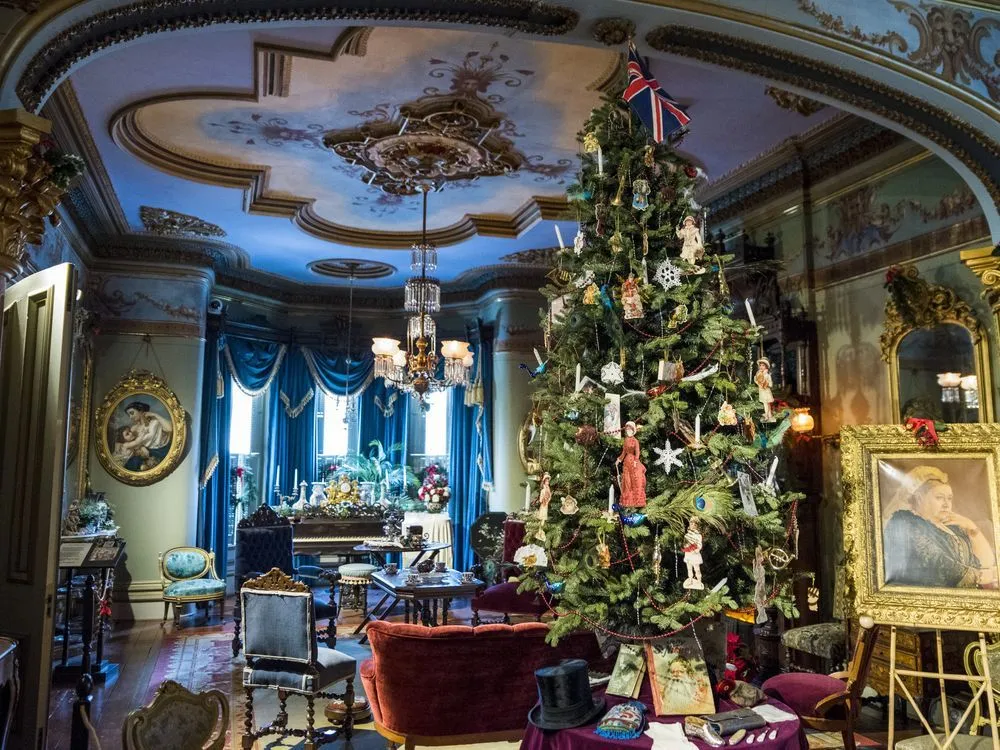
- Pick one room to go full Victorian — usually the living room or dining room.
- Use real greenery, or high-quality faux with visible stems and wire.
- Choose ribbon over glitter; wide velvet or satin reads period, narrow sparkle doesn’t.
- Add one antique object — a brass candlestick, a platter, an old mirror.
- Stop at three materials: greenery, ribbon, and one metal.
Time: about a weekend. Cost: $80–$300 if you shop vintage.
Historic homes have one advantage modern rooms don’t: trim. Deep moldings, a plate rail, a picture rail, a mantel with real depth — these give decor somewhere to sit. In a modern box room, recreate that effect with height instead: put garland on top of a cabinet, run a swag over a doorway, or hang a tall mirror to imply architecture that isn’t there. The reason Victorian decor still lands is symmetry and mass, not the era itself.
27. A Christmas Tablescape That Starts With the Centerpiece
Build the centerpiece first, then work outward — and you can do it for about $50. A grapevine wreath from Walmart ($10) laid flat with three pillar candles ($12) in the middle, a supermarket bouquet broken into three small vases ($8), and a runner cut from a fabric remnant ($6). Skip the flowers in January and the same wreath works with pinecones. If your table is too narrow for a centerpiece, move the whole arrangement to a console or bar cart and use individual votives at each setting instead.
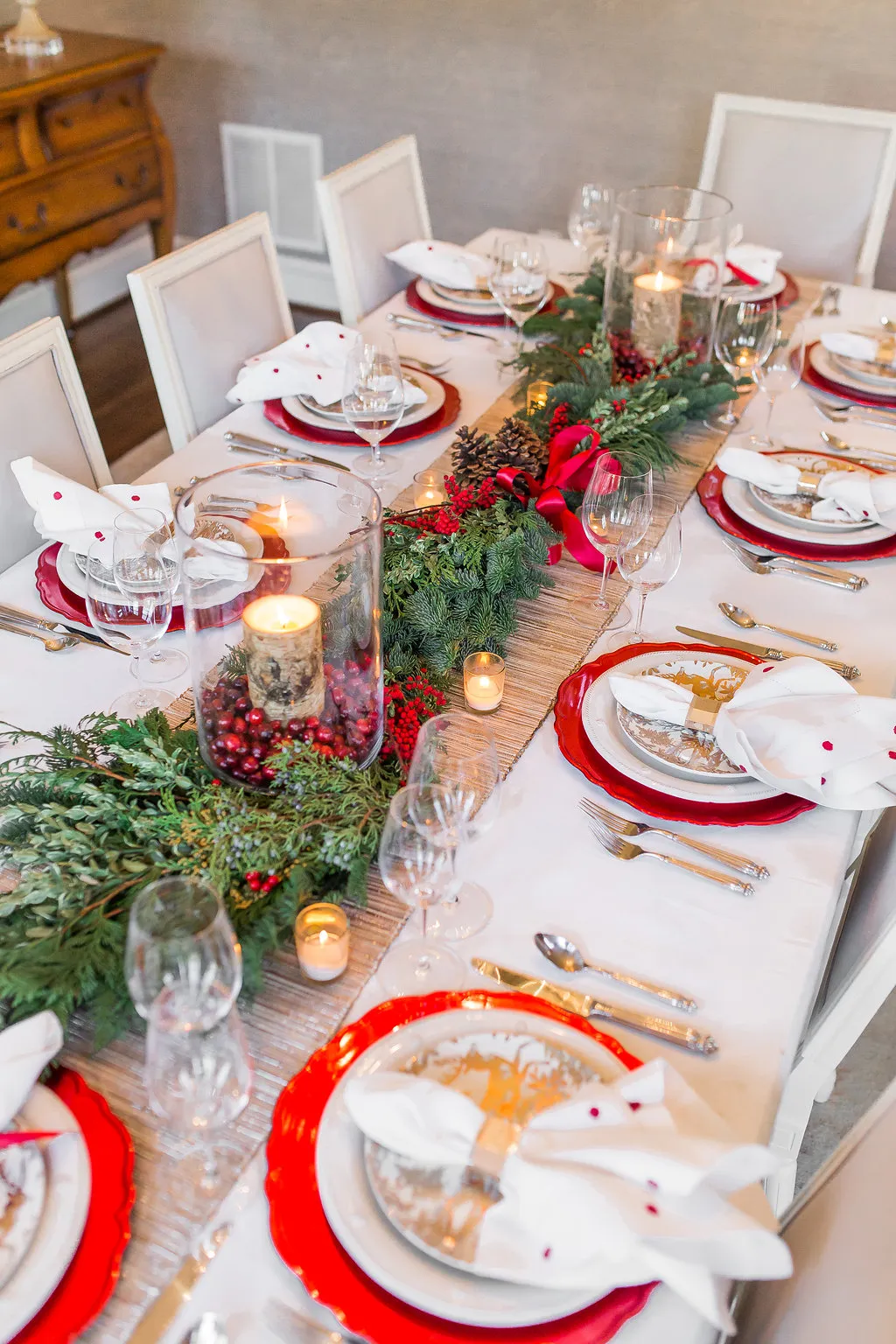
- Wreath or greenery base: $10–$60
- Candles and holders: $12–$70
- Runner or cloth: $6–$120
- Plates and glasses (if buying new): $40–$260
- Small accents — berries, ornaments, name cards: $10–$45
Total: $78–$555
Budget alternative: skip the new dishes entirely. Renting isn’t worth it for one dinner — borrow from a friend, or finally use the good china you’ve been saving. That alone can cut this in half.
28. An Elegant Christmas Table With Nothing Extra on It
here is empty space. An elegant table is defined less by what’s on it than by the gaps between things. Everything on the surface sits at least 3 inches from its neighbor, and nothing sits within 2 inches of the table’s edge. That’s it. If you took away everything but the plates, the glasses, and one centerpiece, you’d still have an elegant table — which tells you that most of what people add is entirely optional.
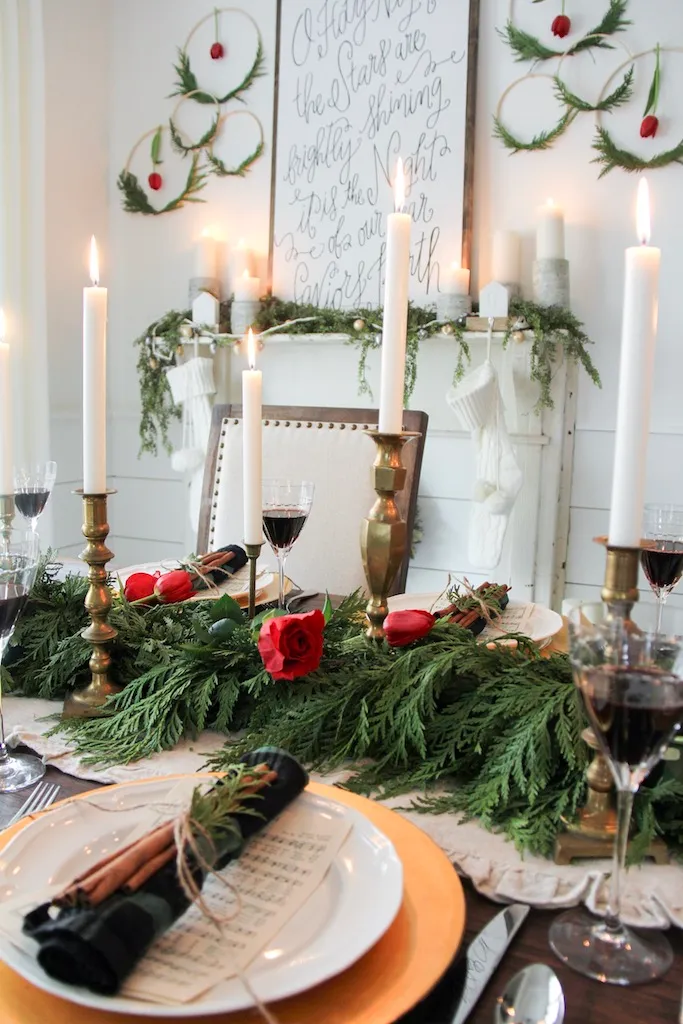
Two measurements worth memorizing. A place setting needs 24 inches of table width; you can squeeze to 22 in a pinch, but below that nobody can eat comfortably. And your centerpiece should be no taller than 12 inches if you want conversation to cross the table — unless you’re using candlesticks, which can go taller because they’re narrow enough to see around. Measure once with a tape before you buy anything, not after.
29. Luxury Placemats and the Quiet Rest of the Table
One investment piece, everything else quiet. That’s 80% plain — white plates, simple glassware, neutral linen — and 20% statement, which here means the placemats. When you build a table this way, the placemats become the entire design, so choose a color that appears nowhere else on the table, or a texture like woven metallic that catches candlelight. Swap the placemats and you have a completely new table without buying a single new plate.
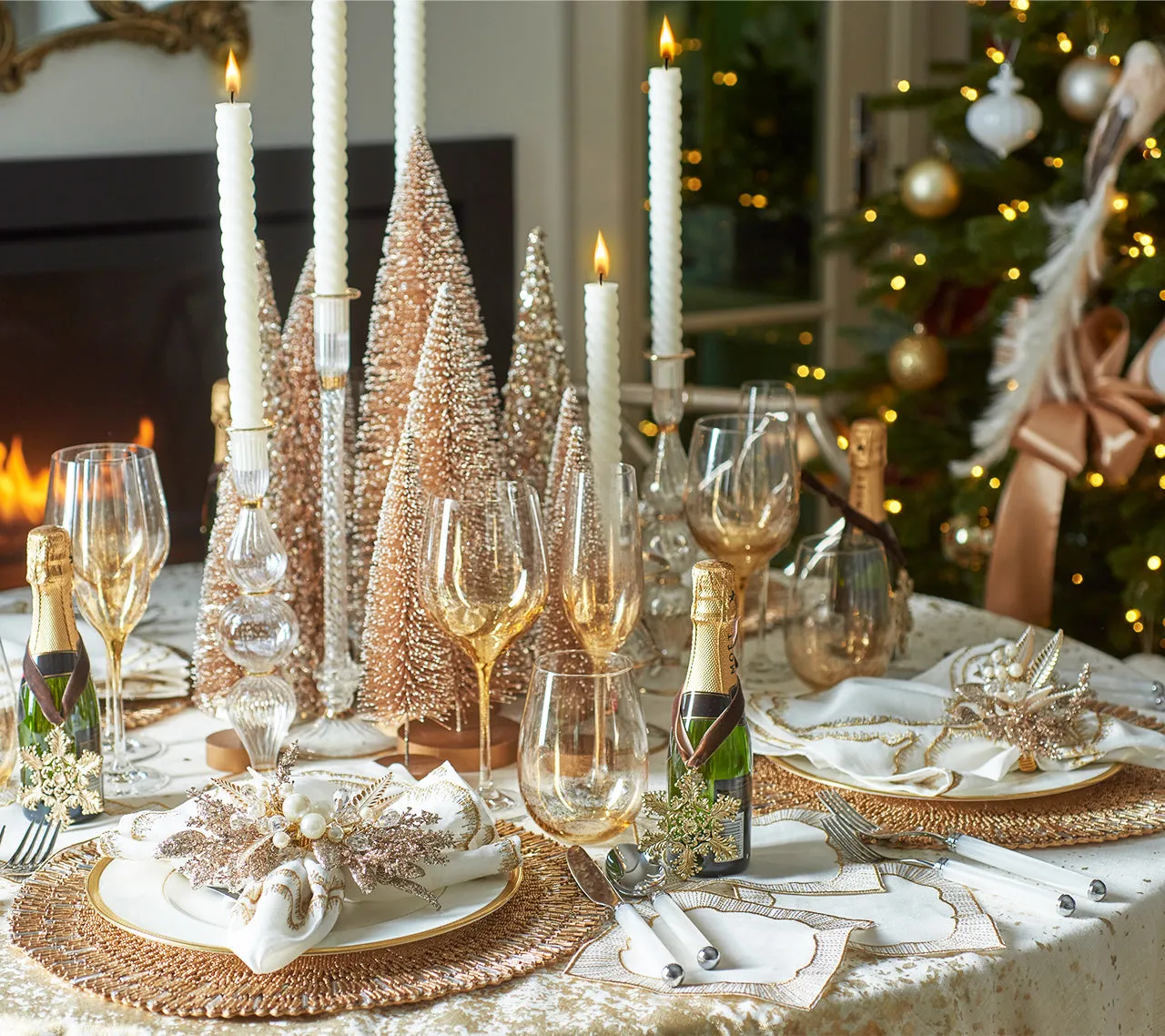
Placemat size matters more than people expect. Standard is 14×19 inches; on a 36-inch-wide table, four of them leave only 8 inches for a centerpiece, so keep that centerpiece narrow. On a 42-inch table you get 14 inches of breathing room and can run a full garland. Rectangular placemats suit rectangular tables; round chargers suit round ones. On a very long table, use a runner instead of placemats so the line doesn’t feel choppy.
30. A Christmas Table That Works From Every Seat
Here’s what nobody tells you: a tablescape looks completely different from each of the four sides of the table. The arrangement that photographs perfectly from the head chair may block the view from a side seat. Walk the perimeter of your finished table and sit in at least two chairs before you commit to anything. Also, scented candles near food are a mistake — vanilla and roast turkey fight each other. Unscented, always, and move the diffuser to the hallway.
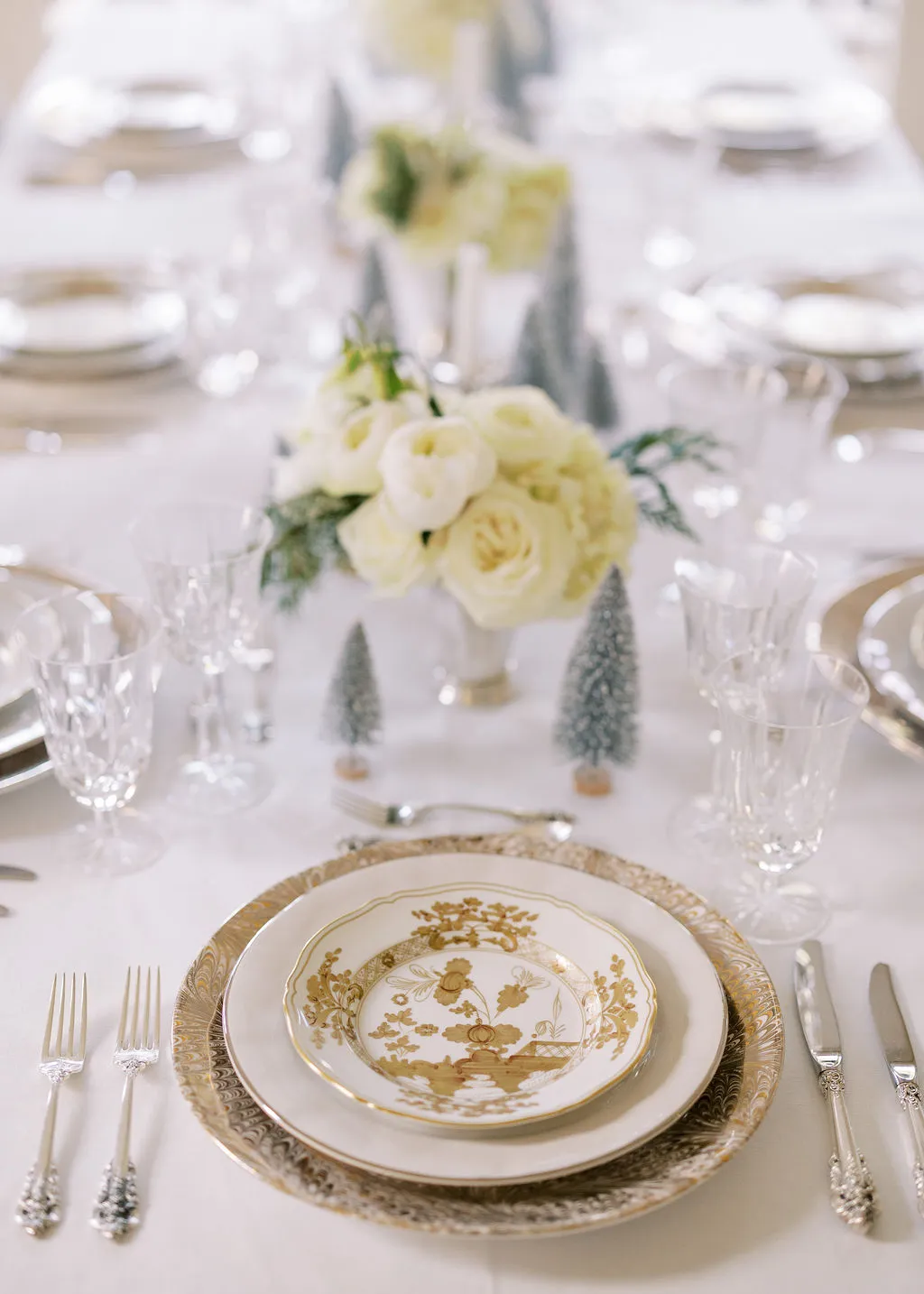
- Set the table fully, then walk the perimeter and check every sightline.
- Lower anything tall that sits between two seats.
- Confirm each setting has 24 inches of width and 15 inches of depth.
- Remove one object. Then look again.
- Light candles only after the food is down.
Time: 20 minutes. Cost: $0.
If you’re building this from scratch, spend in this order: glassware first (you’ll use it year-round), then linens, then candles, then plates. Thrift stores have beautiful crystal stemware for $2–$4 a glass, and mismatched crystal plus matched linens looks deliberately collected. Skip themed holiday plates entirely — plain white goes with every theme you’ll ever try. A full table for six for under $120 is genuinely achievable.
31. Nordic Minimal Christmas With a Light Hand
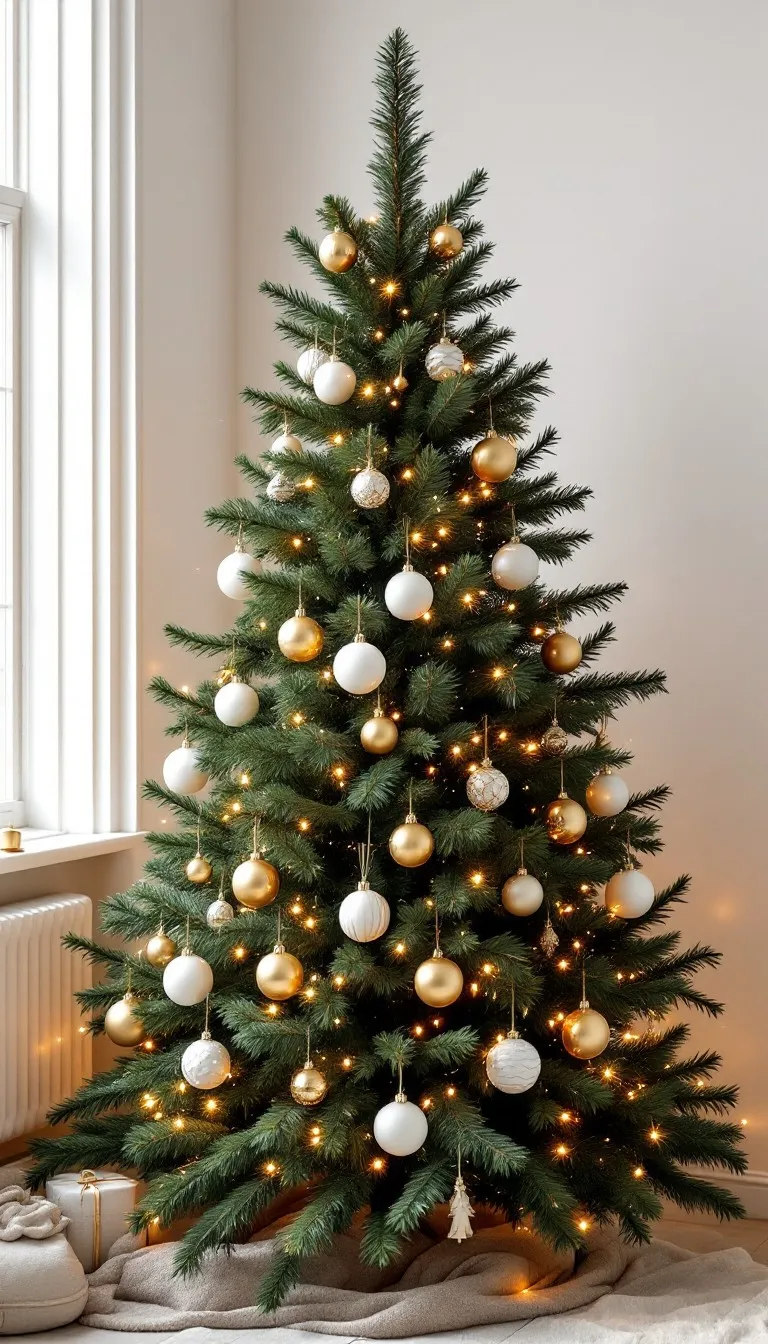
- Choose your neutrals — white, oat, pale gray, or warm birch. Stick to two.
- Decide on one natural texture: wool, linen, wood, or paper.
- Check your light. Nordic minimal needs brightness, so add a warm lamp if the room faces north.
- Resist the urge to add red. If you want color, one muted accent only.
- Measure the mantel or shelf before buying candles — scale is everything here.
Scandinavian minimal holiday styling has been quietly growing for years and it’s peaking now because of a specific shift: people are decorating for the season rather than for a single day. Paper stars, birch branches, wool throws — they work from late November through February, which means less to store and less to take down. It also fits small apartments, where a maximalist tree simply isn’t an option. This isn’t really a trend so much as a practical default that happens to be beautiful.
One Box, One Tree, One Very Good December
Start with one idea here — the table, the mantel, the tree — and let it set the tone for everything else. You don’t have to pull off all 31 in a single weekend; the best-decorated homes are the ones that get adjusted a little every year. And do skip the three mistakes above, because they’re the ones that undo an otherwise beautiful room. 📌 Save this to your Christmas board so it’s waiting for you next November.