Front yards are having a quiet renaissance. In 2026, Americans are looking at their outdoor space not just as a buffer from the street, but as a personal statement that blends beauty, lifestyle, and practicality. Pinterest searches spike because visuals matter here—curb appeal, mood, and regional character all come together. Below, you’ll find thoughtful front yard landscaping ideas that feel current, livable, and achievable across different homes and climates.
1 Modern Rock Garden with Clean Lines
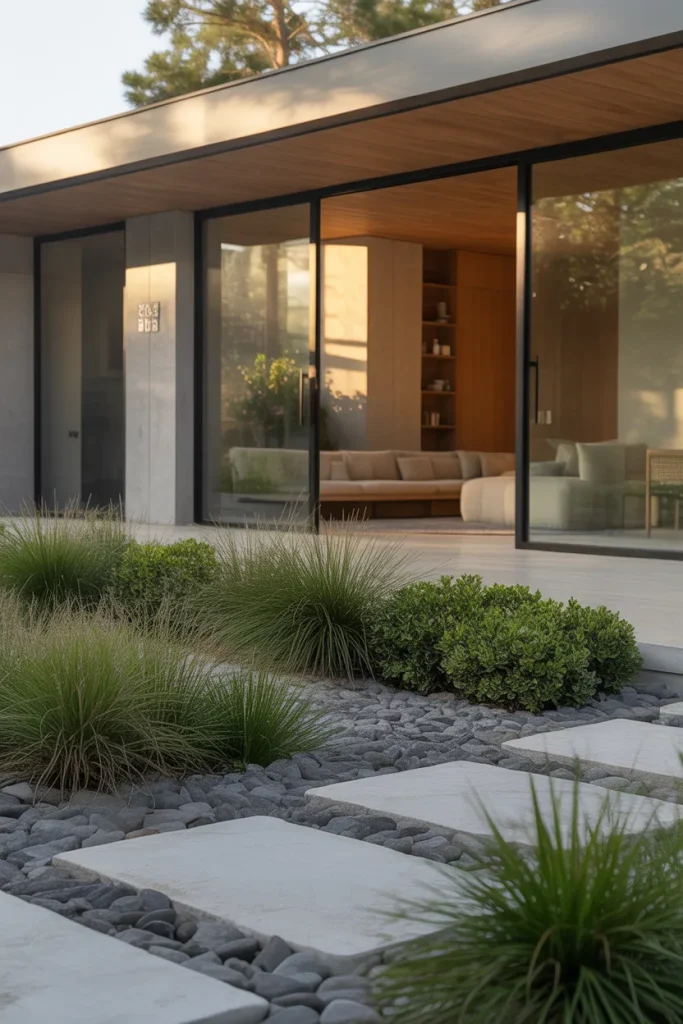 This idea leans into a modern approach using layered rocks, sculptural plants, and negative space to create a front yard that feels intentional and calm. Instead of dense greenery, the design relies on contrast—pale stone against deep green foliage or dark mulch. It works especially well for homes that favor architecture-forward looks and want curb appeal without constant upkeep.
A practical insight often overlooked is drainage. Rock-heavy designs perform best when the base is properly graded and lined, preventing stones from sinking or shifting over time. Homeowners who skip this step often redo the yard within a year, while a solid foundation keeps the look crisp for seasons.
2 Sloped Front Yard with Tiered Greenery
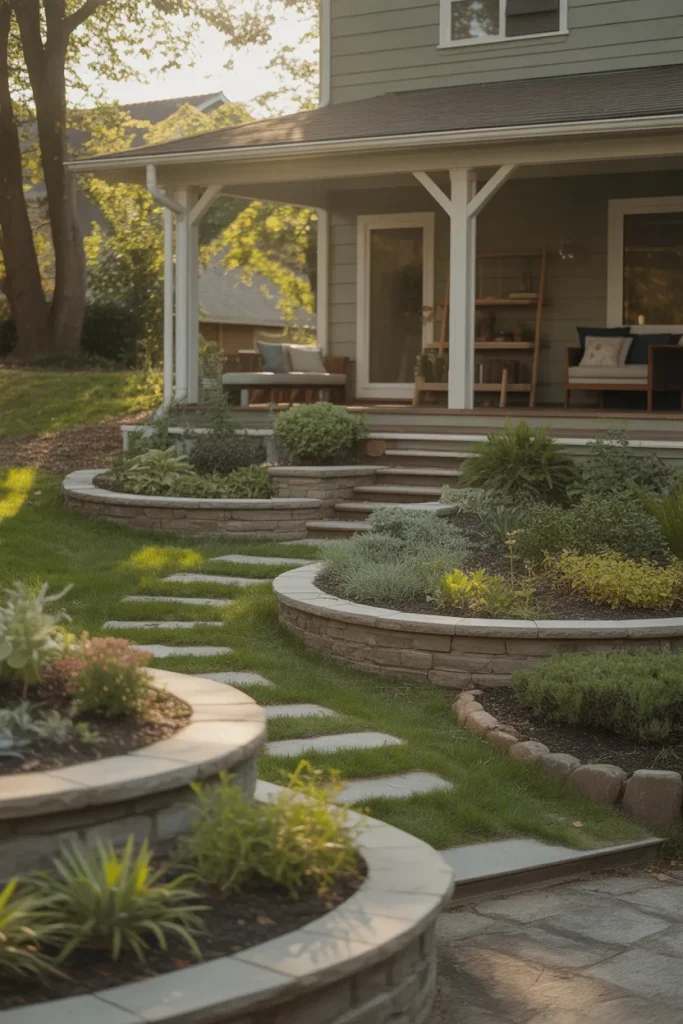 A sloped front yard can actually be a positive thing, and it does not have to feel like a challenge. A range of soft tiers can be used to break the slope and create an effective visual rhythm and usable planting zones. With such an approach, grass paths and low retaining edges work to guide the eye upwards. Large lots are best to be used for this approach, as it provides a natural-looking change in elevation where there is lots of slope.
This design is optimal for areas where erosion prevention is important. In areas where heavy rains are common, tiered planting can slow water, protect roots, and create a safe haven for wildlife. This design is commonly used in hilly neighborhoods, making it a safe and beautiful option.
3 Farmhouse-Inspired Entry Garden
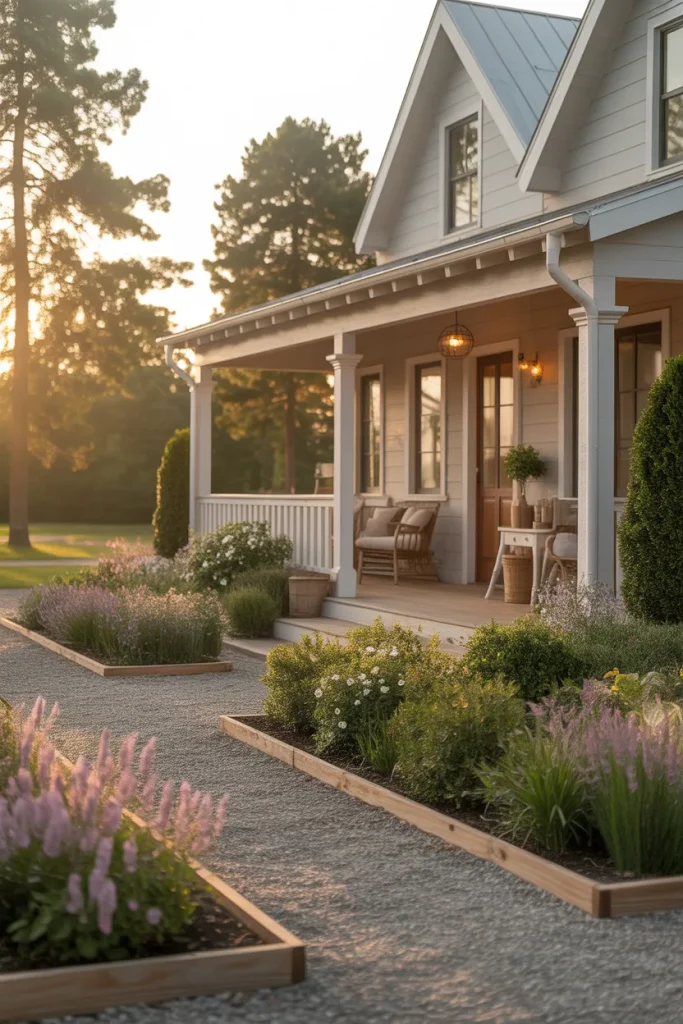 A farmhouse-style yard is soft and nostalgic. It has a fresh feel and does not look dated. It is characterized by loose planting beds, white gravel pathways, and an approachable informal style. This style is ideal for smaller homes and adds great curb appeal and charm. It does not feel polished but adds warmth.
This style is often seen as forgiving, as it allows plants to encroach and grow wild, matching the more relaxed American aesthetic rather than the more sterile, clean look.
4. Simple Lawn with a Statement Tree
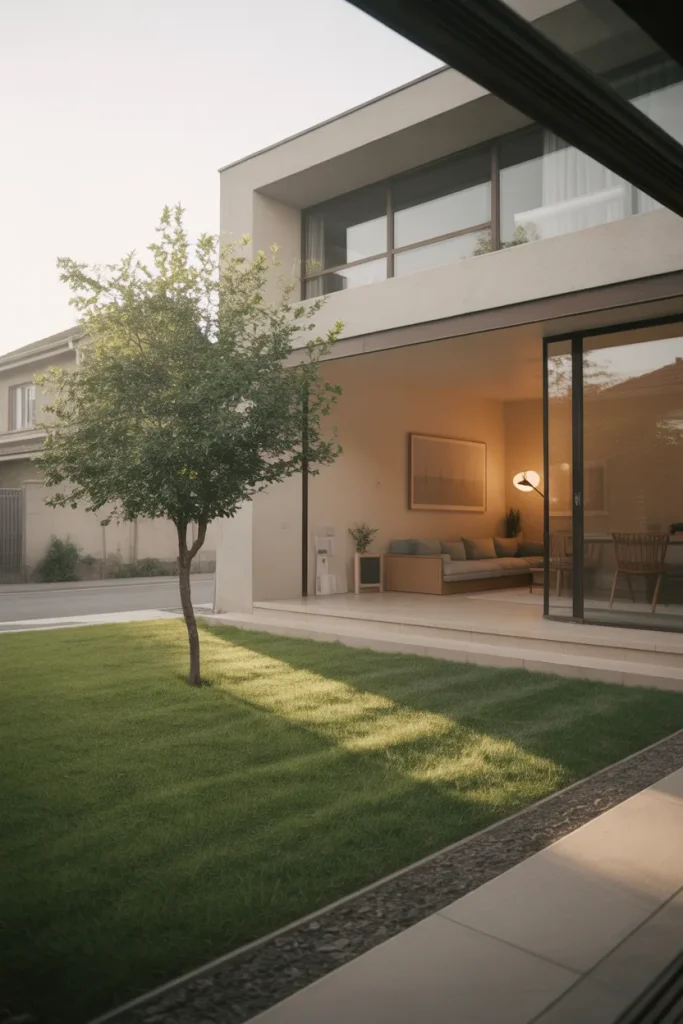 In some cases, the most modern and stylish option is restraint. A simple front yard design anchored by a statement tree offers structure and calm. An open grass area offers a break in the design and allows for ready readability to the street, while the tree adds an element of height and seasonal interest. This design is perfect for neighborhoods where visual harmony is key.
It is an expert opinion that selecting the appropriate size tree species at planting is important. Future conflicts from root systems or tree canopies creating shade are commonly overlooked by most homeowners. Having guidance from a local nursery can help save money from conflicts that will arise down the line.
5 Budget-Friendly DIY Gravel Yards
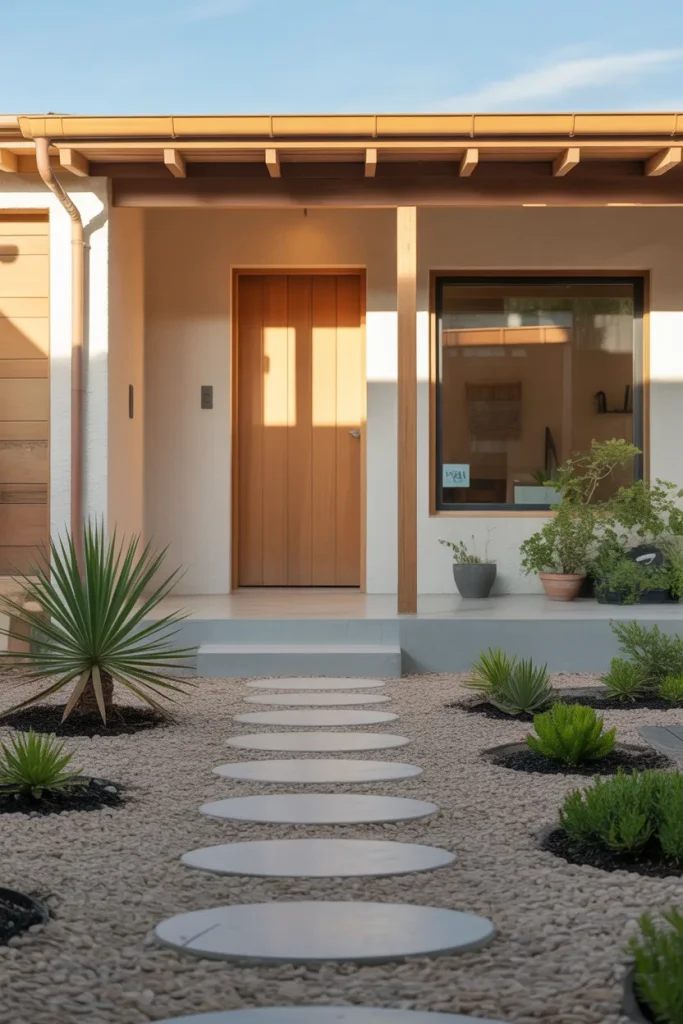 Gravel is an excellent, low-cost option for those looking for a quick front yard transformation. This DIY-style yard uses a limited number of plants, defined zones, and low-cost materials to keep costs down. This is a common approach for starter houses where homeowners are looking for an immediate visible change without a large financial commitment.
The budget angle here is obvious. Most homeowners undertake this project over a weekend using materials sourced locally. The result is a managed, low-maintenance yard that is far less than a traditional lawn and self-sustaining.
6 California-Inspired Drought-Tolerant Design
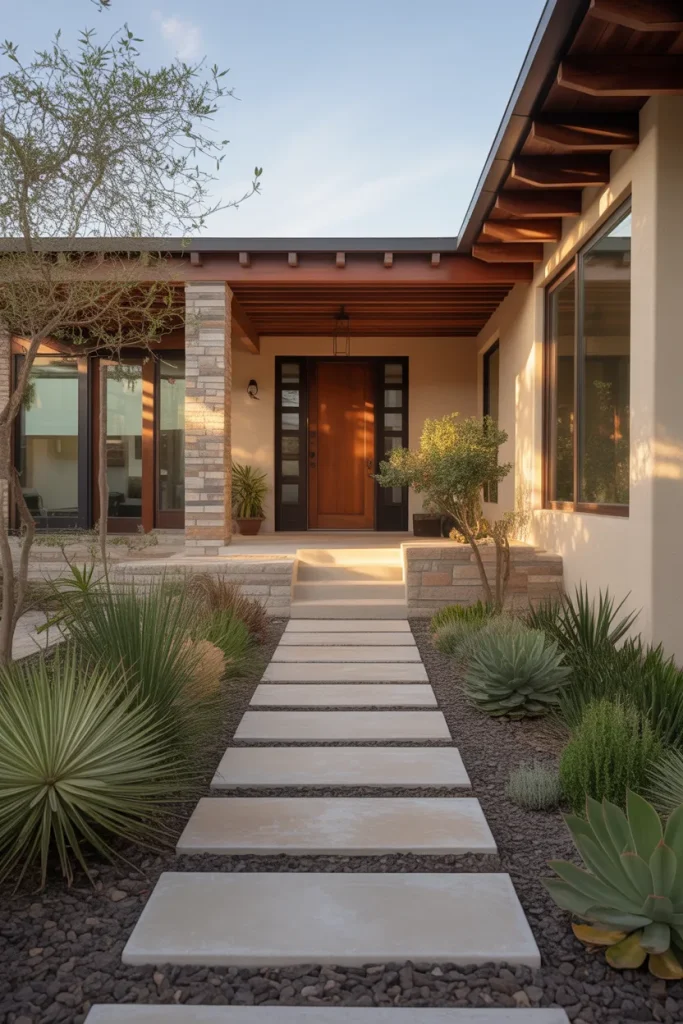 This front yard, drawing inspiration from the Californian style, uses sculptural plants and soft permeable pathways with warm colors. It is sun-loving, drought-resistant, and replaces thirsty lawns with a purposeful textured carpet. The look is modern, laid-back, and environmentally conscious.
This is best suited for regions with water restrictions. It also works best in sunny climates where homeowners seek a sustainable solution in combination with a strong design element.
7 Corner Lot Landscaping with Flow
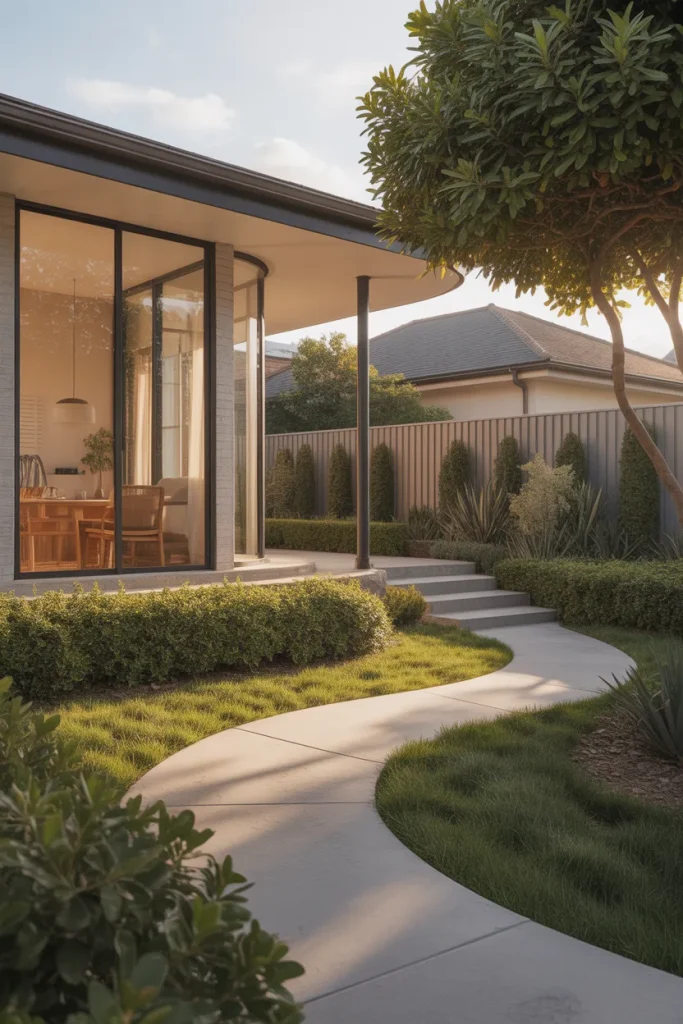 Any corner yard, or house on a corner, requires a burning design that works from several different viewpoints. Curved paths, layered planting, and strategic open sightlines soften exposure while defining a boundary and also help close off the corner. This approach helps to address the many corner lots that feel boxed in.
An edge planting of trees for seclusion is a common mistake that can close off an area, block lines of sight, and feel cumbersome. Lower layers can be kept to maintain some visibility and openness while still framing the house nicely.
8 Texas-Style Wide Front Yard Layout
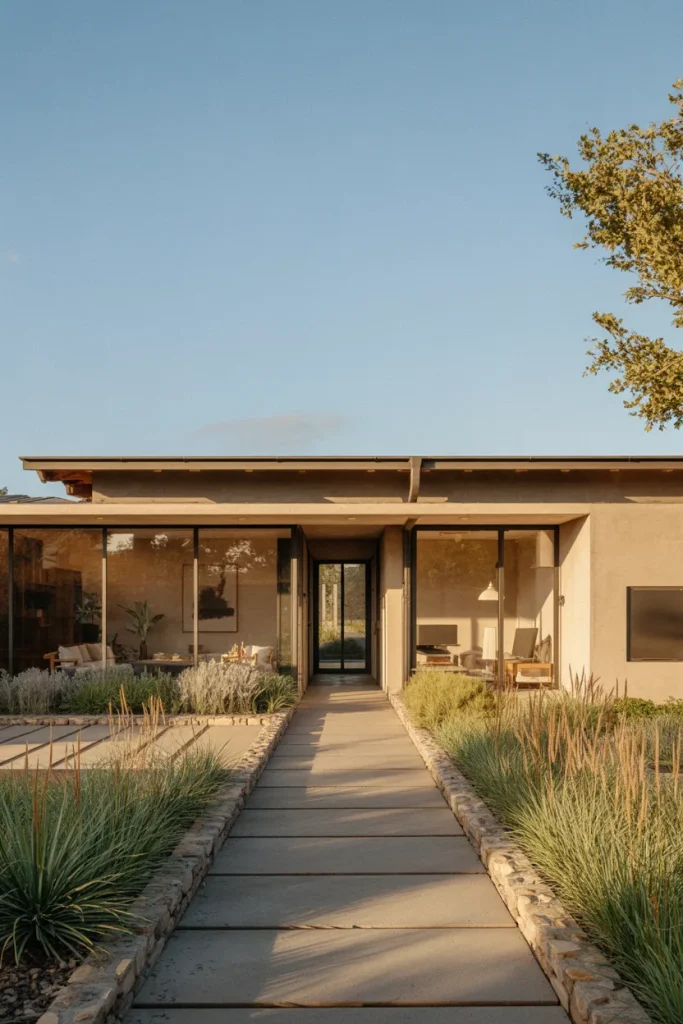 In many Texas neighborhoods, front yards are wide and exposed. This design uses strong horizontal lines, structured beds, and durable materials to ground the space. The scale suits large lots where subtle gestures get lost.
Homeowners often adapt this layout over time, adding shade elements or seating near the entry as the yard becomes part of daily routines rather than just a visual buffer.
9 Florida-Friendly Lush Entry Gardens
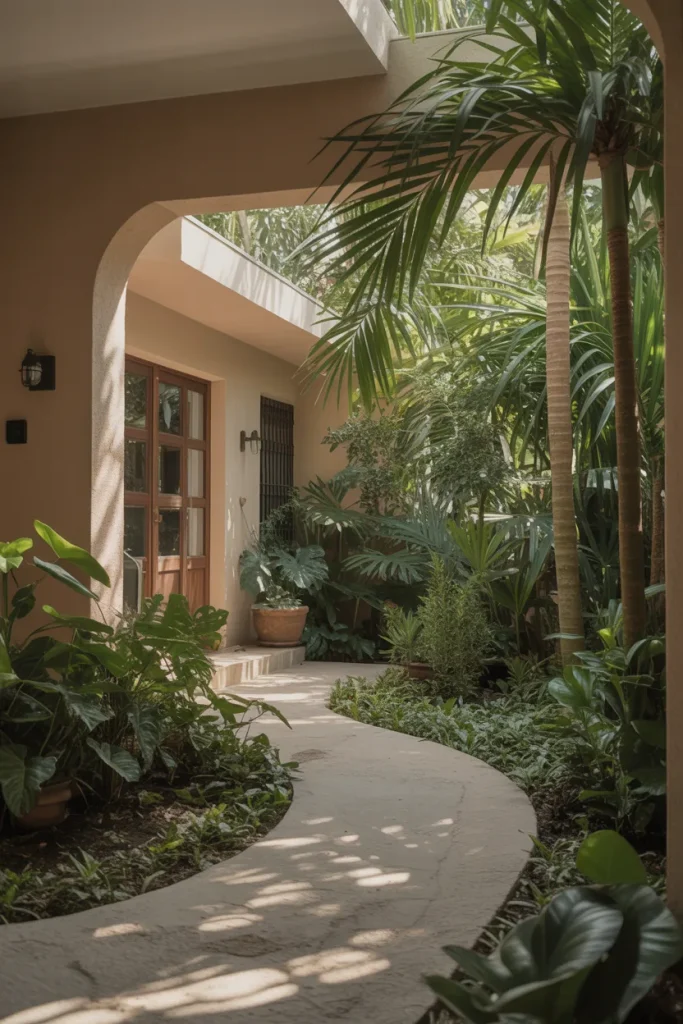 A Florida front yard embraces bold foliage and layered greens. Instead of rigid symmetry, plants spill naturally toward paths, creating a soft enclosure. It pairs well with easy maintenance choices that tolerate heat and humidity.
Expert landscapers often recommend spacing plants wider at installation. In Florida climates, growth is fast, and overcrowding leads to constant pruning if not planned carefully.
10 Simple Budget Lawns with Defined Edges
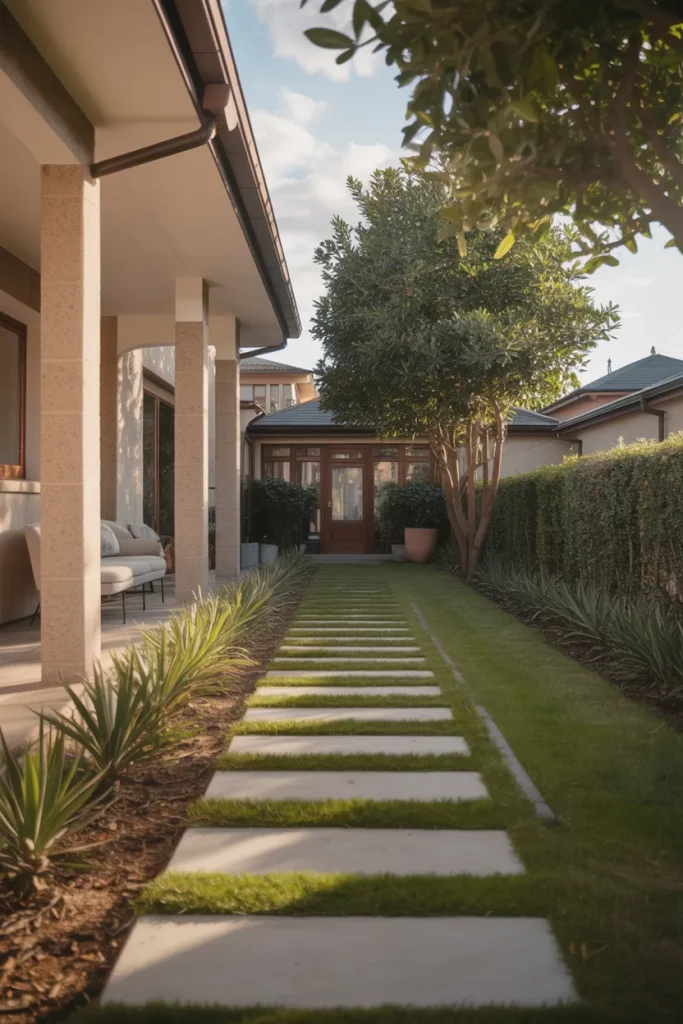 This simple budget idea focuses on clarity. Clean lawn areas, crisp edging, and limited planting make the front yard feel cared for without excess. It’s especially effective for homeowners who want neatness without complexity.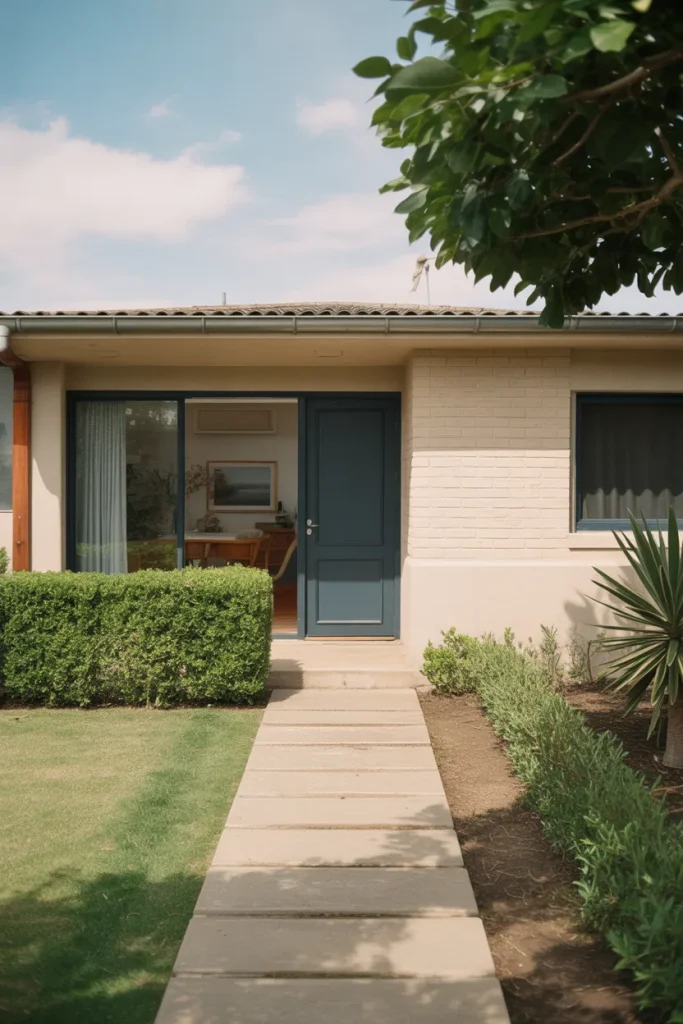
The real value lies in behavior: most homeowners maintain this look consistently because it’s realistic. There’s no pressure to redesign each season, just small touch-ups that keep the yard presentable year-round.
11 Front Yard with Decorative Rocks and Grasses
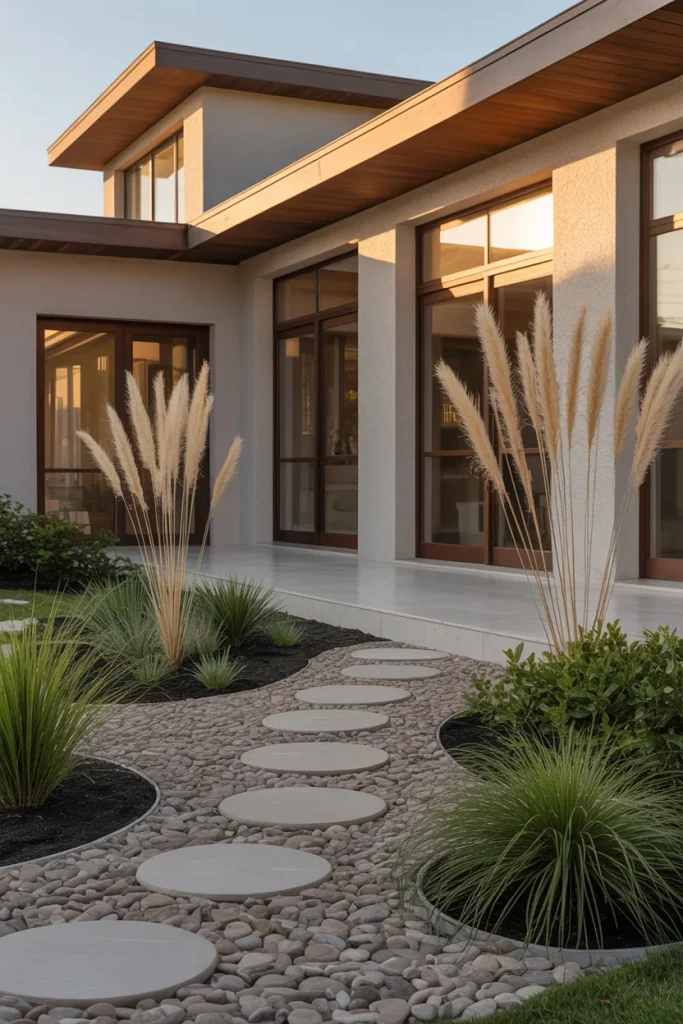 This front yard idea blends ornamental rocks with flowing grasses to create a relaxed yet structured look. Instead of traditional flower beds, the design relies on texture and movement, which feels very current for 2026. It suits homes that want a natural rhythm without losing a modern edge, and it instantly improves curb appeal without feeling overdesigned.
Where this works best is in neighborhoods with open front setbacks. The grasses soften the view from the street, while the stone base keeps everything grounded and tidy throughout the year.
12 Easy Front Yards for a Small House
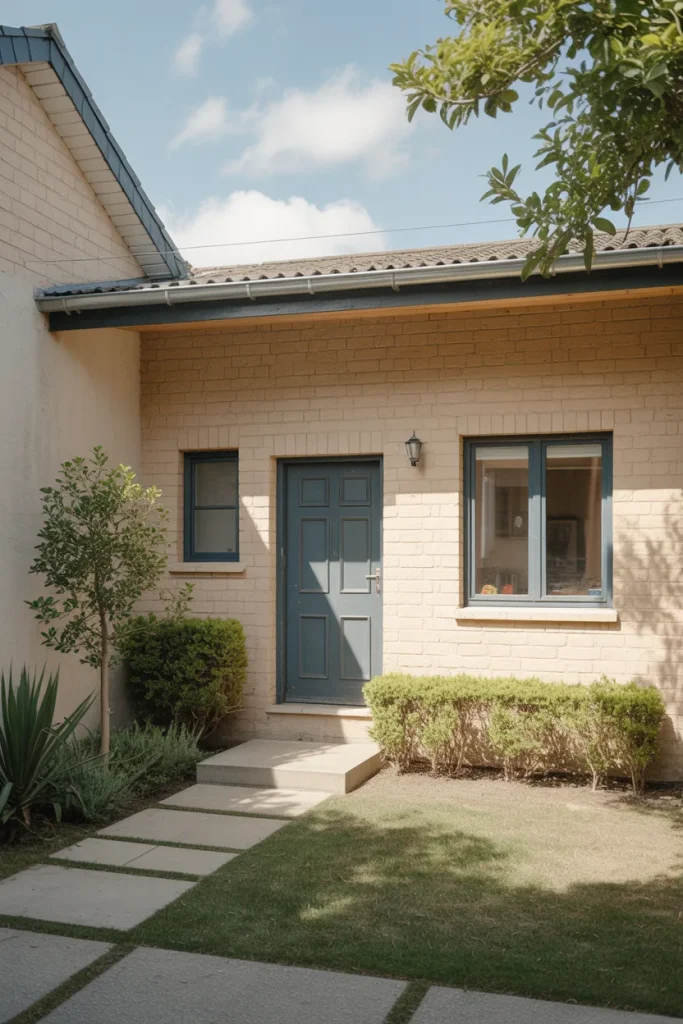 For a small house, simplicity often wins. This easy front yard design focuses on a few strong elements—a clear path, low planting, and balanced proportions. It avoids clutter and makes the home feel more confident from the street, even on a modest footprint.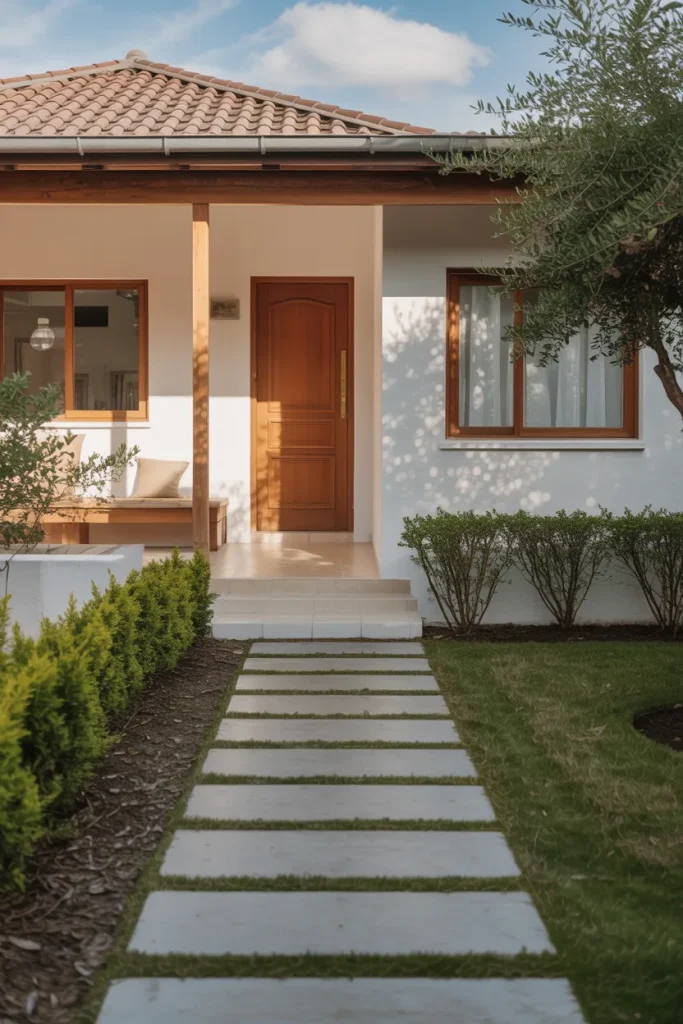
A micro anecdote you hear often: homeowners say guests notice how calm and welcoming the house feels before even stepping inside. That first impression matters more than size.
13. Sloped Lawn with Natural Stone Steps
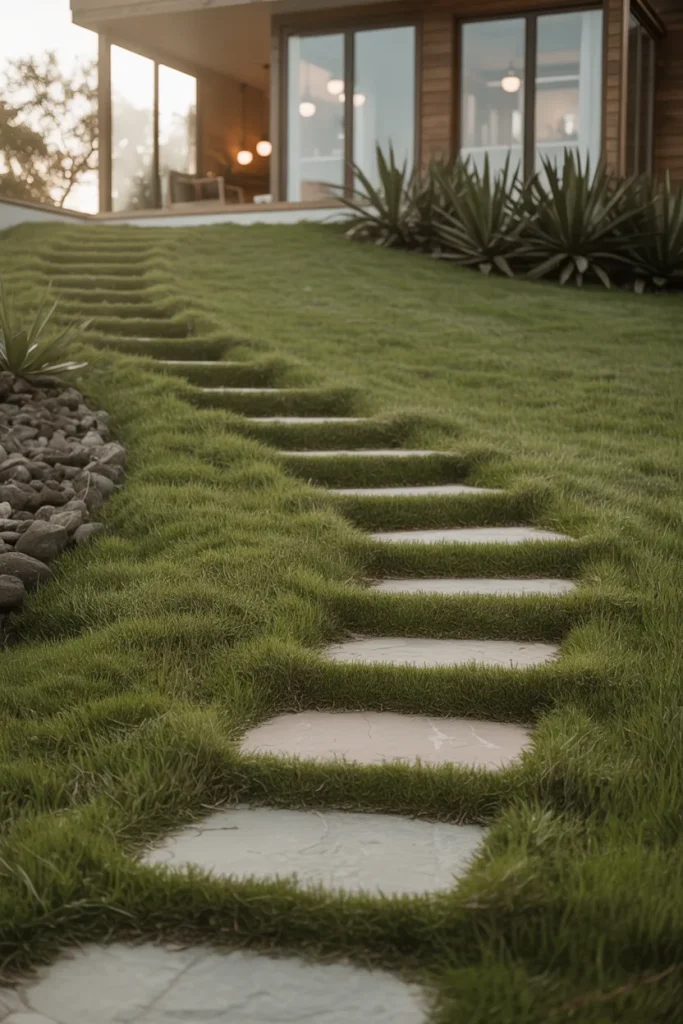 A sloped yard can feel intentional with the right structure. Natural stone steps break up the incline while keeping a soft lawn feel. This approach suits properties where grass still plays a central role, but access and safety are equally important.
A common mistake is spacing steps too far apart. Keeping them comfortable to walk makes the yard feel friendly instead of intimidating, especially for families and visitors.
14 Farmhouse Lawn with Wide Walkway
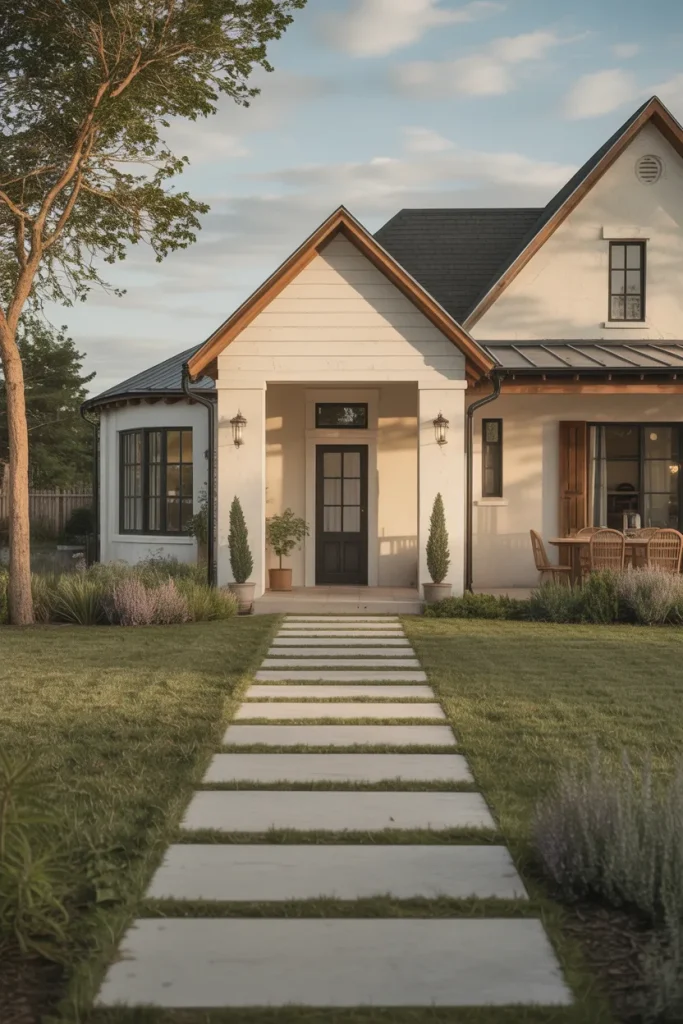 This farmhouse-inspired front yard uses a wide central walkway flanked by lawn and simple plantings. The look feels generous and calm, perfect for homes that value openness over decoration. It pairs well with older houses and newer builds alike.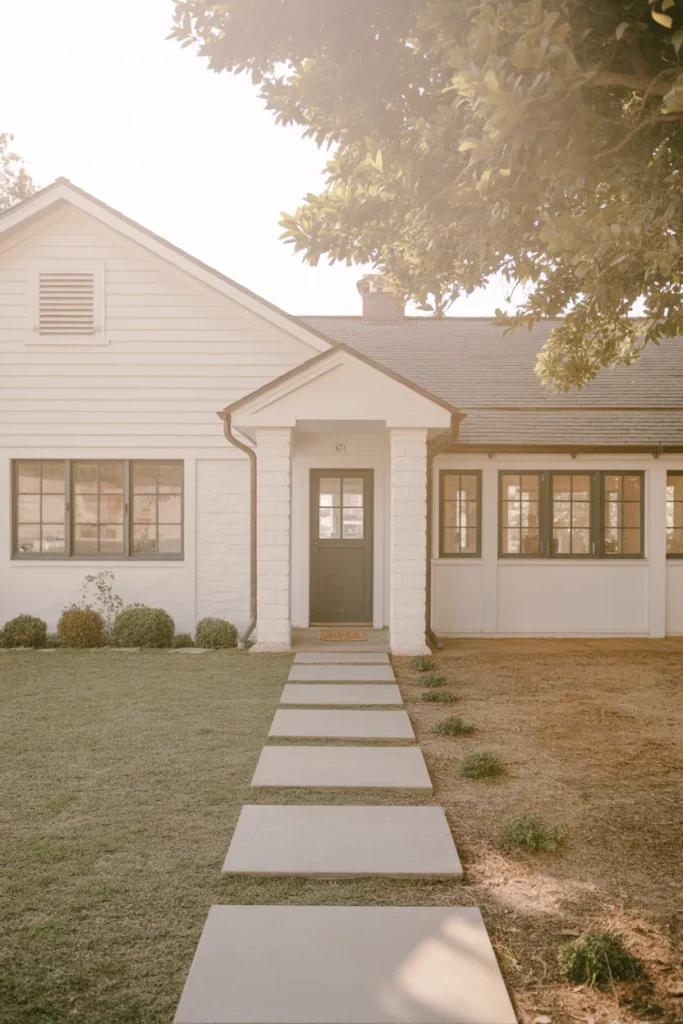
From an American lifestyle perspective, this layout supports daily routines—kids, pets, and packages all move easily through the space without stressing the landscaping.
15 Budget Gravel and Lawn Mix
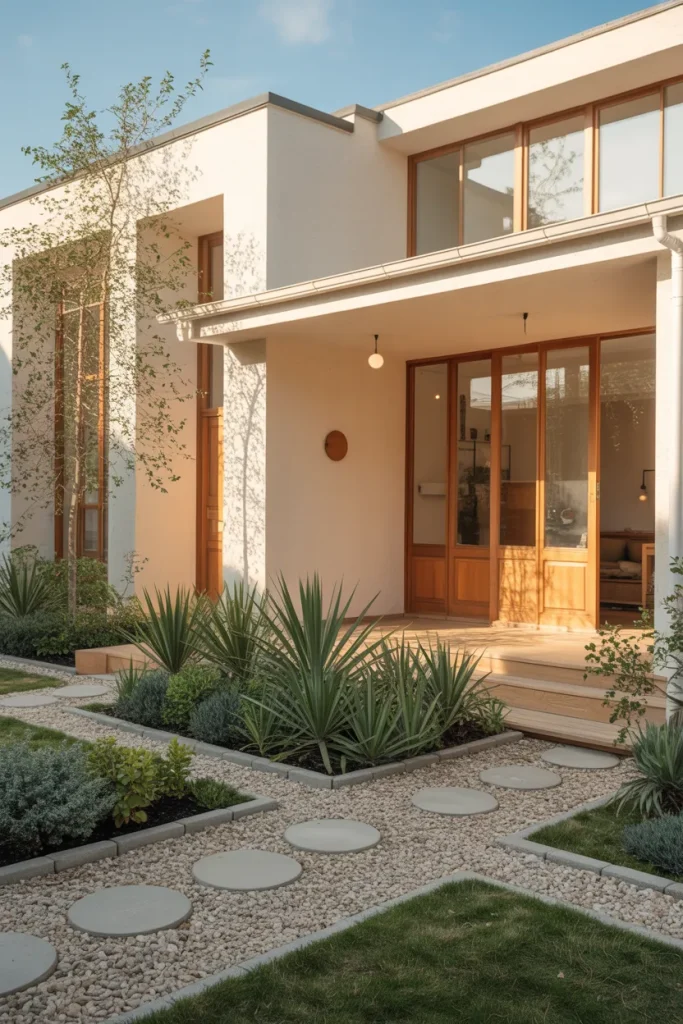 This budget option combines gravel and small grass patches to lessen maintenance while providing a green presence. It suits homeowners wanting a sense of order without a full redesign.
Value is clear: materials are low cost, and maintenance is kept to a minimum. Many homeowners start here, and design evolves as budget allows.
16 California Casual Entries with Native Plants
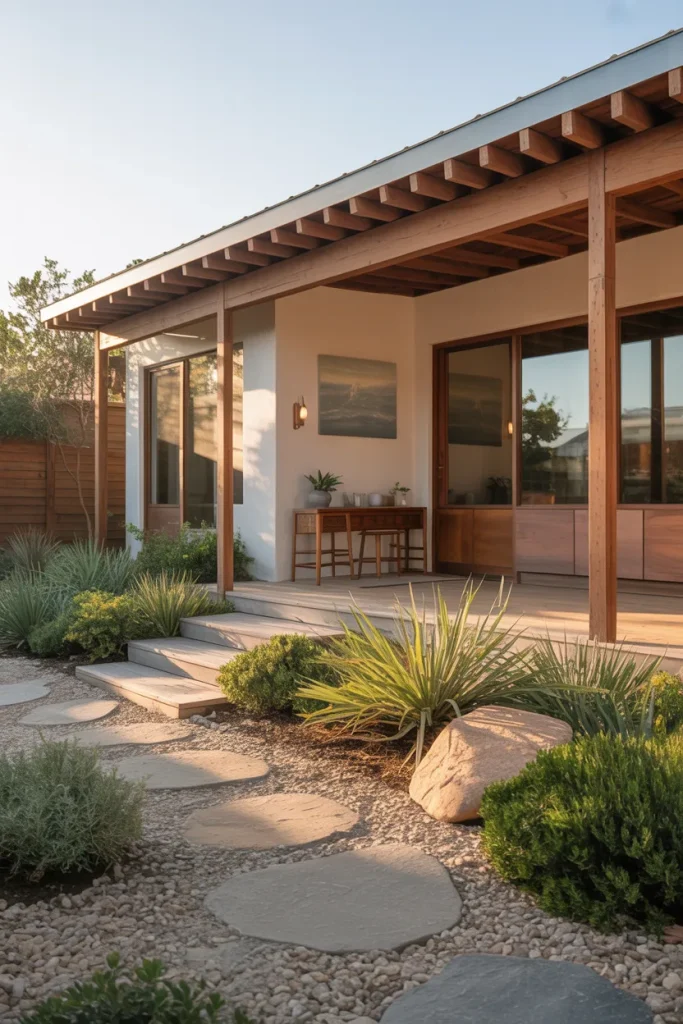 This front yard, designed with California inspiration, is chill and warm. Thanks to full sun, native plants require less water and create a look of ease. The end result is modern without being too structured.
Pro tip: when planting in warm climates, group plants with similar water needs to simplify maintenance and ensure even growth.
17 Corner House with Framed Lawn Zones
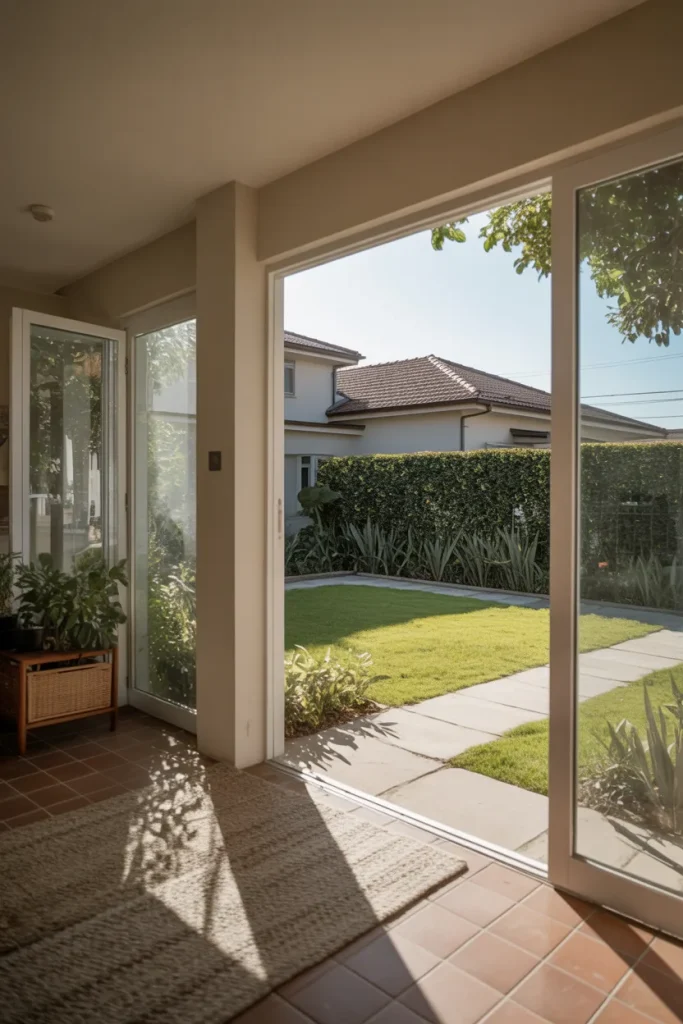 Corner homes gain a clear visual order. The framed lawn sections guide the eye while defining property boundaries without the need for fences. This strategy makes the yard feel open and intentional from every perspective.
It’s all about keeping things safe while saving home presence. This works especially well with visibility at suburban junctions.
18 Texas Front Yard with Shade Tree Focus
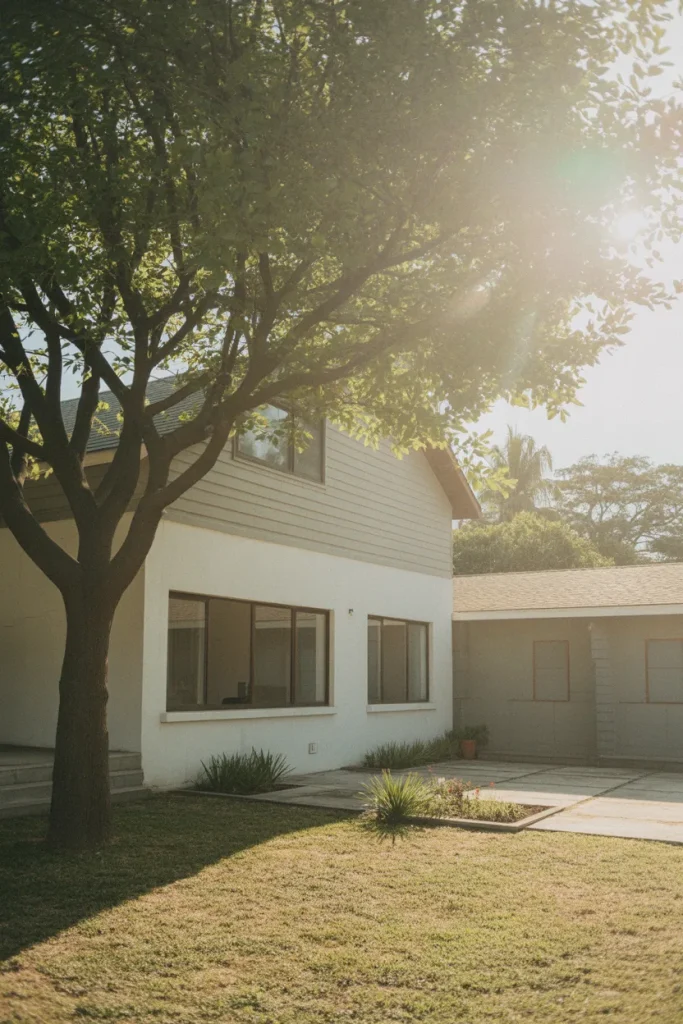 Focusing on a tree within this Texas front yard design anchor. Remaining open lawn and planting, the shade structure shines, making the yard usable even in hotter months.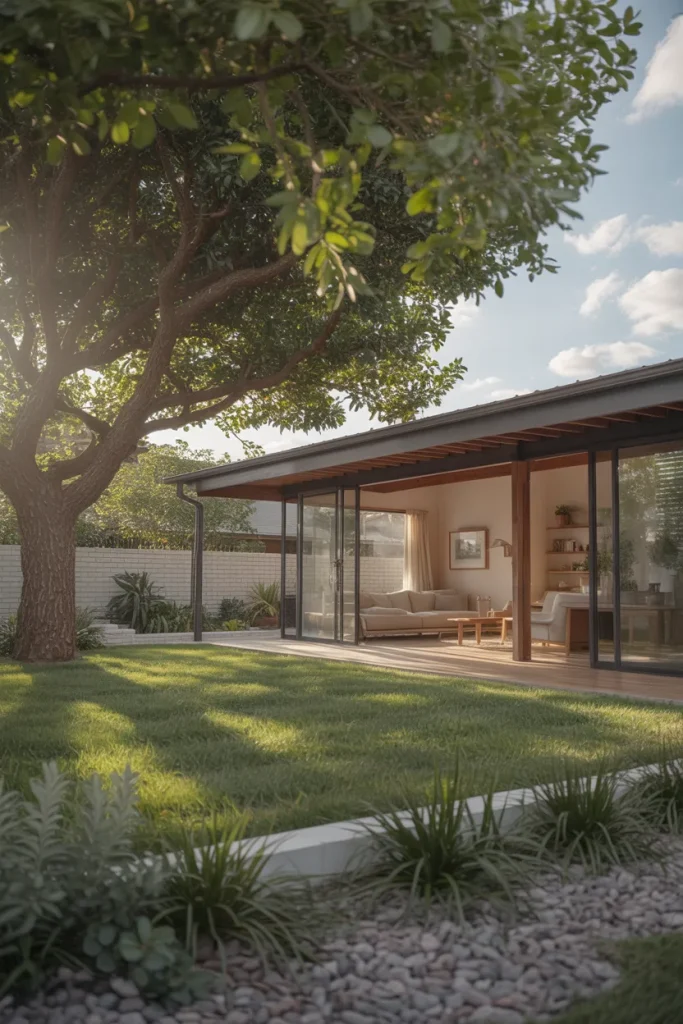
Shady front yard areas tend to shift homeowner behavior. Especially in areas where homes are close together and people still socialize outside.
19 Florida Front Yard with Layered Greens
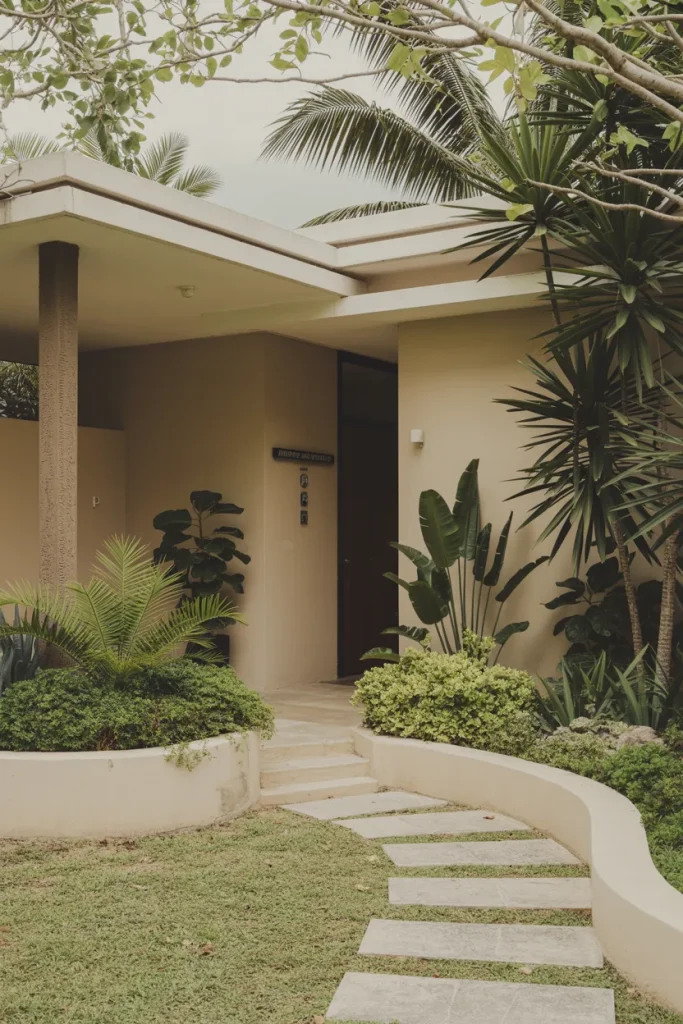 Florida front yards deserve to shine where layered greens create depth. The combination of shrubs, palms, and groundcover in a layered structure creates richness while keeping the depth of design simple.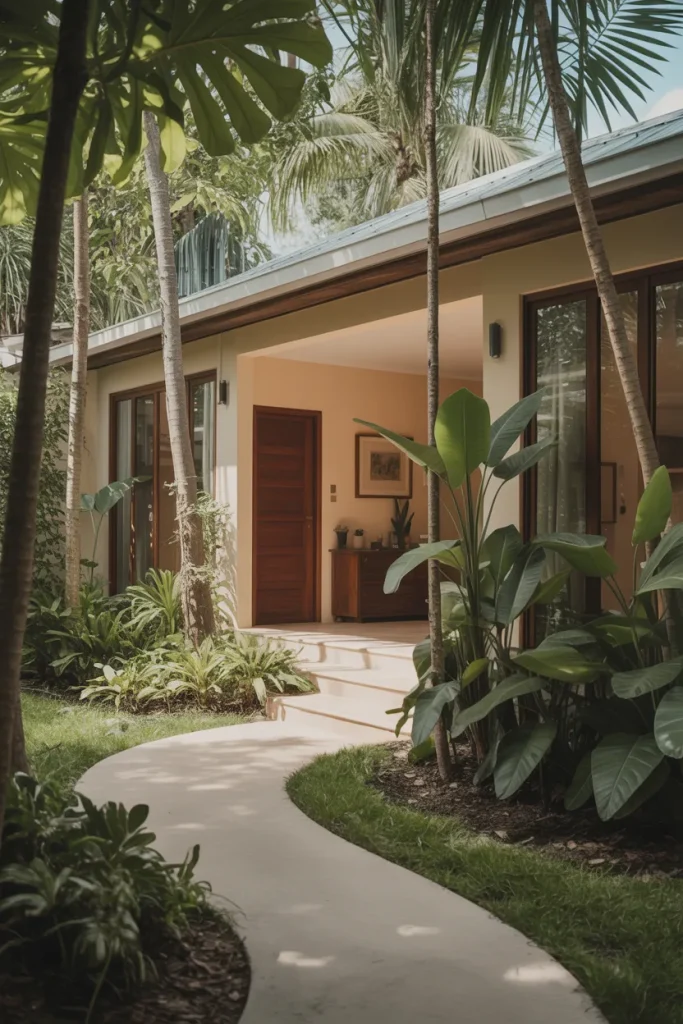
A frequent error comes from planting too close to walls. A well-sustained breath for air circulation and maintenance within the humid conditions should be manageable.
20 DIY Minimal Lawns for First-Time Homeowners
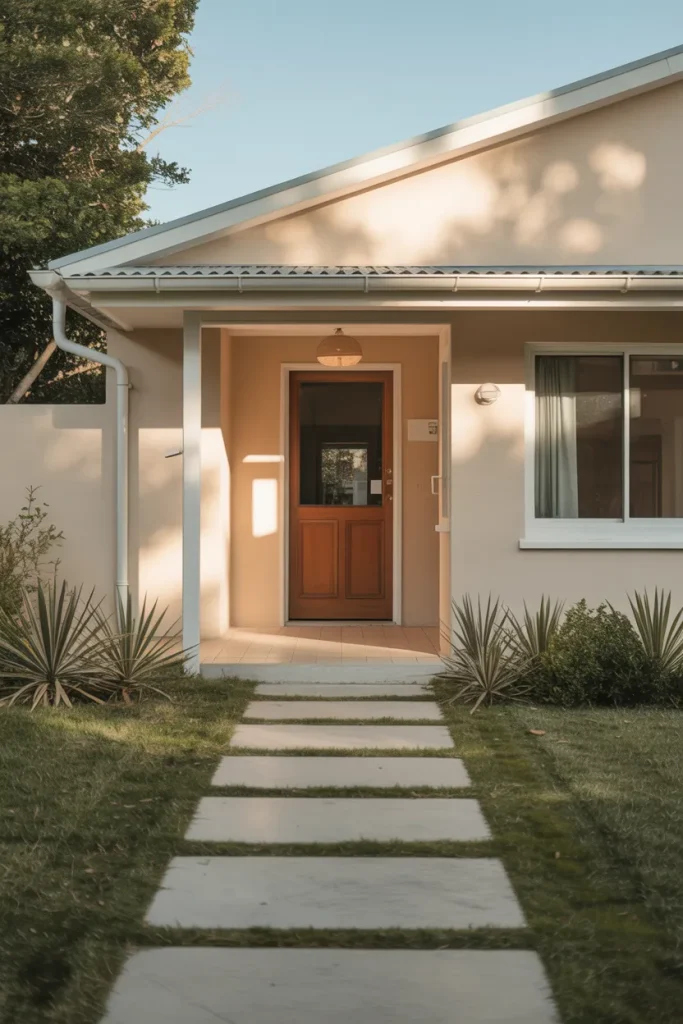 This diy front yard is designed for confidence. A clean lawn, clear edges, and limited plants make it approachable for beginners. It’s especially popular among new homeowners working with a simple budget plan.
A practical insight: starting small prevents burnout. Homeowners who master a simple layout first are more likely to enjoy gradual upgrades rather than feeling overwhelmed.
21 Modern Front Yards with Structured Grass Panels
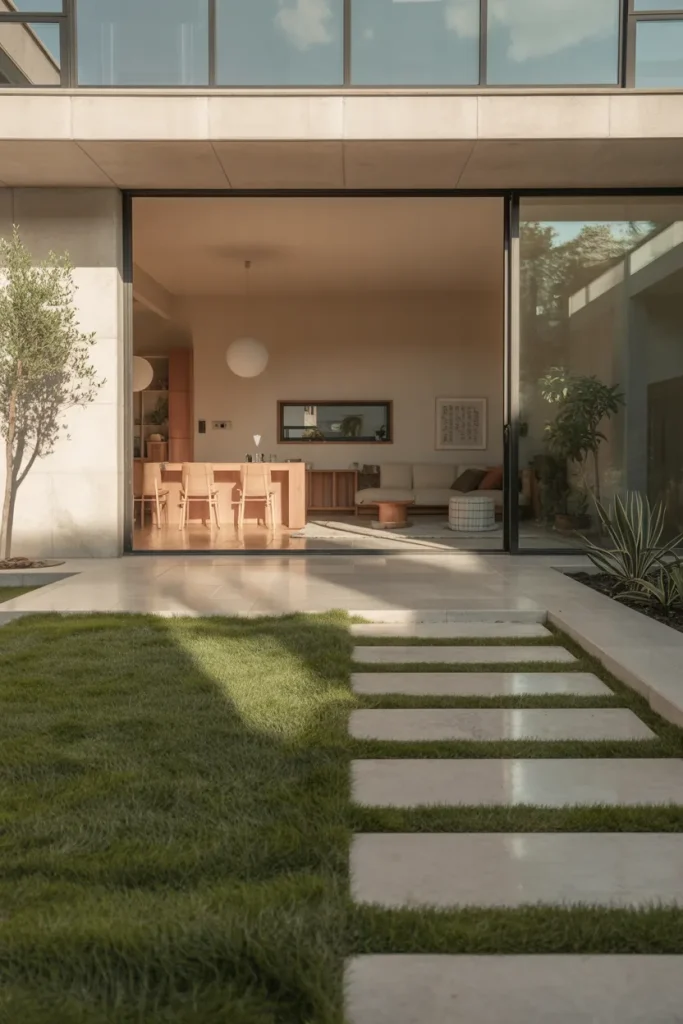 This idea rethinks grass as a design feature rather than filler. Rectangular lawn panels framed by stone or concrete create a modern rhythm that feels intentional and calm. It works well for homes that want visual order without sacrificing greenery, especially on lots where symmetry strengthens curb appeal.
Expert designers often point out that mowing patterns matter here. Keeping edges crisp and panels evenly cut preserves the architectural feel and prevents the yard from drifting back into a standard lawn.
22 Easy Front Yards with Mulch and Shrubs
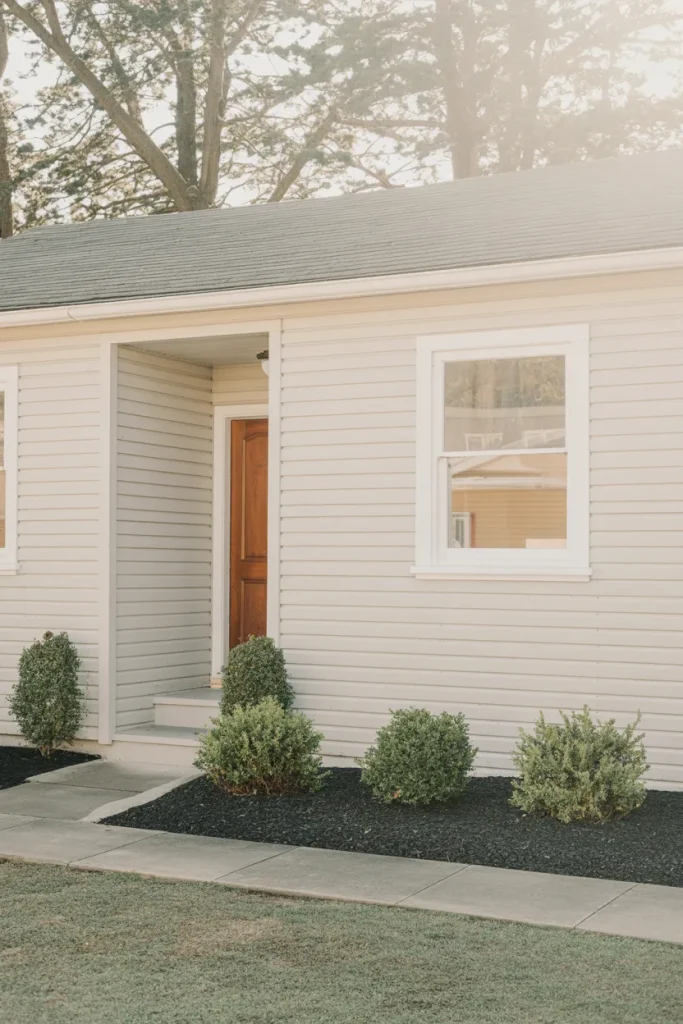 An easy front yard doesn’t mean boring. Mulch beds paired with a few well-chosen shrubs create contrast and depth while staying low-effort. This layout suits homeowners who want a tidy appearance without weekly upkeep and works across many home styles.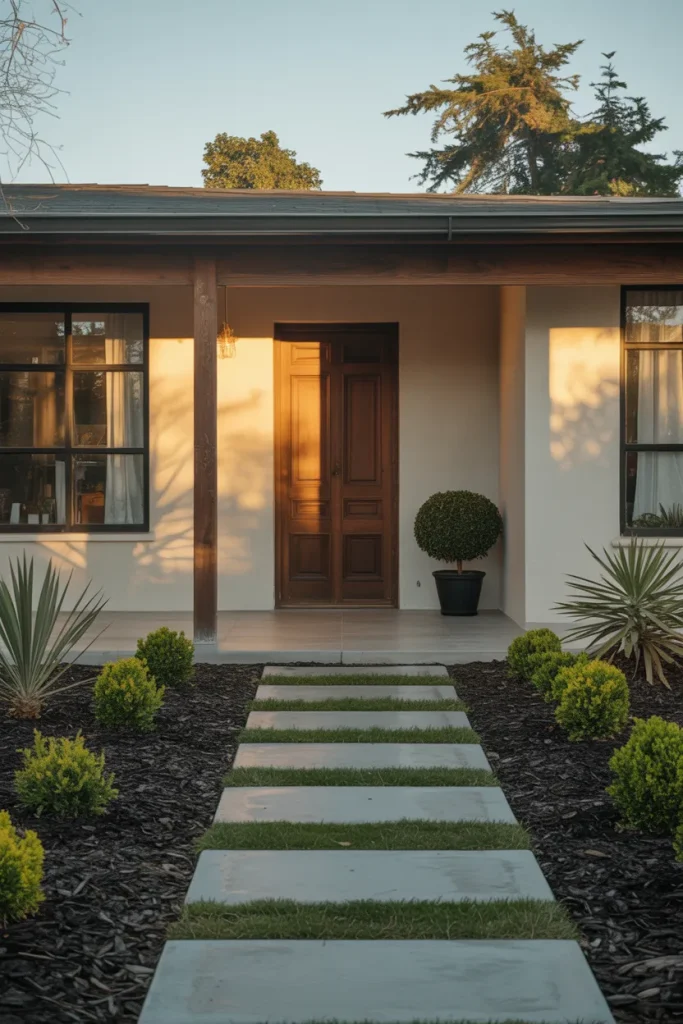
A practical insight is spacing. Leaving room between shrubs allows them to mature naturally, reducing trimming time and keeping the yard balanced as plants grow.
23 Sloped Corner Yard with Layered Paths
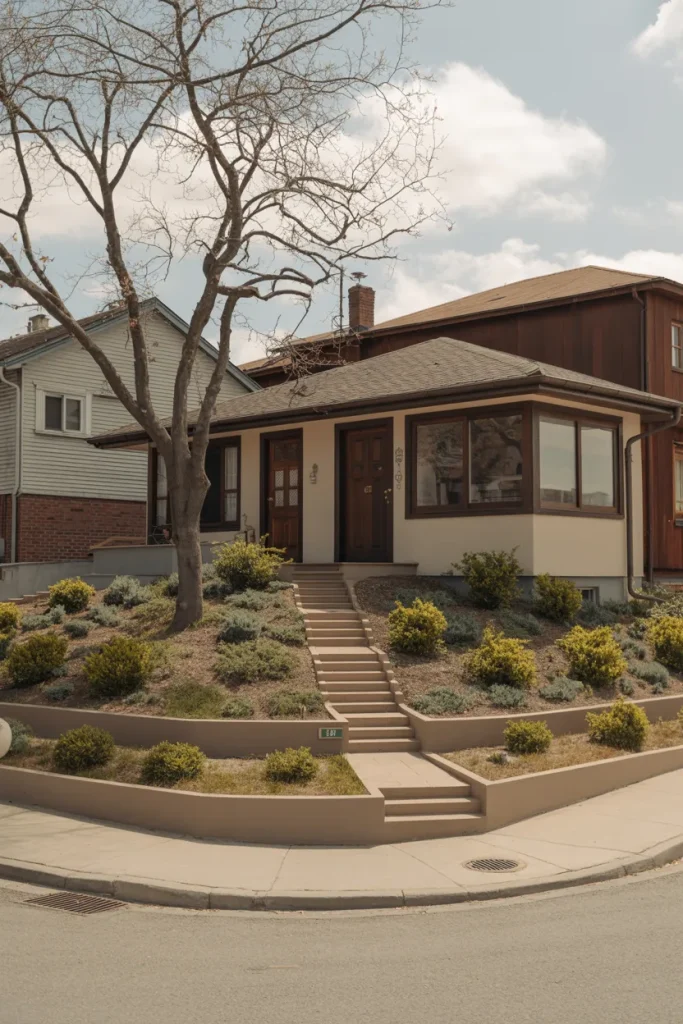 This design addresses two problems and needs at the same time. There is a need for a design and solution for a corner exposure and a sloped site. Layered elevational paths help in the movement of the people, and planting beds help soften the changes in elevation. This creates a design that can look intentional and feels less like a design that was done with no thought to the design, especially with the strangely shaped lots.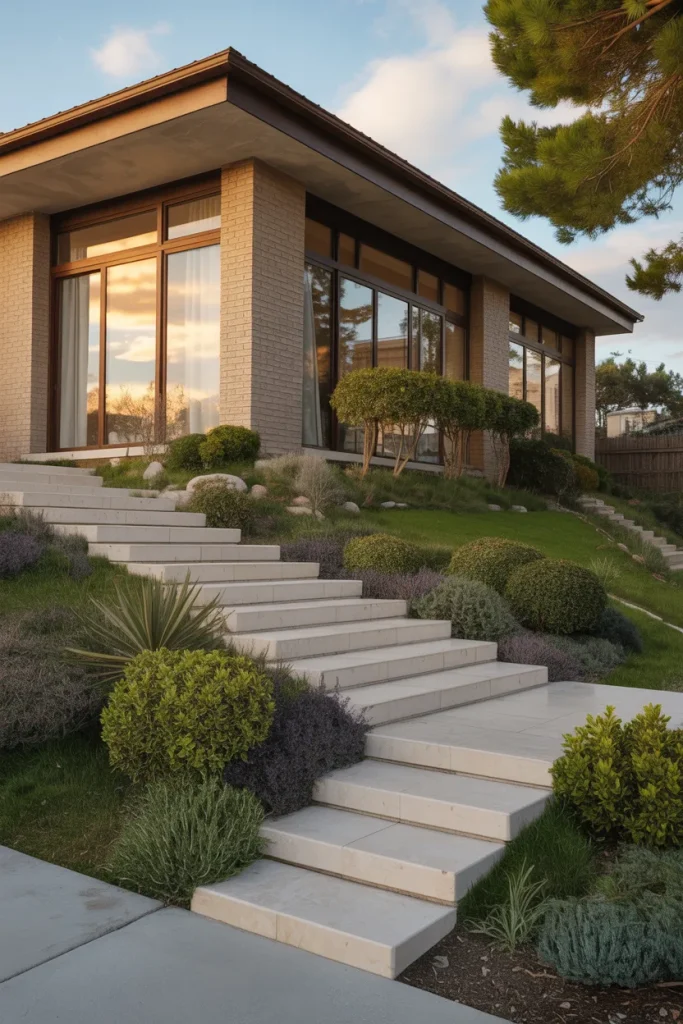
The best place for this to work is within a neighborhood with people walking and using the roads. The paths that are defined help to keep the planting areas from being trampled and help the yard to feel accessible from many sides.
24 Farmhouse Front Yards on a Budget
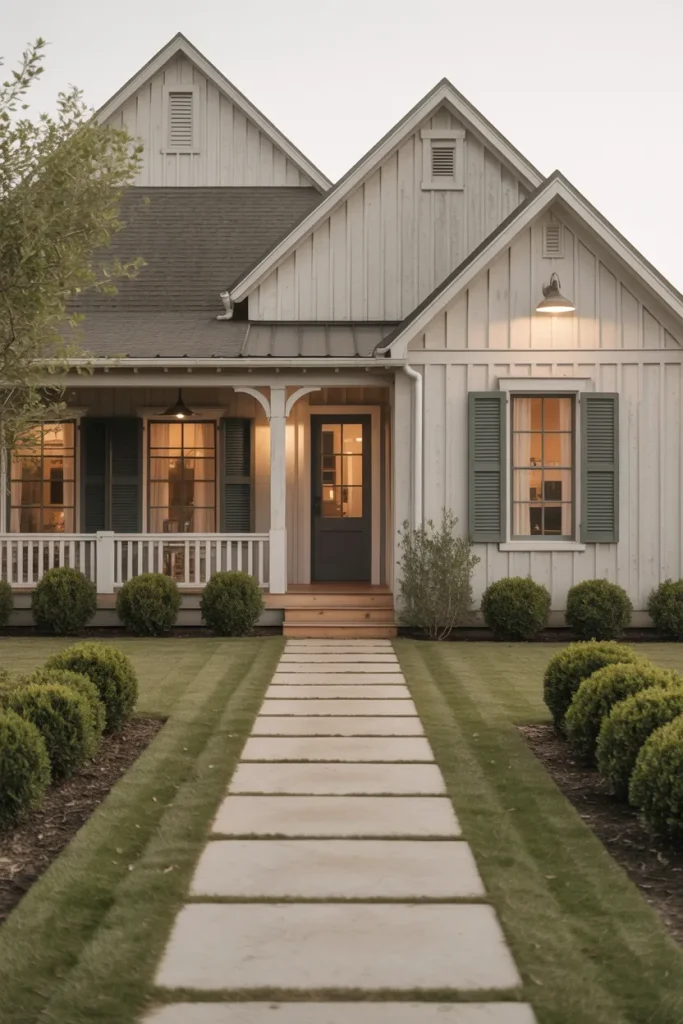 This yard in the farmhouse style shows that warmth could be done without an excess of materials and design. The appealing look at a cost-effective design is done using simple lawns, modest planting beds, and a clearly defined entry path. The design is especially inviting for older homes being downsized and being redone bit by bit.
Most homeowners begin with a yard that is simply grass and paths in between, and then they add to the planting over time. This process works best to hold costs down and allow things to grow and develop over time naturally.
25. Florida Front Yard with Open Lawn and Palms
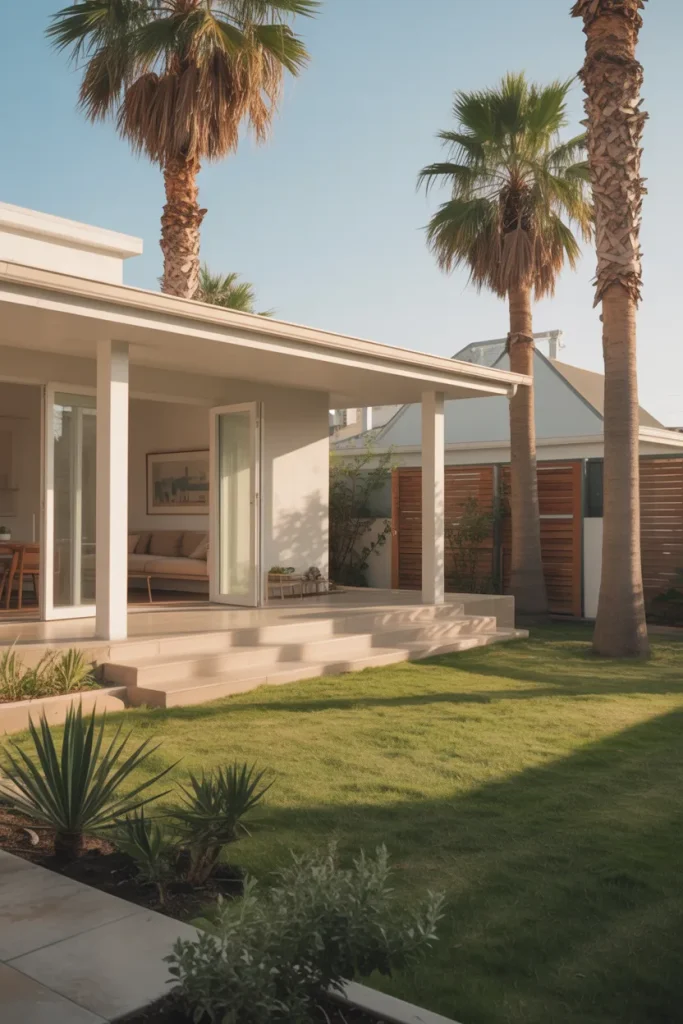 The Florida front yard has the ability to feel airy along with being able to feel lush at the same time. The open areas of lawn together with palm-style trees make it feel open, and the sight lines between them help to frame the house. The look of the front yard feels relaxed and bright and very appropriate for the climate.
Palms are often potholed and underplanted to demonstrate close clustering. Removing potli and underplanting keeps the trunks to the side and allows for enhanced moisture retention and maintenance.
26 Texas DIY Front Yards with Gravel Borders
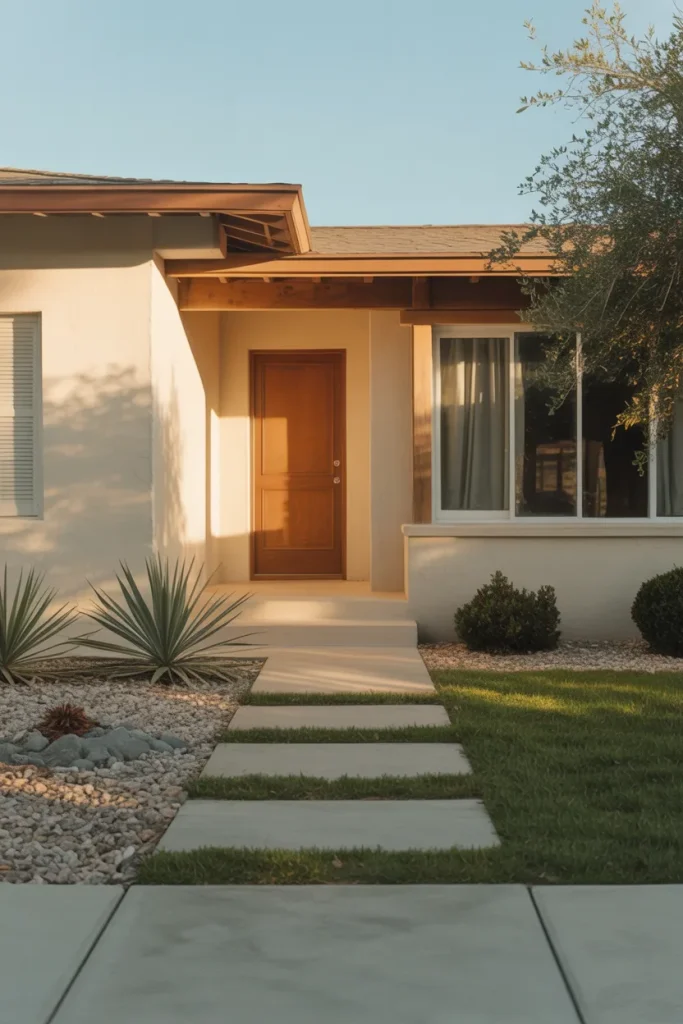 The DIY idea here is great for Texas neighborhoods where heat and sun mean tough choices. With gravel, the layout stays defined and the planting zones remain uncluttered. It keeps things simple, easy, and flexible enough to be changed over time.
A few homeowner micro-anecdotes on starting with one edge of gravel and expanding later are common. First time landscape project feels flexible enough to have little risk.
Landscaping for front yards in 2026 is more about the practical things that accommodate the daily realities. If one of these ideas sparked inspiration, be sure to tell us how you would customize it for your own home; great ideas are often the result of interacting with your neighbors.